
Funfetti Sourdough Bread
This post may contain affiliate links for products and ingredients I use and recommend. For more information, see my affiliate disclosures.
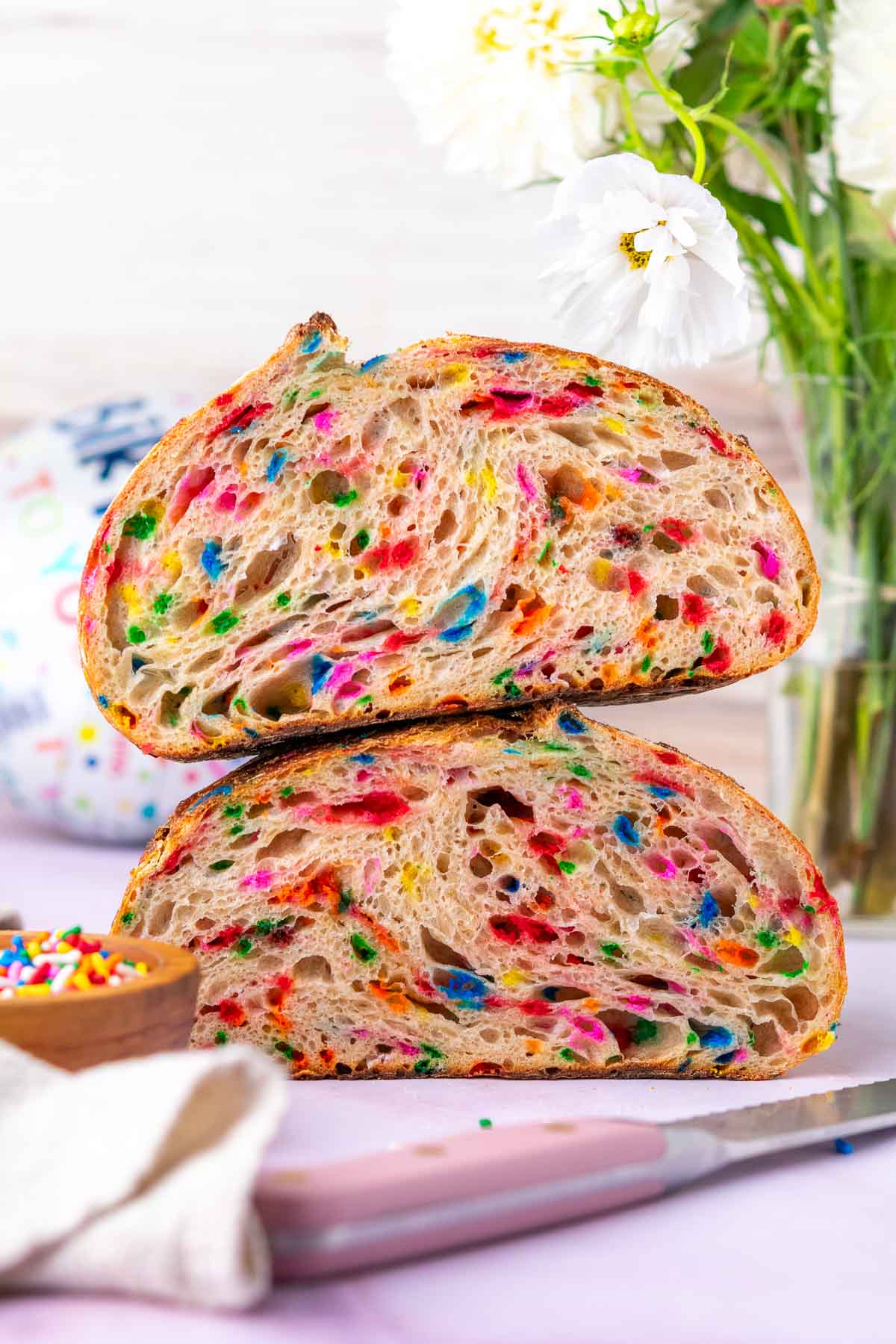
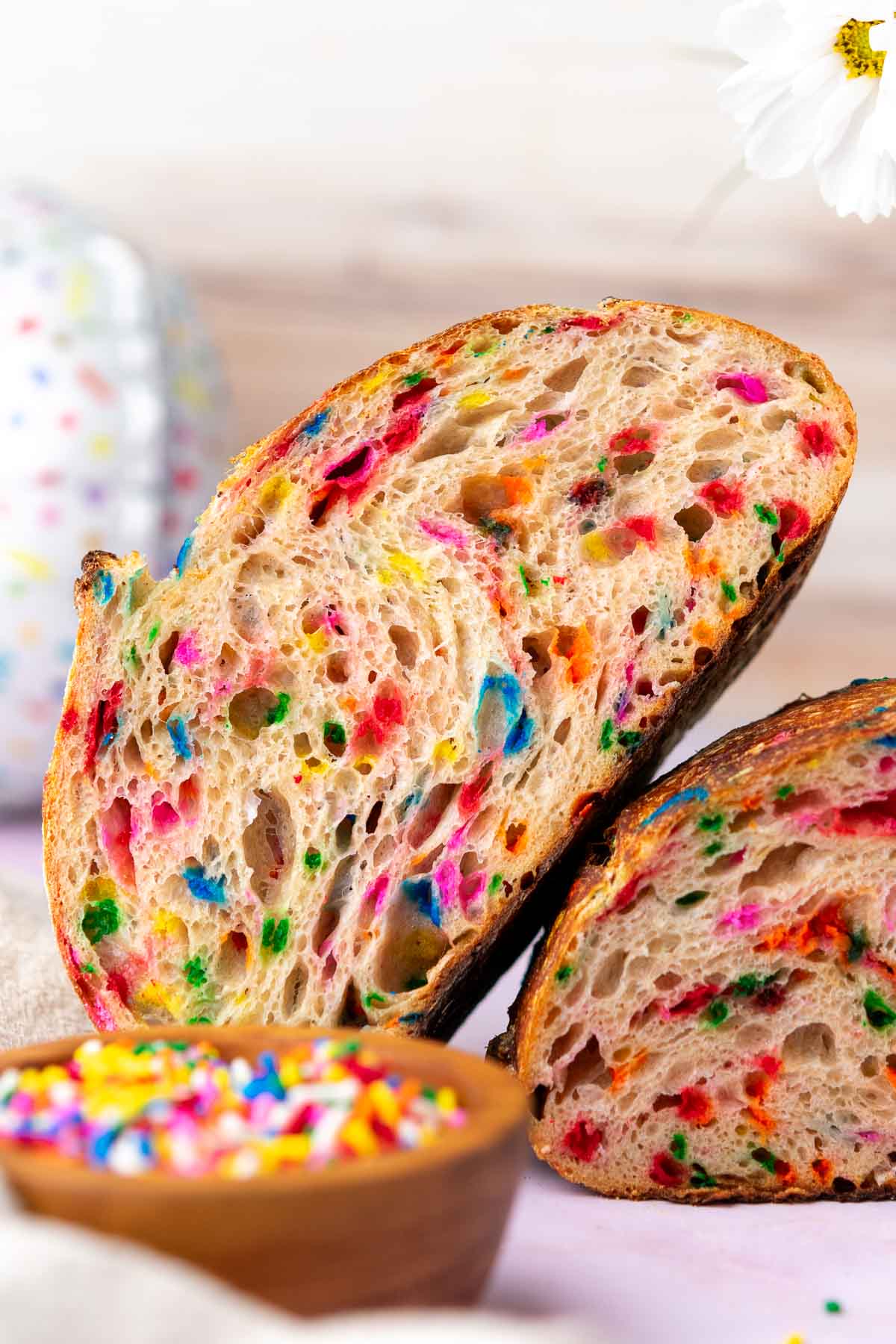
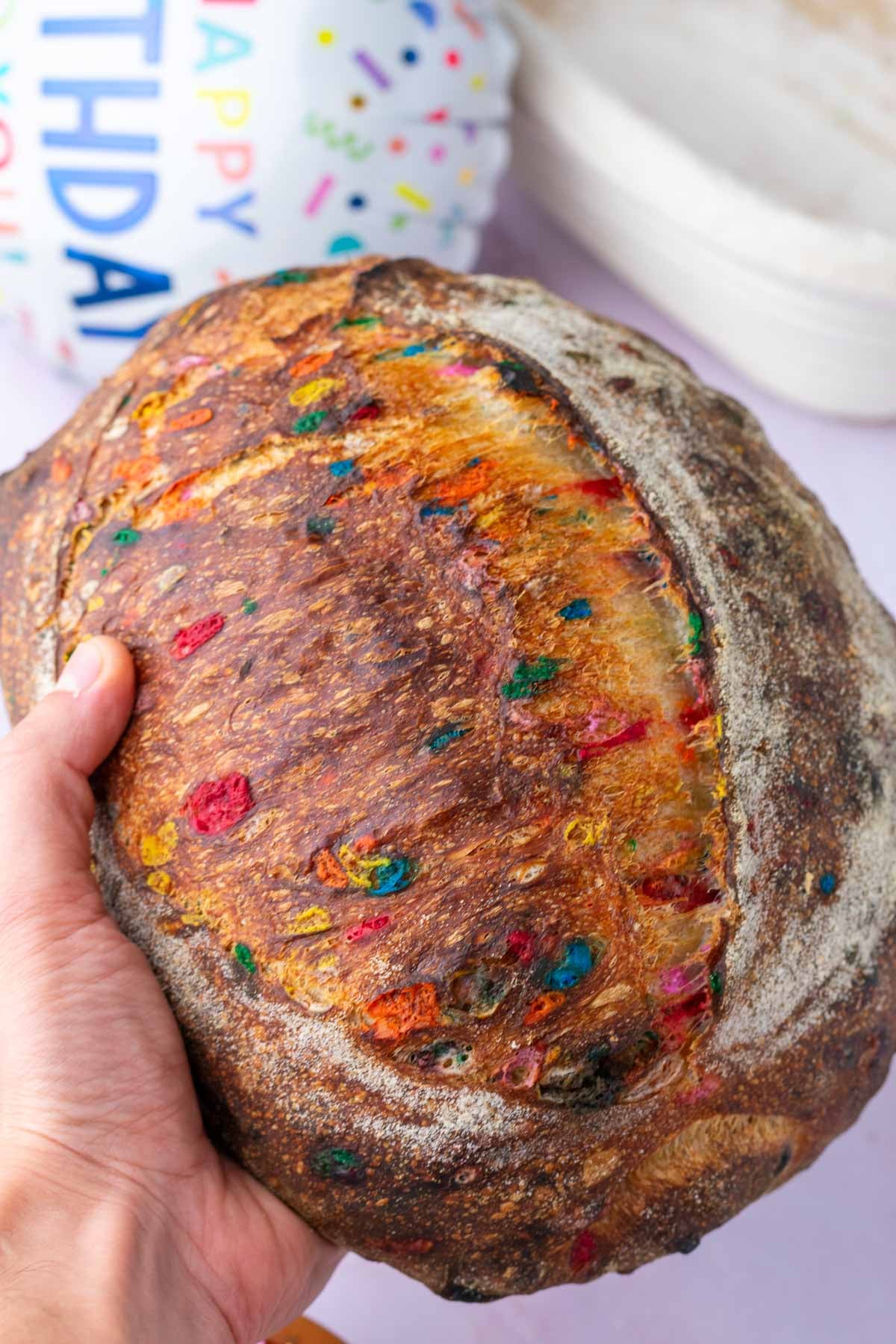
This Funfetti Sourdough Bread is speckled with colorful confetti sprinkles that is perfect for parties and celebrations like your favorite rainbow cake in sourdough bread form.
Vanilla and almond extract give it a boxed cake aroma and flavor, but the loaf isn’t too sweet and is naturally leavened with sourdough starter for a long fermentation.
This fun sourdough loaf has heaps of rainbow sprinkles in every bite and looks fantastic set out at birthday parties, holidays, or celebrations.
This detailed bread recipe will walk through every step of the process and gives lots of tips so you can get the best funfetti sourdough bread possible.
👉 For other favorite sourdough breads with inclusions, see my recipes for:
⭐️ Why You’ll Love this Recipe
- Tastes like the popular boxed cake mix, but isn’t sweet.
- Full of rainbow sprinkles in every bite.
- Great for kids, birthday parties, office parties, and celebrations.
- Still tastes like artisan sourdough bread with a long fermentation.
- Sprinkles are an easy inclusion if you’re new to adding inclusions to breads.
- If you’re a Taylor Swift fan, she mentioned making funfetti sourdough bread in a podcast!
🛠 Tools Needed
View my Sourdough Tools and Equipment guide for a complete list of my favorite bread-baking tools.
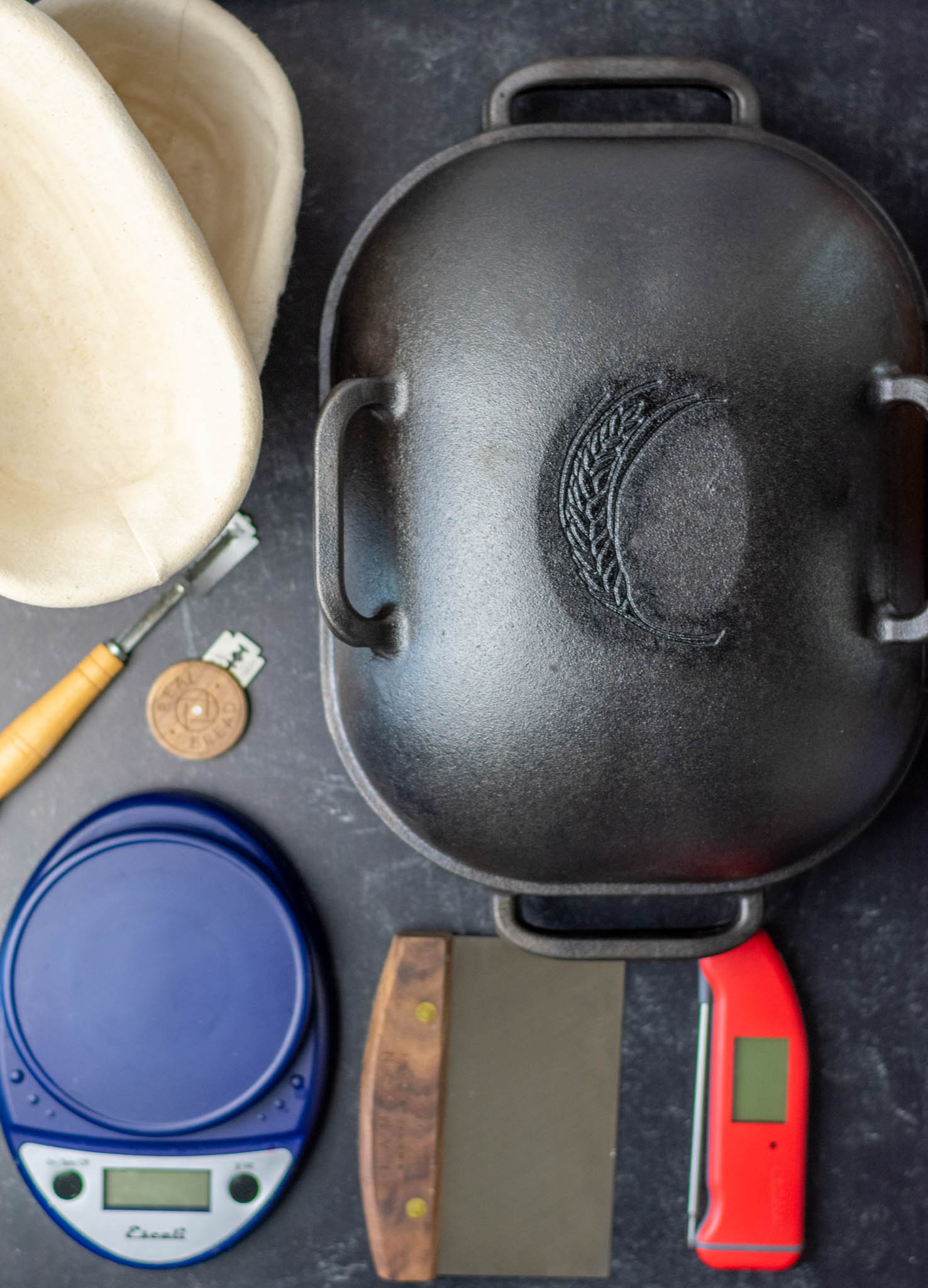
- Dutch Oven
- I love baking with my Challenger Bread Pan. It bakes excellent sourdough bread for a home baker and is heavy-duty cast iron.
- For more information on Dutch ovens, I have listed my recommendations with pros and cons here.
- Baking Scale
- Measuring your ingredients by weight instead of volume is essential so you get a more consistent and accurate bake.
- Bread Lame
- Can use a sharp razor blade or sharp knife.
- Bench Scraper
- Assists with shaping and transferring your bread to your banneton or basket.
- Banneton Proofing Basket
- I use this 10″ oval proofing banneton for baking batards (ovals) and a 9″ round banneton for boules (rounds).
- A proofing basket will help keep your dough shaped while it proofs overnight and is removed easily from the basket with a liner. If you don’t have one, line a mixing bowl with a floured tea towel.
- Optional: Brød and Taylor Folding Bread Proofer
- This folding proofing box by Brød & Taylor is a game changer to keep your sourdough starter and doughs at the perfect temperature while proofing.
- The proofer folds up easily, includes a humidity tray, is multifunctional, and can even be a slow cooker.
- Optional: Danish Dough Whisk
- I like using a Danish dough whisk to help mix with less mess. It’s an optional but helpful tool.
🛒 Ingredients Needed
See below for more information, variations, and possible substitutes.
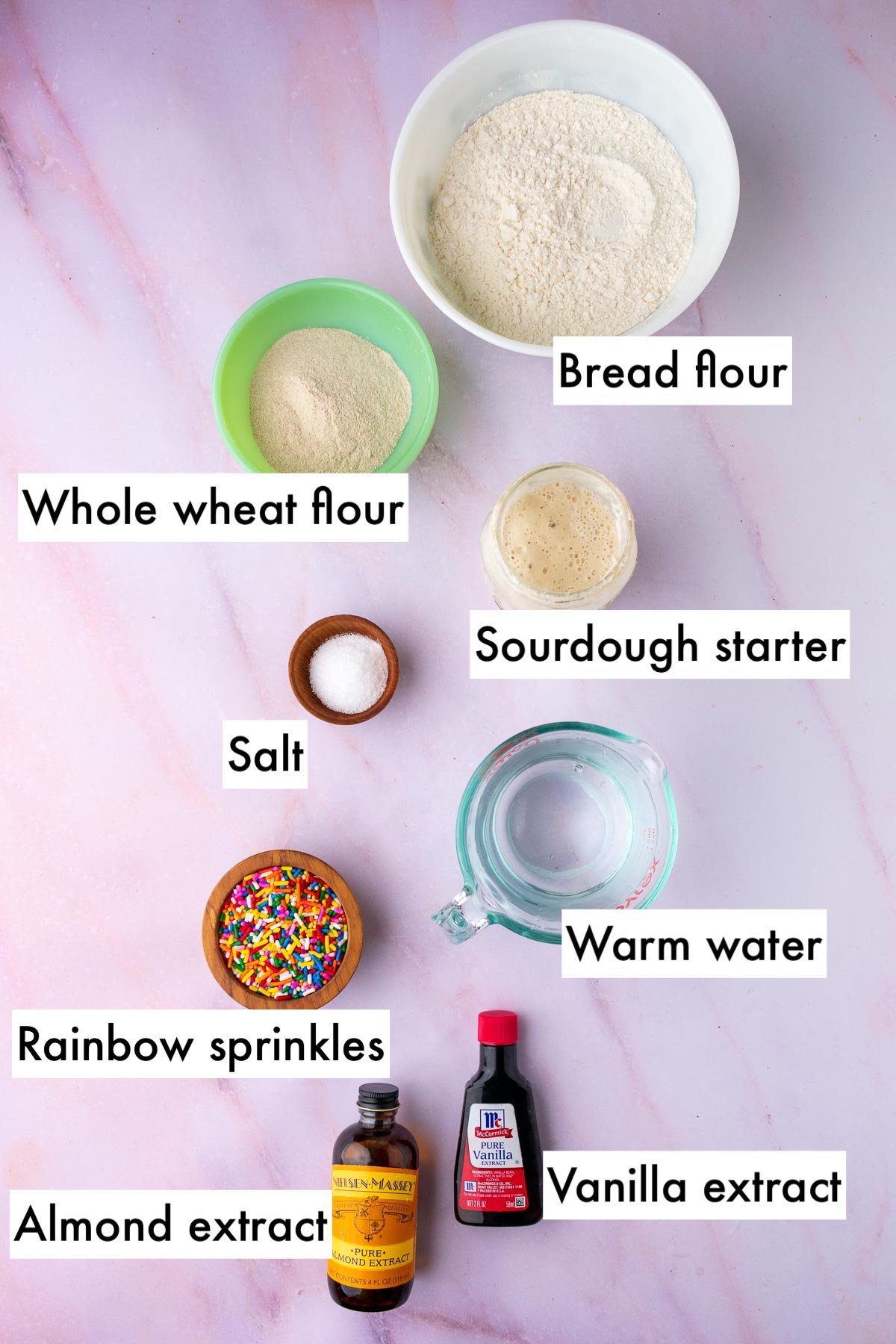
- Bread Flour
- For recipe testing, I used King Arthur Bread Flour at 12.7% protein. High-gluten flour works best for this loaf, but you can also use all-purpose flour.
- Whole Wheat Flour
- Add a bit of whole wheat flour for added flavor and nutrition.
- However, you can easily substitute with spelt flour in the recipe like my Spelt Sourdough Bread.
- Sourdough Starter
- Use active sourdough starter and not sourdough discard for this bread.
- Don’t have a sourdough starter? Learn How to Make a Sourdough Starter and make a stronger sourdough starter with my top sourdough starter tips and why I maintain a small sourdough starter.
- Salt
- Warm Water
- I typically use warm water for autolyse so the dough is still warm when I add my levain.
- Sprinkles
- I prefer using waxy ice cream or cake rainbow sprinkles from this loaf for the brightest color and less streaking.
- They’re great for adding on top of Fudgy Sourdough Brownies or Sourdough Frosting too!
- If you use sprinkles that are less bright or use natural food colorings, note that the bread may not be as colorful and may be more prone to color streaking.
- Vanilla Extract
- Vanilla adds a warm richness to the loaf, giving it a baked good-like quality without any added sugars.
- Another delicious loaf with vanilla is Lavender Vanilla Sourdough Bread.
- Almond Extract
- The key to any funfetti-tasting loaf is almond extract. This gives it the nutty, nostalgic flavor of boxed cake mix. It brings out the flavors of the sprinkles, just like it does for cherries in my Sour Cherry Jam and Sourdough Sour Cherry Pie.
- Leave out if you don’t have or use cake batter extract.
⏰ Sample Baking Schedule
This is my typical baking schedule for most sourdough breads like My Everyday Sourdough Bread Recipe. It works well for a weekend bake, but many steps are flexible, depending on your own day-to-day schedule.
For example, you can make the levain the night before (use 10g of starter and 40g of flour and 40g of water). You can also proof the dough overnight in the refrigerator for up to a day to bake on your own time.
- Make the Levain: 9:00am
- Autolyse: 1-2pm
- Add Levain & Rest: 2-2:30pm
- Add Salt, Extracts, & Mix: 2:30pm
- Bulk Fermentation: 2:30-8:30pm
- Shape: 8:30pm
- Overnight Proof
- Score & Bake: Next Day
🌈 How to Make Funfetti Sourdough Bread
Follow this visual and step-by-step guide to help make this rainbow or funfetti sourdough bread recipe.
This recipe makes one large sourdough loaf, but you’re welcome to double it to make two loaves.
1. Make the Levain
Mix 30 grams of sourdough starter, 30 grams of bread flour, and 30 grams of water in an empty jar.
Cover and set it in a warm location (between 75-80ºF) for about 4-5 hours until it’s bubbly and ripe. The levain should at least double in size during this time.
Note: Alternatively, skip this step and use 90 grams of an active sourdough starter in the recipe.
To make a sourdough starter from scratch, follow my Sourdough Starter recipe guide.
Learn more about the difference between a starter and levain.
2. Autolyse
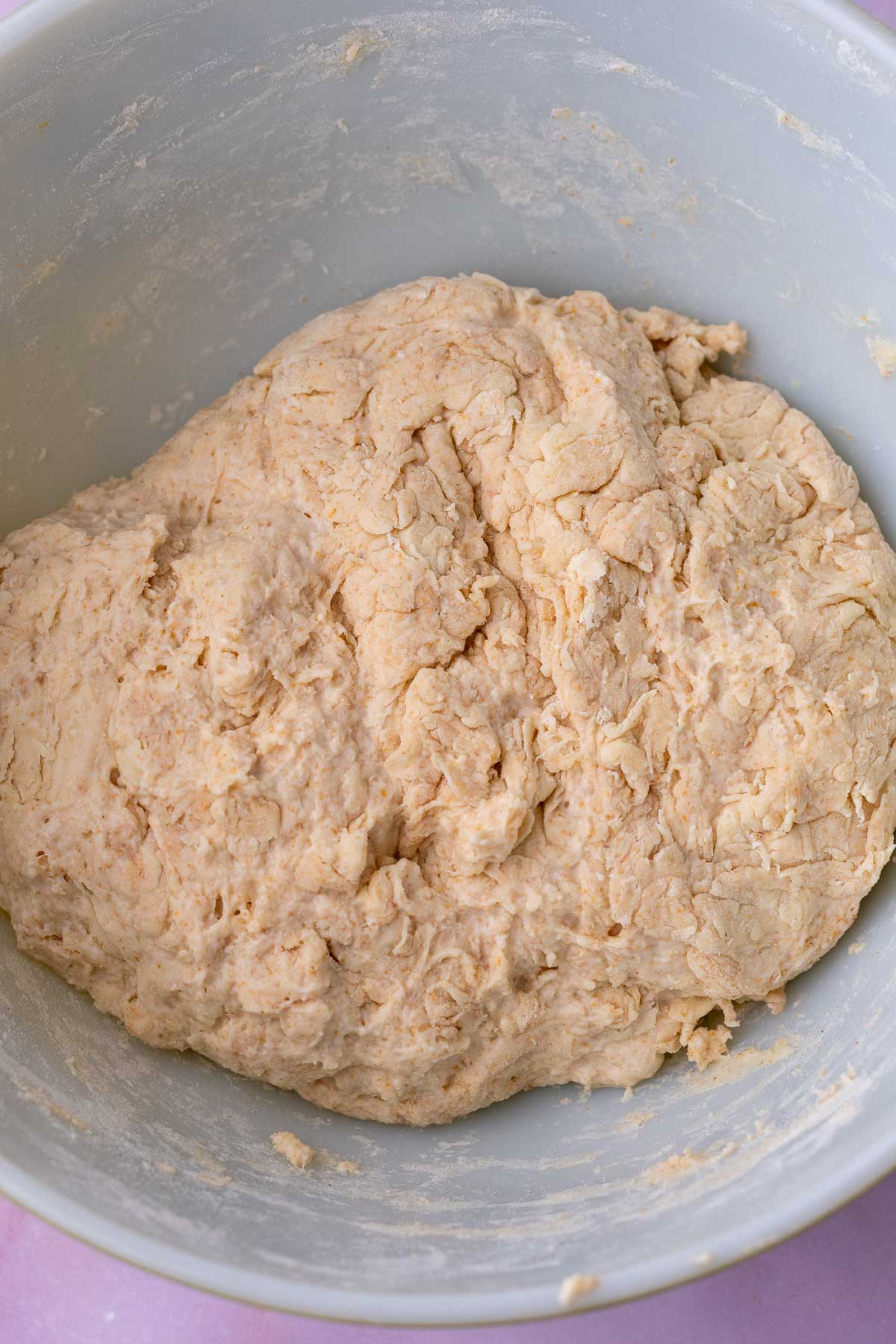
About an hour before the levain is ready, mix the bread and whole wheat flours in a large mixing bowl and pour in the warm water.
Use your hands or a Danish dough whisk to mix the flours and water. It’s okay if some scraggly bits of flour remain, but you want most of it to be hydrated.
Cover the bowl and set it aside to autolyse for an hour.
Note: For more information about autolyse, read my detailed sourdough Autolyse guide that details what autolyse is, when you can skip it, and more information.

3. Add the Levain and Rest
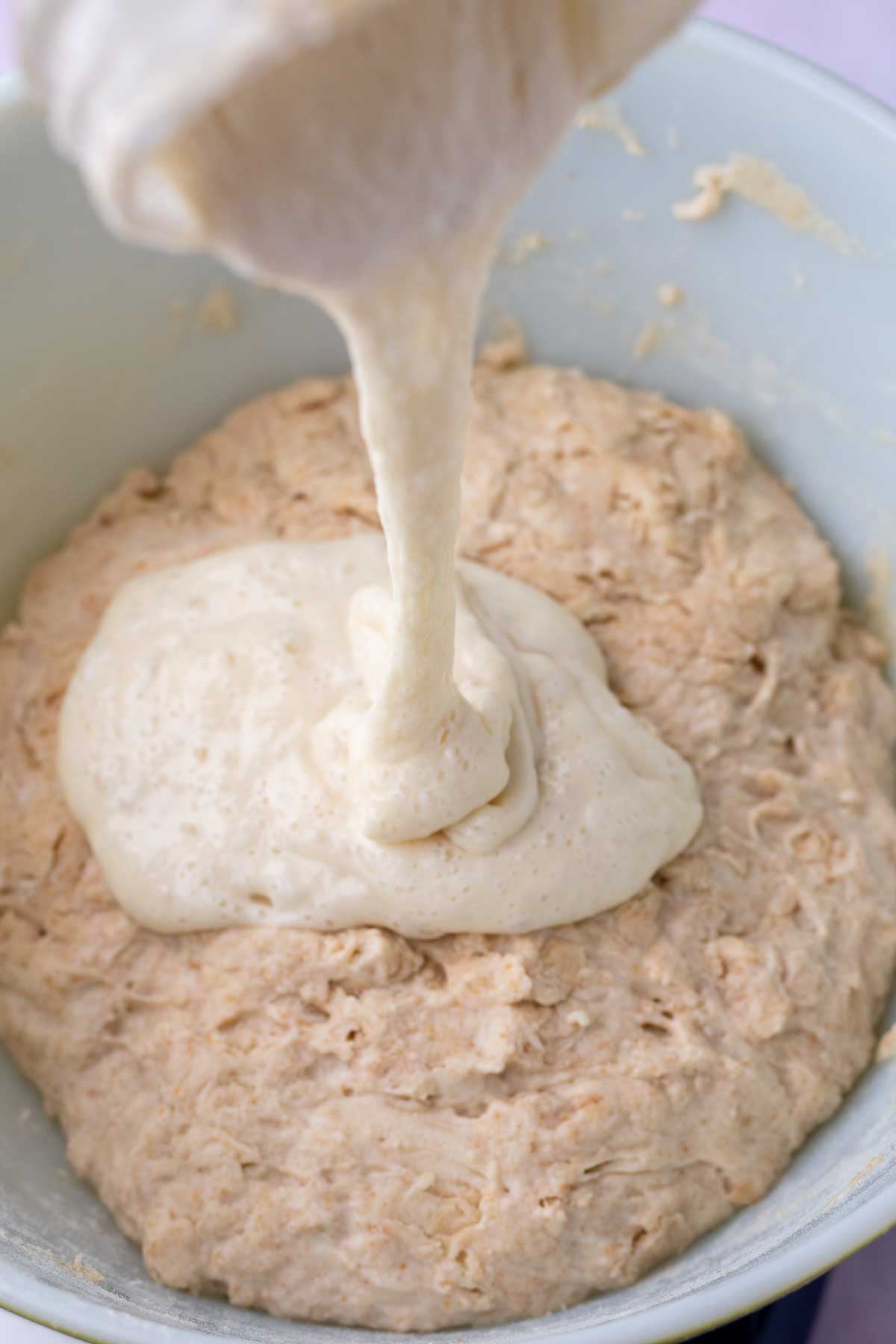
When the levain is bubbly and doubled in size, pour it onto the dough.
Use your hands to dimple the levain into the dough. Then, stretch and fold the dough onto itself for a few minutes until you thoroughly incorporate the levain into the dough.
You’ll do more mixing later when you add in the salt, but you want to make sure the levain is evenly distributed throughout the dough.
To stretch and fold:
- Use your hand as pincers to pull up a portion of the dough.
- Lift the dough to stretch it, then fold it down in the middle of the bowl.
- Rotate the bowl and repeat this motion.
Cover the bowl and rest it in a warm location for 30 minutes.
4. Add Salt, Extracts, and Mix
After 30 minutes, sprinkle the salt and add the vanilla and almond extracts into the dough.
Dimple in the ingredients and begin mixing. Stretch and fold the dough for about 5-7 minutes until it’s smoother, mostly holds its shape, and the salt is distributed throughout.
The alcohol in extracts can inhibit gluten formation during mixing, so don’t be surprised if the dough seems a bit wet or soupy at first. For that reason, the bread requires a bit more upfront mixing than typical loaves.
Cover the bowl and rest for 30 minutes.


5. Bulk Fermentation, Sprinkles, and Folds
After the first mix, bulk fermentation will take about 5-6 hours at 78ºF. Note that the alcohols in the extract can slow fermentation slightly.
If your dough and environment are colder, bulk fermentation will take longer. Conversely, in warmer conditions, the dough will ferment faster.
Tip: An instant-read thermometer like the Thermapen is a great tool to check your dough temperature throughout bulk fermentation.
Perform at least four sets of stretch and folds, separated by 30-45 minutes each. If you notice that the dough is still very slack after a few folds, you may want to add more folds in.
Add the rainbow sprinkles during the first set of stretch and folds. To add, scatter a quarter of the sprinkles on top of the bread, fold, add another quarter, fold again, and repeat two more times. This way, the sprinkles are gently added into the dough so they don’t bleed as much.
The dough rests for the remainder of time until shaping.
Bulk fermentation is complete when this dough has doubled in size, feels full of air, is smoother, and has some visible bubbles on top of and around it.


6. Shape
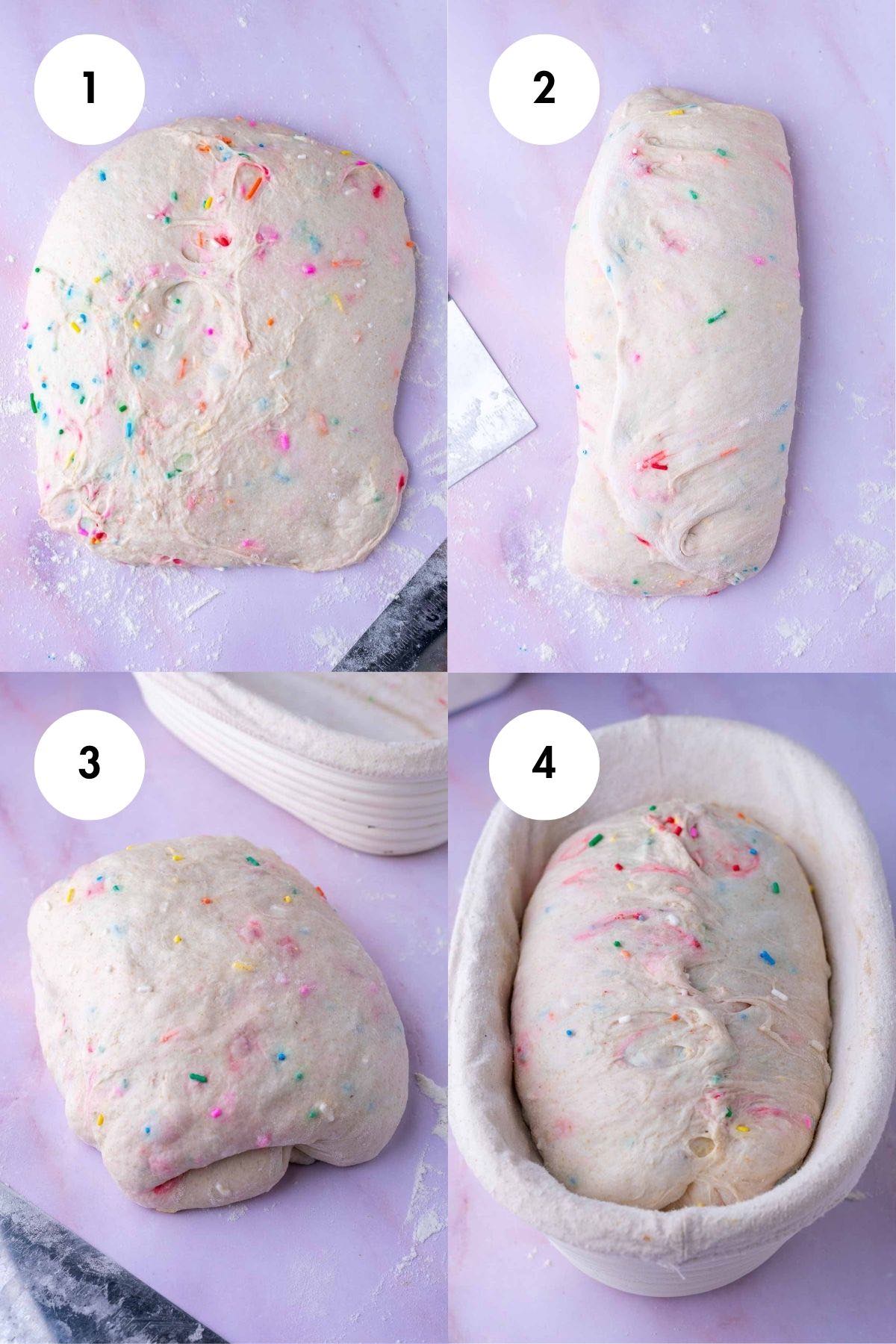
Lightly flour your surface and banneton (rice flour is helpful to prevent sticking) and use a bench scraper to shape the dough into a boule (round) or batard (oval).
To shape into a batard, dump the dough out onto your floured surface and used floured hands to shape it into a square (image 1 below). Then, use a bench scraper and your hands to gently lift and stretch one side up and over to the center of the dough. Repeat on the other side, fold it over the first fold (2). Finally, roll the dough up into a taut packet from the top down (3).
Lift the dough and place it seam-side up into the banneton (4). If necessary, stitch the dough to strengthen it. To do this, I pinch two ends of the dough and cross them over each other down the middle of the dough to create the stitch.
If you notice that the dough is very slack when you turn it out of its bowl, add an extra preshaping step to strengthen it further.
7. Overnight Proof
Cover the banneton and place it in a cold refrigerator overnight and up to 48 hours.
The overnight proof, or retard, will give additional flavor to the dough and slow down fermentation so you can bake it on your own schedule.
8. Score & Bake
Place an empty Dutch oven inside the oven and preheat it at 500ºF (260ºC) for an hour.
After an hour, remove the cold dough from the refrigerator and turn it out onto a small piece of parchment paper.
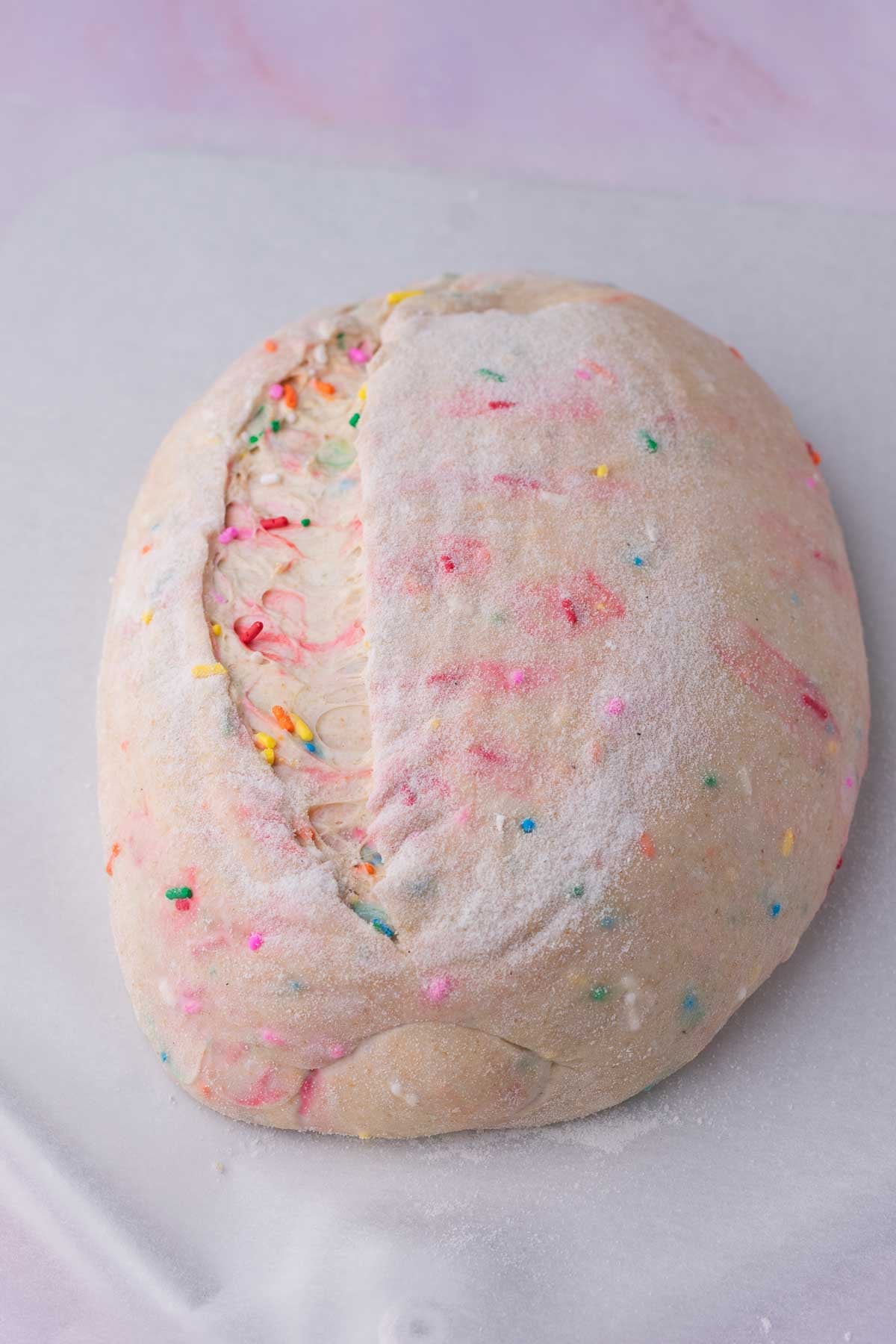
Then, score the dough using a sharp bread lame.
I usually score with one long slash for a batard (oval). For a boule (round), score the dough with a cross pattern in the center of the dough or another design.
To help increase the chances of a sourdough ear, the score should be about ¼”-½” deep at a slight angle.
Carefully place the scored dough with parchment or a reusable baking bread mat into the Dutch oven and immediately cover it with the lid.
Bake
I follow the same routine to bake most of my sourdough breads, such as My Everyday Sourdough Bread Recipe.
Bake at 500ºF (260ºC) for 20 minutes.
Remove the lid, turn the oven down to 450ºF (232ºC), and bake with the lid off for about 12-15 minutes. The loaf should be quite fragrant during baking!
Cool the loaf on a wire rack for at least an hour before slicing.
Finally, enjoy cutting into this celebratory funfetti sourdough bread!

How to Store & Serve
I like to store sourdough bread cut-side down once sliced. This helps the loaf retain moisture so it doesn’t dry out and become stale.
To slice, cut the bread in half, turn it cut-side down, and then slice it with a sharp, serrated bread knife.
Then, wrap the loaf in a tea towel and place it in a bread bag, bread box, or brown paper bag, where it will stay fresh for about three days. After a few days, you may need to reheat or toast slices.
Unsliced, the bread will last another day or two without staling or losing too much moisture.
Finally, you can freeze sourdough bread by placing slices in a freezer-safe bag where it will keep for months. To thaw, reheat the frozen slices in a toaster oven, toaster, or oven.
Funfetti sourdough bread is particularly good served with butter and a drizzle of honey, vanilla cream cheese, berries, or even whipped cream or mascarpone.


❓FAQs
Can I use all-purpose flour?
You can use all-purpose flour instead of bread flour, but note that you may need to mix more or add a couple of extra folds to strengthen the dough.
Is this recipe vegan?
As long as your sprinkles are, then yes.
Can I make the bread sweeter?
Funfetti sourdough is surprisingly not that sweet. If you want to add honey like in my Calabrian Chili and Honey Sourdough Bread, you could add a touch to the loaf. Lemon zest would also be a nice natural touch.
If you have a sweeter tooth, some white chocolate chips would be nice! Follow the instructions on how I add chocolate and larger inclusions in my Chocolate Coffee Sourdough Bread if adding.
Does funfetti sourdough bread taste like cake?
While festive, this funfetti loaf is still an artisan sourdough bread. It’s not sweetened with added sugar like Sourdough Sugar Cookies, but sprinkles do have sugar in them. The vanilla and almond extracts give the loaf a boxed cake aroma and flavor with the illusion of sweetness like cake.
Ultimately, I’d describe the loaf as still tasting like sourdough bread with mildly sweet hints of that nostalgic and playful funfetti cake mix flavor.
Will the sprinkles melt or bleed into the dough??
Some sprinkles may slightly bleed, especially in long fermentation. Using thicker, waxy sprinkles helps keep the colors intact.

⭐️⭐️⭐️⭐️⭐️
Please leave a rating, comment or question below! Tag me on Instagram or Facebook @SourdoughBrandon or PIN this recipe on Pinterest to come back to it later!
Funfetti Sourdough Bread
Equipment
- 1 Cast Iron Dutch Oven, I use the Challenger Bread Pan linked here with fantastic results, but another cast iron dutch oven works well too
- 1 Dough Whisk, optional but helpful
- 1 Brød and Taylor Folding Proofer, optional but helpful
Ingredients
Levain
- 30 grams Sourdough Starter
- 30 grams Bread Flour
- 30 grams Water
Funfetti Sourdough Bread
- 350 grams Bread Flour
- 50 grams Whole Wheat Flour
- 300 grams Warm Water
- Levain, see above, or 90 grams of active sourdough starter
- 9 grams Sea Salt
- 1 TBS Vanilla Extract, or vanilla paste
- ½ tsp Almond Extract
- 75 grams Rainbow Sprinkles
Instructions
- Make the Levain:In a clean jar, mix the sourdough starter, bread flour, and water for the levain.Cover and set in a warm location (between 75-80ºF) for about 4-5 hours until doubled and bubbly.Alternatively, skip making a levain and use 90 grams of active sourdough starter below.30 grams Sourdough Starter, 30 grams Water, 30 grams Bread Flour
- Autolyse:About an hour before the levain is ready, mix together the bread flour, whole wheat flour, and warm water in a mixing bowl.Make a well in the center of the flour and pour in the warm water. Use a dough whisk or your hands to mix together the flour and water just until it comes together.Cover and rest in a warm location for an hour.350 grams Bread Flour, 50 grams Whole Wheat Flour, 300 grams Warm Water
- Add Levain, Salt, Extracts, and Mix:Add all of the levain into the bowl and dimple it into the dough. Then, stretch and fold the dough for a few minutes to incorporate.Cover and rest in a warm location for 30 minutes.Sprinkle in the salt and add the vanilla and almond extract. Dimple into the dough with your fingertips. Stretch and fold the dough for about 5-7 minutes until thoroughly mixed and the salt dissolves. The dough may be quite wet at first as the alcohol in the extracts can hinder gluten development some.Cover and rest in a warm location for 30 minutes.Levain, 9 grams Sea Salt, 1 TBS Vanilla Extract, ½ tsp Almond Extract
- Bulk Fermentation, Sprinkles, & Folds:At 78ºF (26ºC), bulk fermentation typically takes about 5-6 hours.During bulk fermentation, perform 4 sets of stretch and folds, spaced 30 minutes apart for the first couple of hours. During the first set, scatter a quarter of the sprinkles on top of the dough, fold, and repeat three more times to evenly distribute the sprinkles into the dough.Rest for the remainder of bulk fermentation.At the end of bulk fermentation, the dough should be smooth, feel full of air, have visible bubbles, and jiggle if shaken. The dough should rise about 75%.75 grams Rainbow Sprinkles
- Shape:Lightly flour the top of the dough and the counter. Gently loosen the dough from the sides of the mixing bowl and turn the dough out onto the counter.With the help of a bench scraper, shape the dough into a batard (oval) or boule (round). Shaping images are above in guide.Lift it up and place it into a floured banneton.
- Cold Overnight Proof:Place the covered banneton into a refrigerator to proof overnight and for up a couple of days.
- Bake:Place the empty Dutch oven with lid in the oven and preheat for an hour at 500°F (260ºC).Once preheated, remove the banneton from the refrigerator and turn the dough out onto a piece of parchment paper or a reusable bread baking mat. Score the dough with a sharp bread lame about ¼-½" deep.Transfer the scored dough to the Dutch oven and cover it with the lid.Bake at 500°F (260ºC) for 20 minutes. Remove the lid, lower the oven temperature to 450ºF (232ºC) and bake for about 12-15 minutes with the lid off.Remove from the oven and cool on a wire rack for at least an hour before slicing.Slice and enjoy!
Notes
- Try to keep the dough at a constant, warm temperature (between 75-80ºF) as much as possible throughout fermentation. I use the Brød and Taylor bread proofer to keep my dough at a constant 78ºF. If your dough and environment are cooler, bulk fermentation will take longer. Conversely, in warmer conditions, the dough will ferment faster.
- Read my guide for a detailed walkthrough with photos and videos for shaping, scoring, and baking this funfetti sourdough bread.



My first loaf! Thank you! It came out perfect!
I love that and so happy to hear you had a good experience with your first loaf!
Loving this yummy loaf lately!