
Sourdough Dinner Rolls with Rosemary
This post may contain affiliate links for products and ingredients I use and recommend. For more information, see my affiliate disclosures.
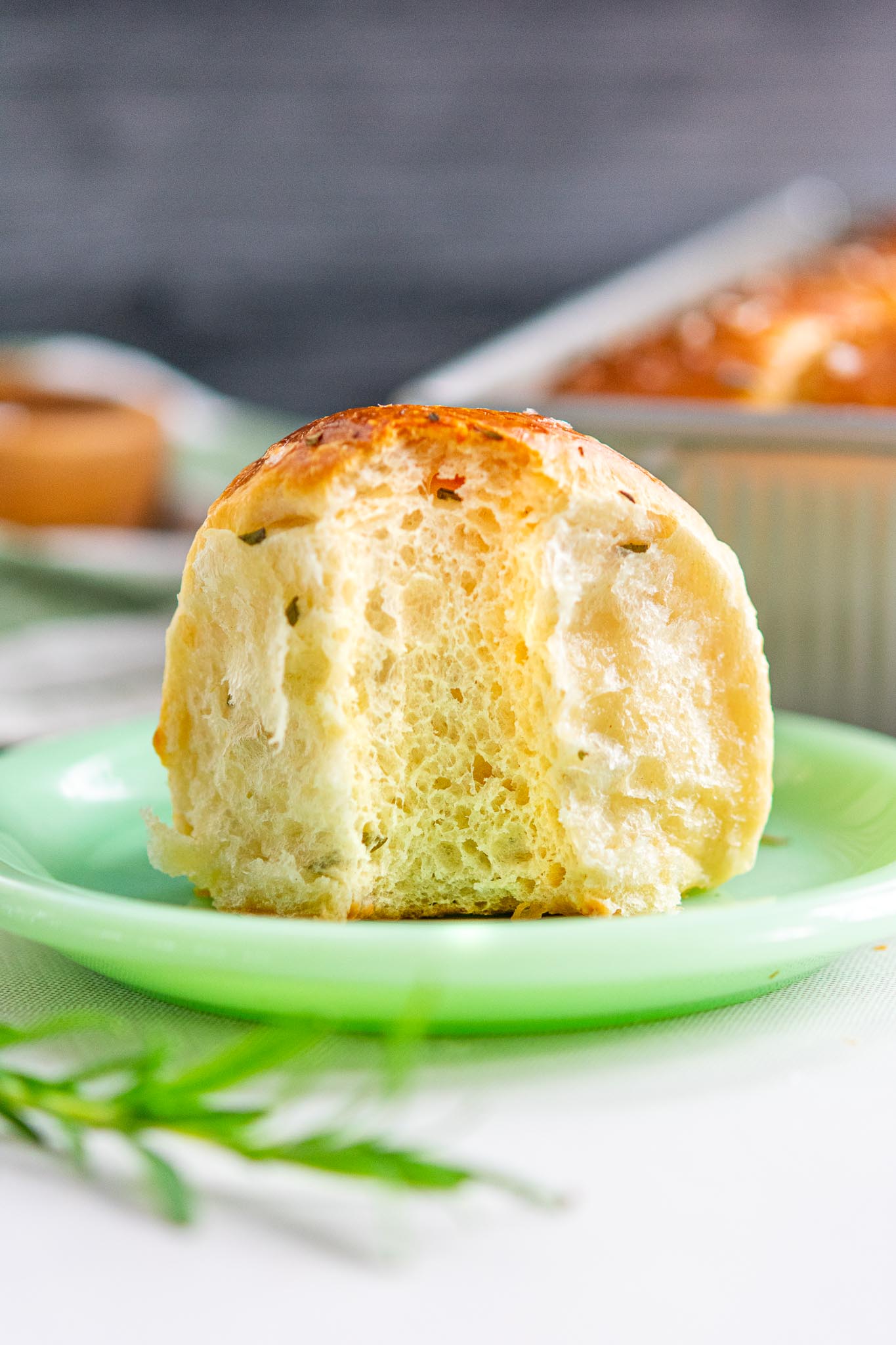
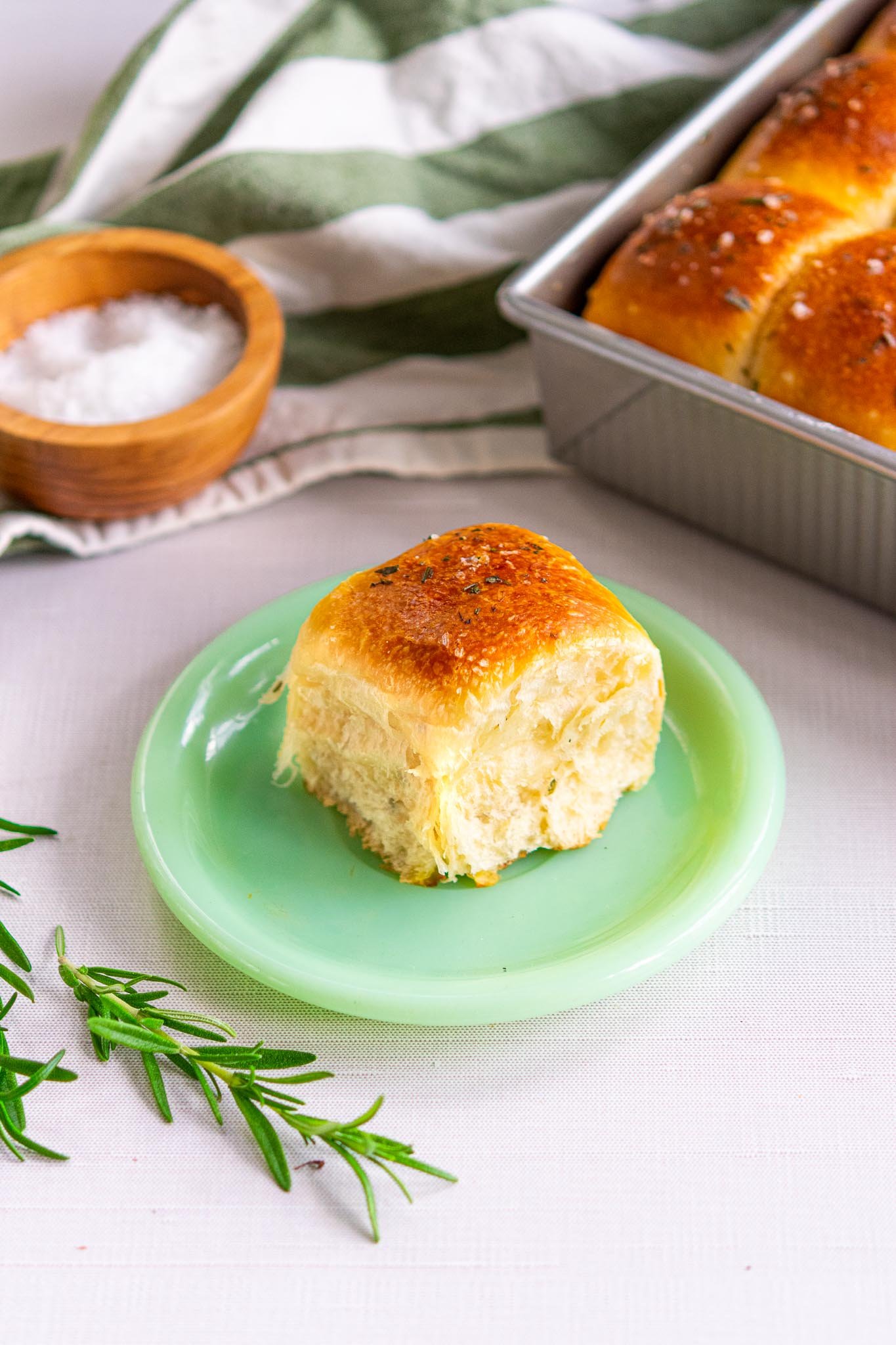
Sourdough Dinner Rolls with Rosemary are incredibly soft and fluffy with a mouth-watering pull-apart texture that will leave you craving more.
These soft brioche sourdough dinner rolls are the perfect side dish for Thanksgiving, a holiday meal, or a cozy weeknight dinner. Every year, thousands make these viral sourdough dinner rolls because they’re so buttery, squishy, and fluffier than a plush pillow.
Another reason to love these soft sourdough dinner rolls is that they’re easy to make ahead of time, overnight, or on the same day.
This recipe makes twenty sourdough rolls for a crowd, and it is easy to divide the recipe in half. They’re sure to be a star at your dinner table and really are the best sourdough dinner rolls ever!
👉 For other soft enriched breads, check out my Sourdough Brioche Bread, my luxurious Sourdough Cinnamon Rolls, fluffy Sourdough English Muffins, and this Sourdough Babka with Any Jam.
🙋♂️ Tips for Making the Best Sourdough Dinner Rolls
These five baking tips will help you make the best sourdough dinner rolls possible for this recipe!
- Make Yudane:
- Yudane is a Japanese method of mixing flour and boiling water, which gelatinizes the flour, resulting in incredibly soft bread. The technique is similar to Tangzhong, another roux method, but it is a 1:1 ratio of flour to water.
- Creating this paste allows the rolls to absorb more water, become fluffier, rise taller, and last longer than when not using this method. I use it for my Seeded Whole Wheat Sourdough Sandwich Bread and tangzhong for my Sourdough Hot Dog Buns.
- Use room-temperature ingredients:
- Room-temperature ingredients facilitate easier mixing and incorporation when making sourdough brioche and other enriched doughs, such as my Sourdough Sweet Potato Dinner Rolls or Sourdough Brioche Hamburger Buns.
- Softened butter is especially vital for this dough. If the butter is cold, it may not blend into the dough; hot or melted butter will be greasy and can separate.
- Proof long enough:
- It’s easy to underproof enriched doughs because they can take longer to ferment due to the addition of eggs, butter, milk, and sugar. Double bulk fermentation (one at room temperature until doubled and another in the refrigerator overnight), along with a long final proof, ensures that the sourdough yeasts have sufficient time to ferment properly.
- Under proofed rolls will be dense and may not rise high when baked. It’s more difficult to overproof these rolls unless you overextend the final proof.
- Mix long enough:
- Enriched doughs require additional mixing to ensure enough gluten development. The large percentage of fat in the recipe can hinder gluten development, so it’s crucial to mix the dough long enough until it passes the windowpane test. You can’t overmix this dough.
- Divide the rolls equally:
- Weigh your dough before shaping so you get equal-sized rolls.

🛠 Tools Needed
- Baking Scale
- Use weight measurements for the most accurate and consistent bakes.
- 9×13 Baking Pan
- I like to use this 9×13 aluminized steel pan from USA Pans. It’s naturally nonstick and bakes evenly. I use for my Sourdough Pumpkin Cinnamon Rolls, too.
- Stand Mixer, optional but helpful
- You can mix this dinner roll dough by hand, but a stand mixer is easier.
🛒 Ingredients Needed
Click on the toggles below for more information, recommendations, and possible substitutes.
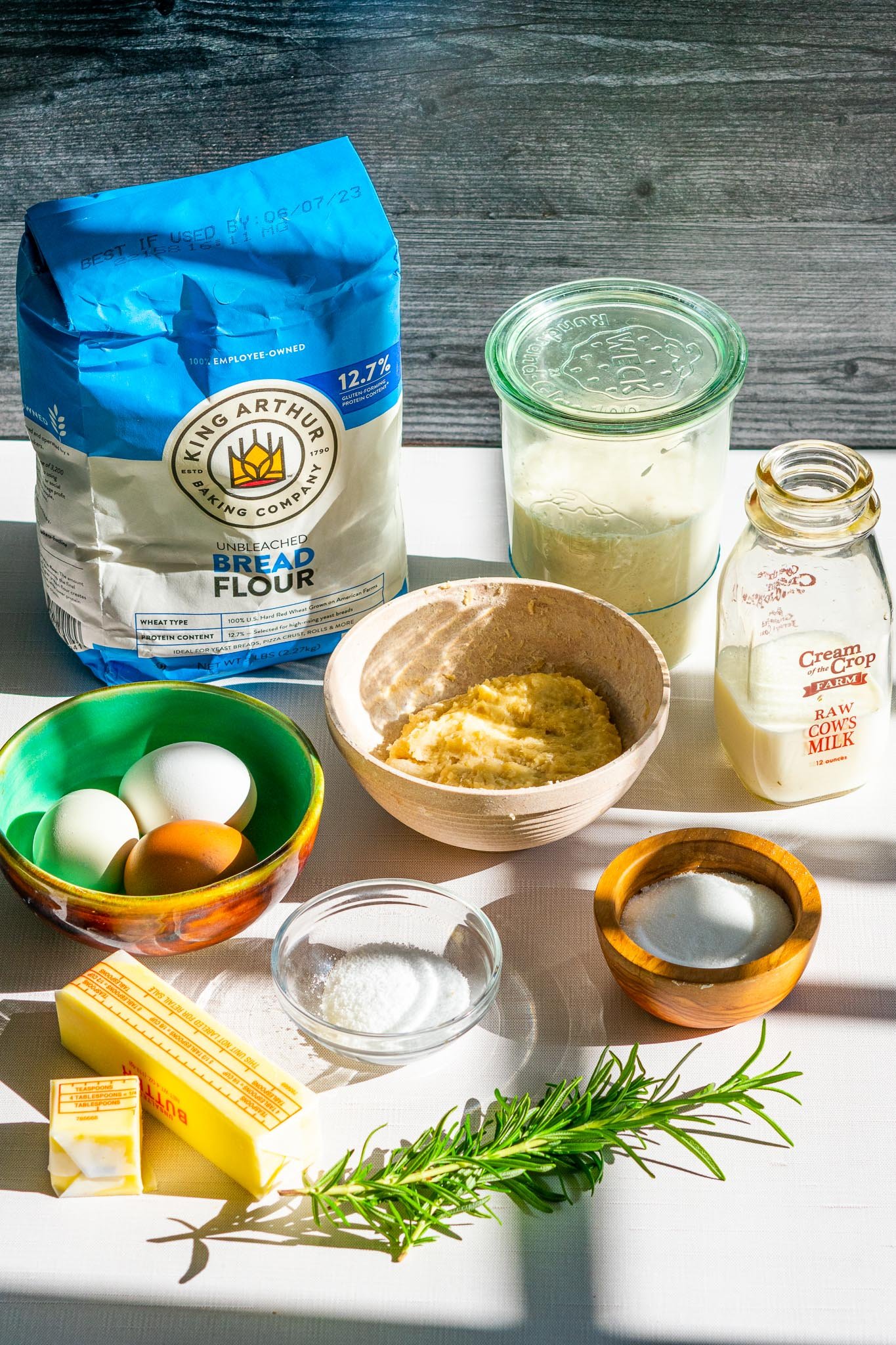
- Bread Flour
- Bread flour for dinner rolls helps the rolls rise taller and have a chewier texture. However, all-purpose flour will work for these rolls as well.
- Whole Milk
- Like my Sourdough Sandwich Bread, whole milk makes these dinner rolls richer, enhances the flavor, and aids in browning.
- If you don’t have whole milk, substitute it with another milk. You could even use a creamy nut milk, too, if you want to make this recipe vegan (along with vegan butter).
- Sourdough Starter
- Don’t have a sourdough starter? Learn How to Make a Sourdough Starter and make a stronger sourdough starter with my top sourdough starter tips.
- If you use sourdough discard, add a pinch of instant yeast to the recipe.
- Rosemary
- I incorporate fresh rosemary into the dough and sprinkle it on top of the rolls before they bake. Rosemary is my herb of choice for these rolls, creating an unmatched piney aroma as they bake.
- If you don’t have fresh rosemary, use half the amount in dried rosemary.
- Substitute the rosemary it with another herb like sage, thyme, or chives, or skip the herbs altogether!
- Granulated sugar
- The small amount of granulated sugar in the recipe adds a subtle sweetness to the otherwise savory rolls. If you want to leave out, you can, or substitute with another sugar such as coconut sugar.
- Salt
- Eggs, for richness, to tenderize, and create a pillowy dinner roll.
- Unsalted butter (room temperature)
- The butter must be room temperature when making a brioche dough like this. If the butter is cold, it will not mix into the dough well, and if it’s too warm, it will be a sloppy mess!
- Flaky salt, for topping (optional)
👨🏫 Baker’s Percentage Chart
I include a baker’s percentage chart to easily scale a recipe up or down. With baker’s percentages, the total weight of all flour in the recipe is 100%.
I also include the prefermented flour from the levain in this flour weight. Finally, I note the ingredients proportionally to the total weight of flour. That’s why the percentages below will total more than 100%.
If you want to learn more, the King Arthur website has a more detailed reference page on why and how baker’s percentages are calculated.
| Ingredients | Weight | Baker’s Percentage |
|---|---|---|
| Bread Flour | 636 grams (includes 80g levain and 116g for yudane) | 100% |
| Water | 196 grams (includes 80g levain and 116g for yudane) | 25.6% |
| Sea Salt | 12 grams | 1.9% |
| Granulated Sugar | 50 grams | 7.9% |
| Sourdough starter | 80 grams (all for levain) | 12.6% |
| Whole Milk | 118 grams | 18.5% |
| 3 Eggs | 150 grams | 23.6% |
| Unsalted Butter | 142 grams (10 TBS) | 22.3% |
👨🍳 How to Make Sourdough Dinner Rolls with Rosemary
Follow this visual and detailed guide to help you make the best Sourdough Dinner Rolls.
1. Build the Levain
Set aside the butter, eggs, and whole milk to come to room temperature.
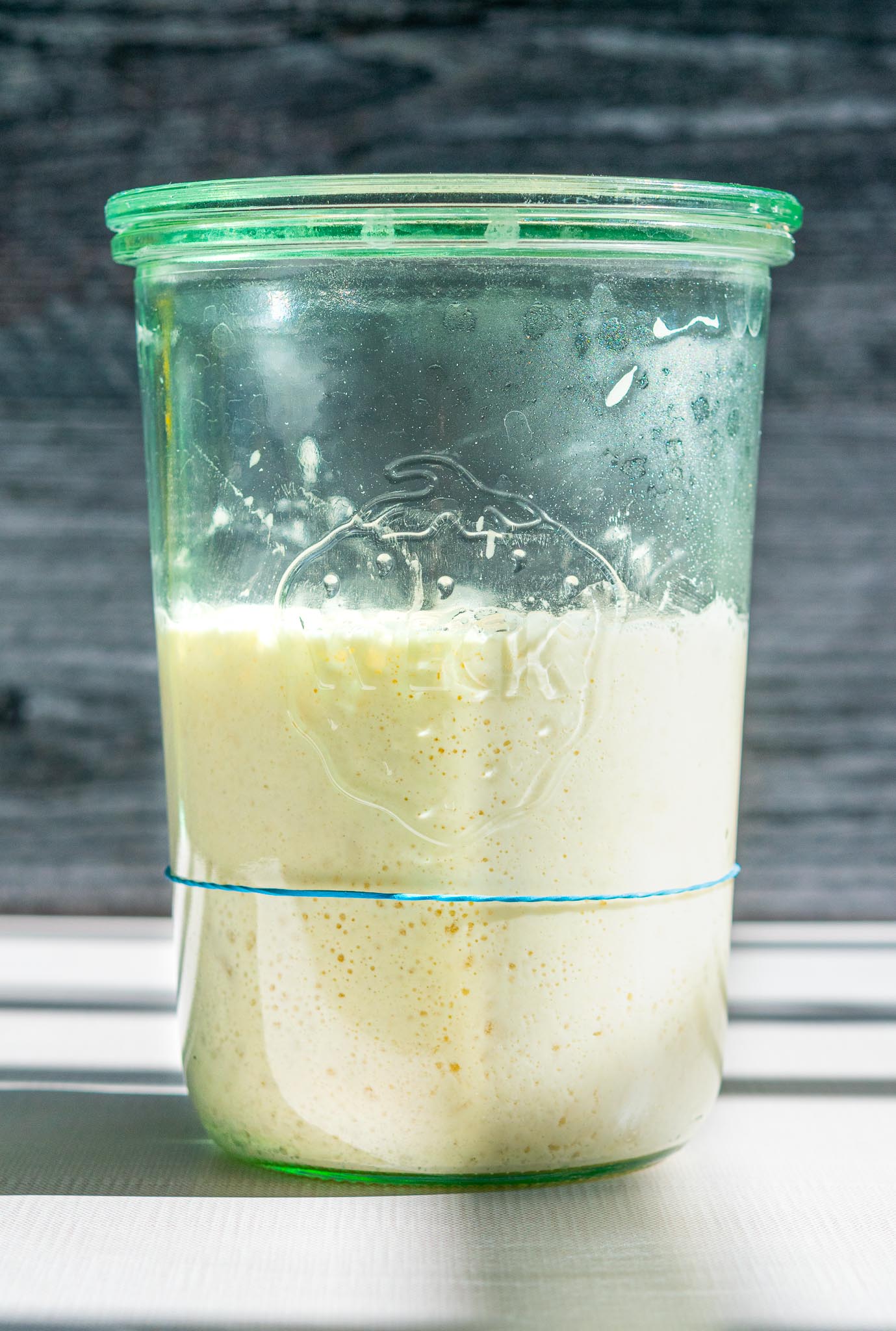
Mix the active sourdough starter, bread flour, and water for the levain in an empty jar.
Cover and set in a warm location (between 75-80ºF) for about five hours until it doubles, is bubbly and ripe.
Note: I almost always make a separate levain for yeasted recipes. Learn more about the differences between a sourdough starter and levain.
If you prefer to skip the levain, use an equal amount of ripe sourdough starter when you add the wet ingredients.
2. Make Yudane
Make the yudane after you mix the levain.
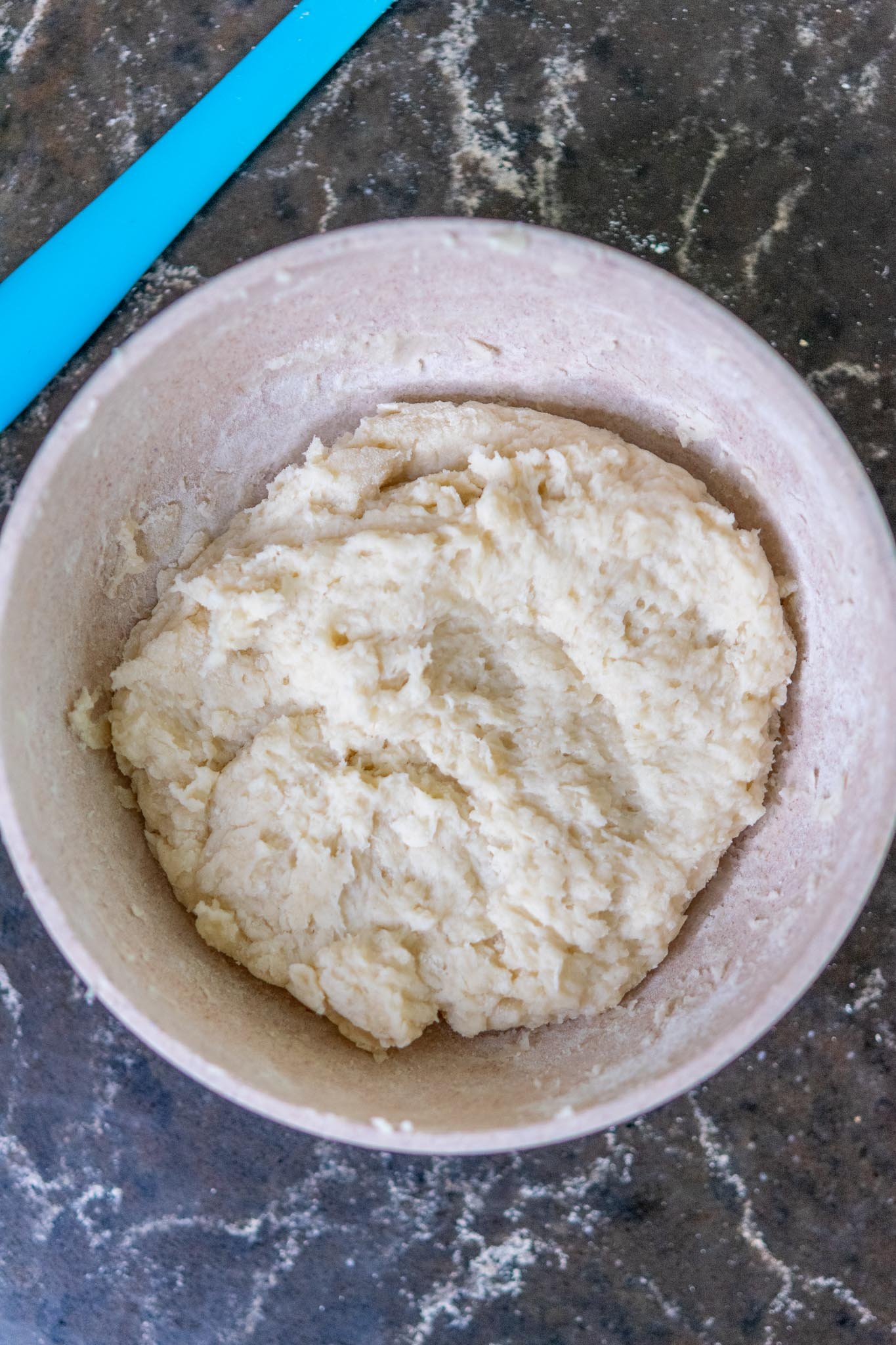
Place the bread flour in a small, heatproof bowl and boil an equal amount of water in a tea kettle or on a stovetop. Immediately pour the boiling water over the flour.
With a silicone spatula, mix the flour and boiling water until the flour is gelatinized, thoroughly mixed, and forms a thick paste.
Cover and let it cool until your levain is ripe. It’s that easy! This will make these sourdough dinner rolls soft and fluffy.
3. Mix the Dough
Once the levain is ready, add all the dough ingredients (minus the butter), yudane, and levain into the bowl of a stand mixer fitted with the bread hook attachment.
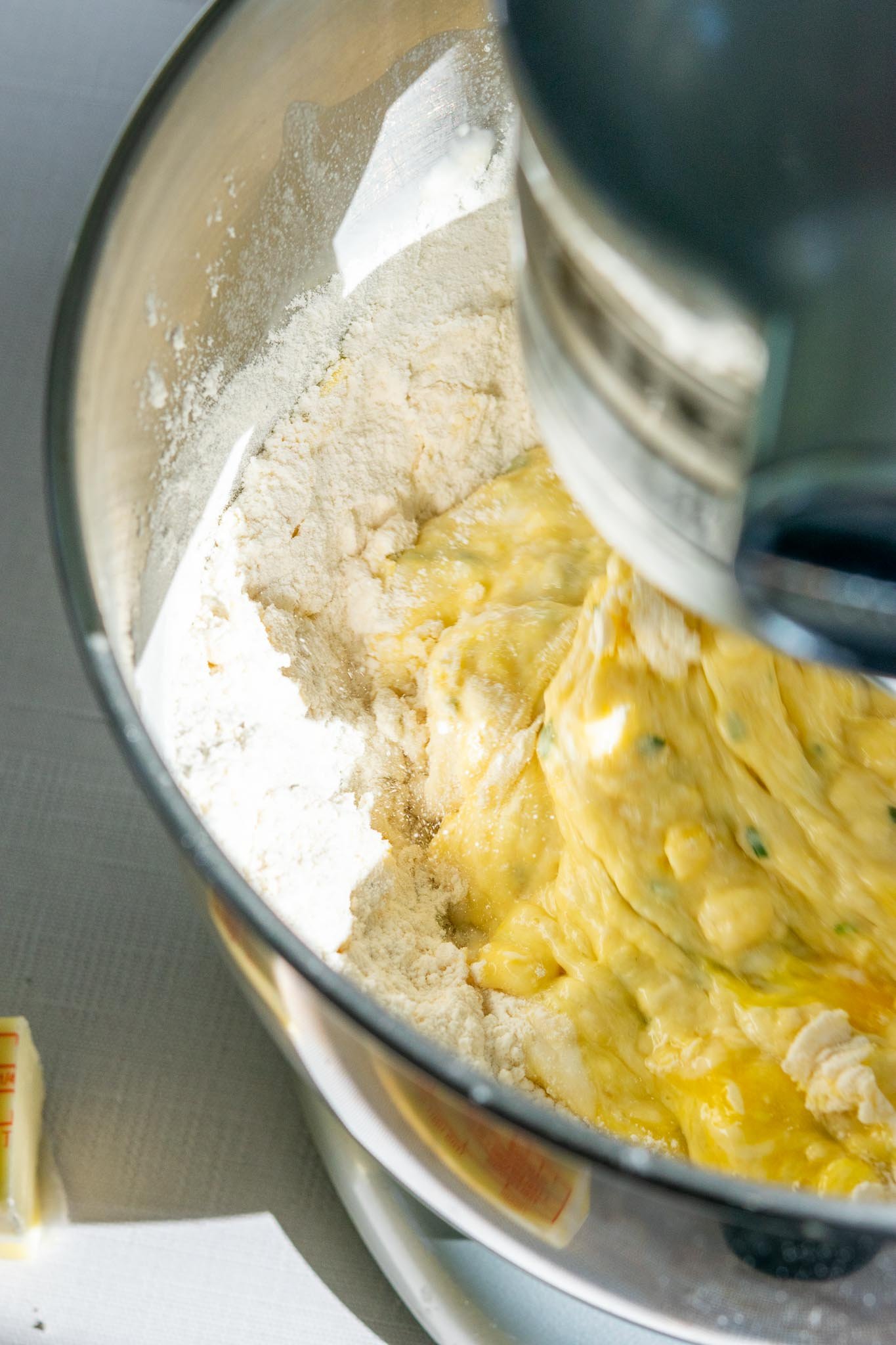
On low speed, begin to mix the dough.
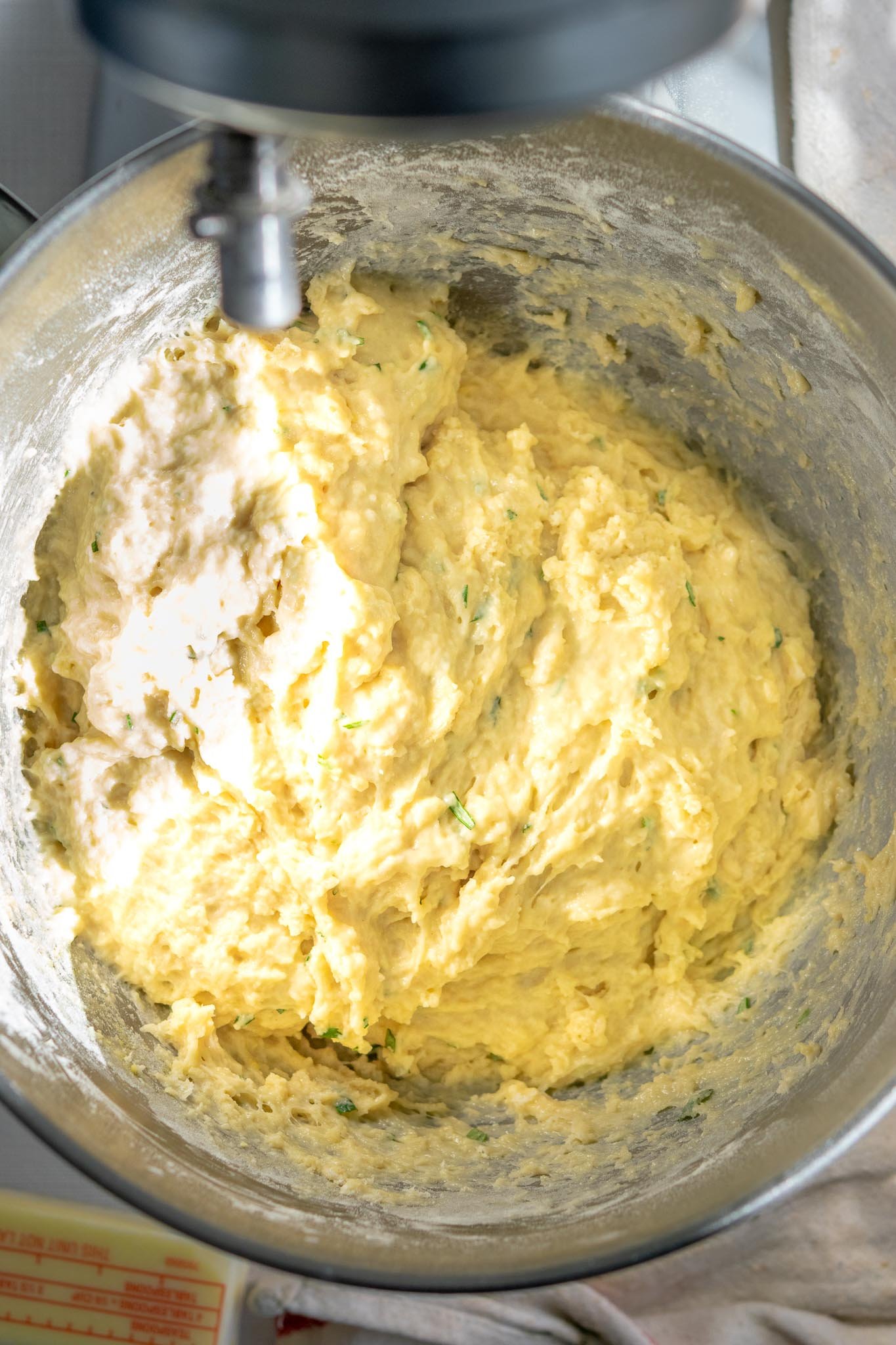
Mix for a few minutes until the flour is incorporated. The dough will still be very rough and shaggy. Cover the bowl with a towel and let it rest for ten minutes. This rest will help relax some of the gluten and hydrate the flour like Sourdough Autolyse.
After the rest, mix on medium speed for about 5 minutes until the dough becomes more cohesive.
4. Add Butter & Mix
Slice the room-temperature unsalted butter.
With the mixer running on medium speed, add one tablespoon of butter at a time into the mixer until it is fully incorporated (30 seconds to a minute). Repeat and continue this process with the remaining pieces of butter.
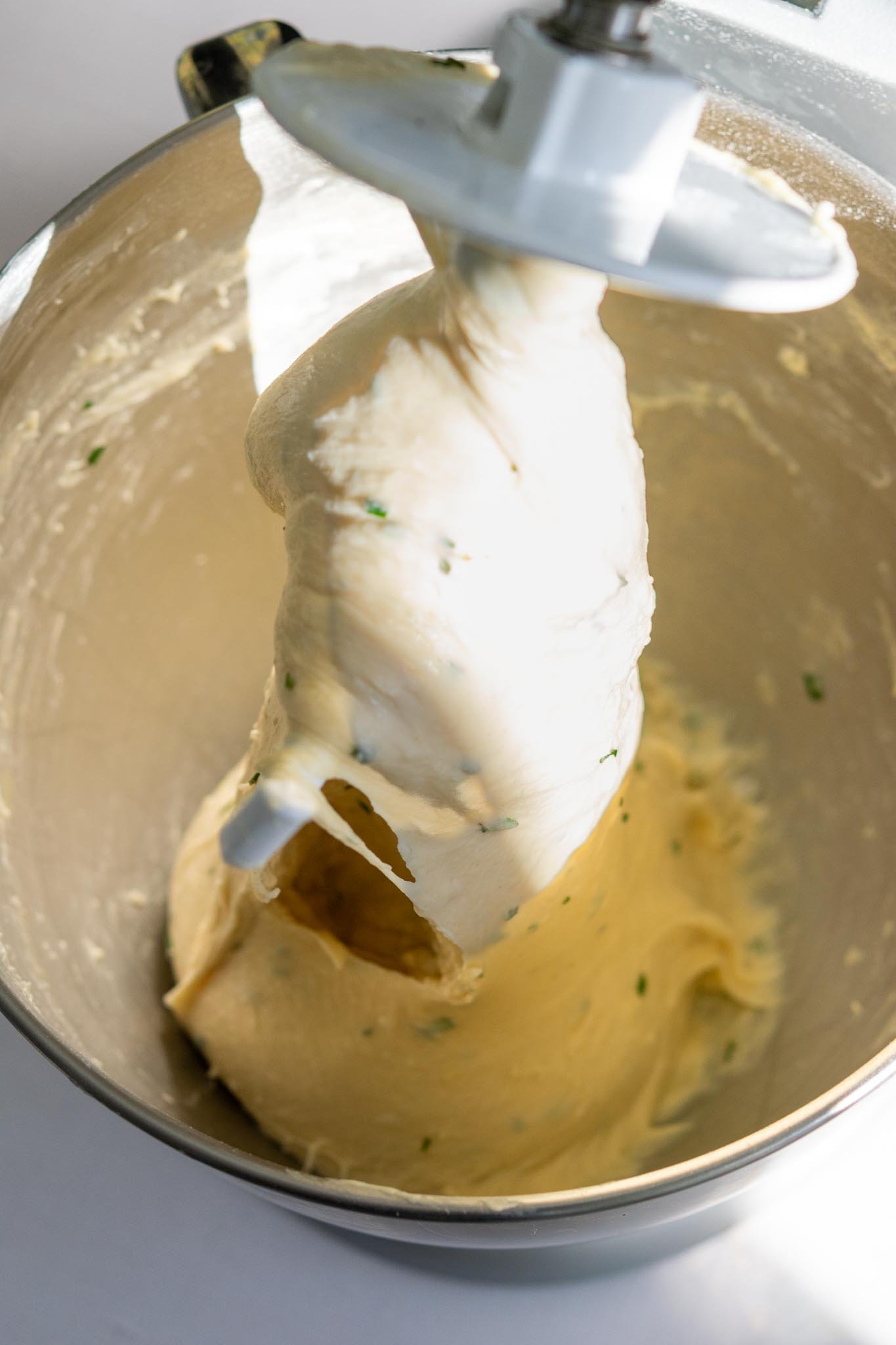
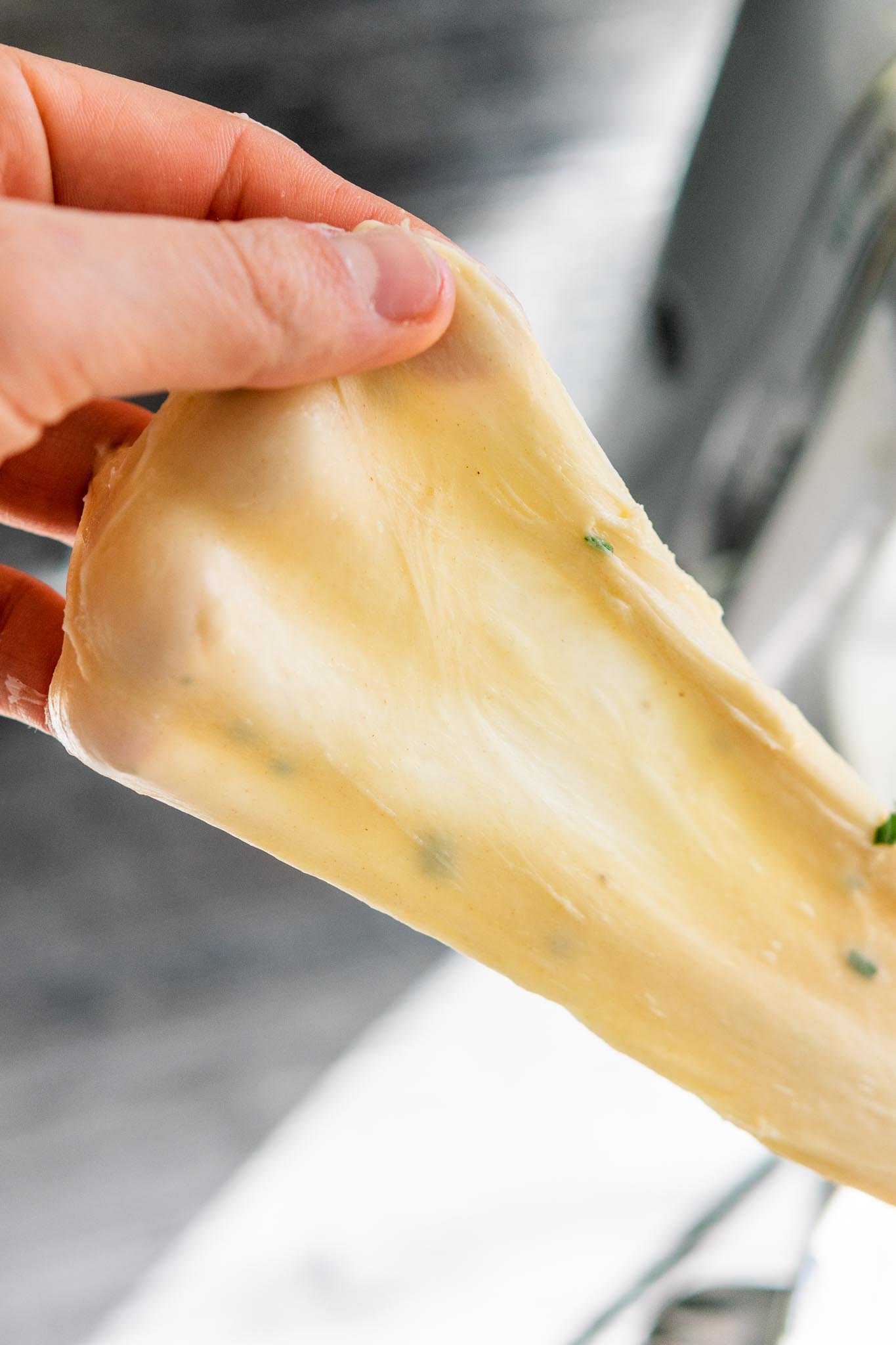
After all the butter is added, continue mixing the dough for at least five more minutes, until it passes the windowpane test. The dough should be silky smooth and slide off the dough hook.
Properly mixed brioche is the key to these soft sourdough rolls.
Note: If your butter is too warm, it will not mix into the dough, and it will remain greasy. Refrigerate it for a few minutes to harden up. Conversely, if the butter is taking too long to incorporate and is too cold, zap it in the microwave at half-power for 10-second intervals.
5. Bulk Fermentation
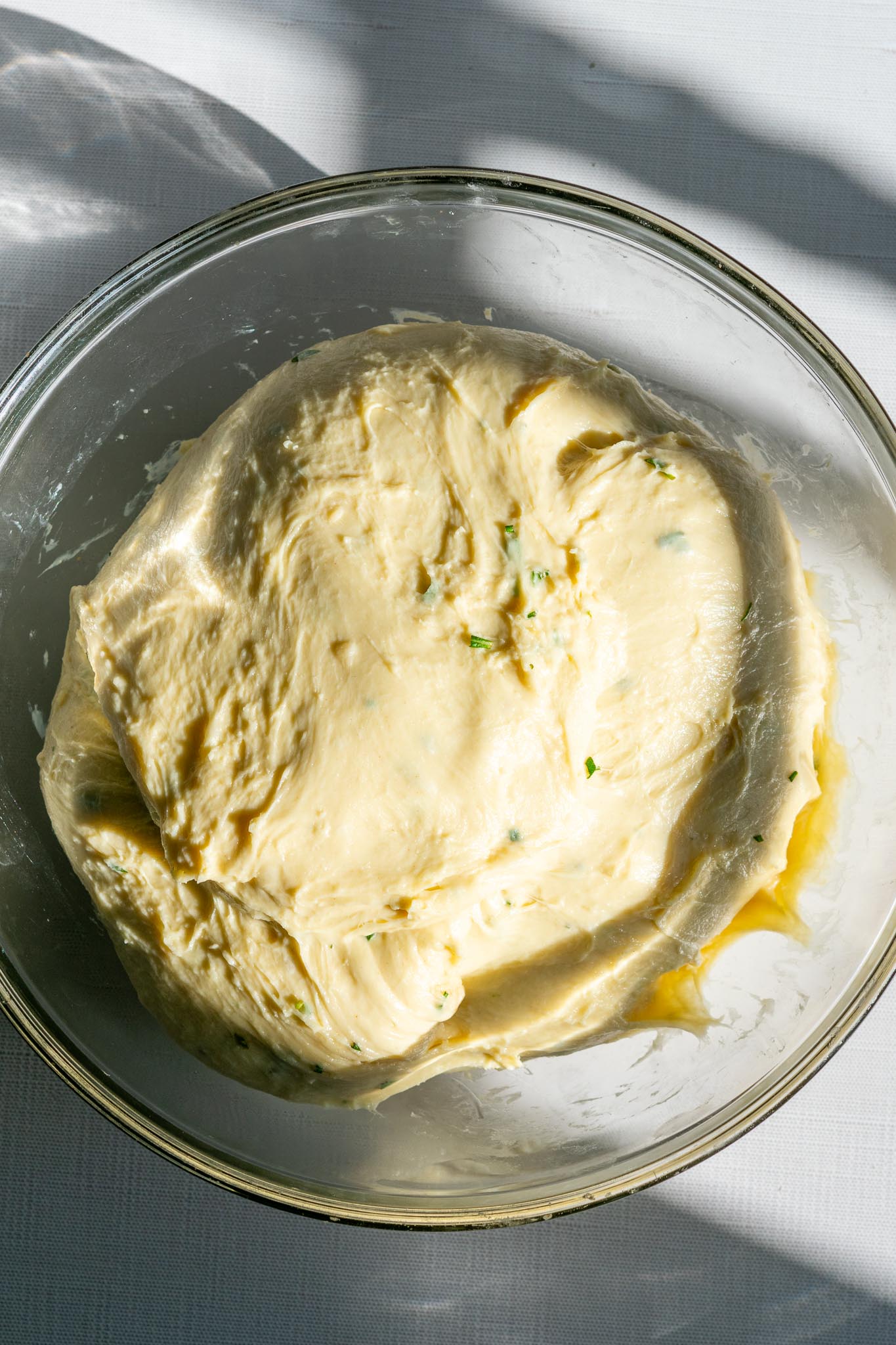
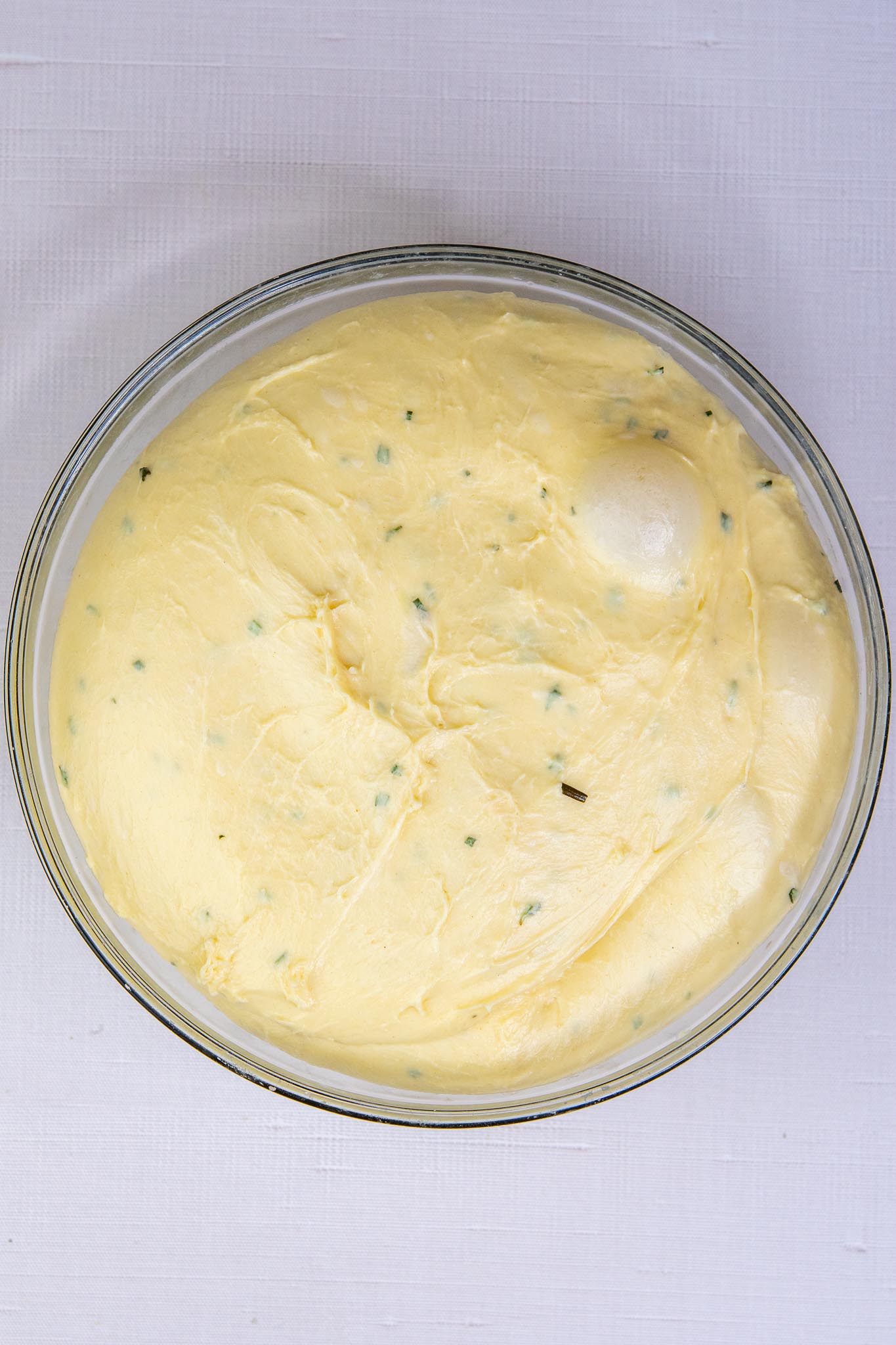
Transfer the dough to a medium mixing bowl, gather it into a round, cover it, and place it in a warm location to proof.
Note: My Brød & Taylor proofer keeps the dough at a consistent temperature.
At 78ºF, bulk fermentation (first proof) takes about 4 hours total.
If your dough and environment are colder, bulk fermentation will take longer. Conversely, in warmer conditions, bulk fermentation will be faster.
After one hour, perform one stretch and fold on the dough. This brioche dough benefits from the additional strength a simple stretch and fold provides.
To stretch and fold:
- Use your hand as pincers to pull up a portion of the dough.
- Lift the dough to stretch it, then fold it down in the middle of the bowl.
- Rotate the bowl 90º and repeat this motion three more times.
Bulk fermentation is complete when the dough is doubled, domed in the bowl, and there are visible bubbles on top of and around the dough.
6. Overnight Proof
Cover the bowl and place it in the refrigerator to proof overnight or for up to a couple of days.
Note: Proofing this dough overnight in the refrigerator adds a more complex flavor to the overnight sourdough dinner rolls. Furthermore, the cold dough is easier to divide and shape. It also allows you to bake the rolls at a later time according to your own schedule.
However, if you want to skip the overnight proof to make same-day sourdough dinner rolls, you can. Move on to dividing and shaping your rolls next and cut the final proof time down to 2-3 hours or until ready to bake.
7. Divide and Shape the Sourdough Dinner Rolls
Butter or spray the baking pan.
Take the chilled dough out of the refrigerator, and gently punch it down with your hand to degas it.
Divide Dough
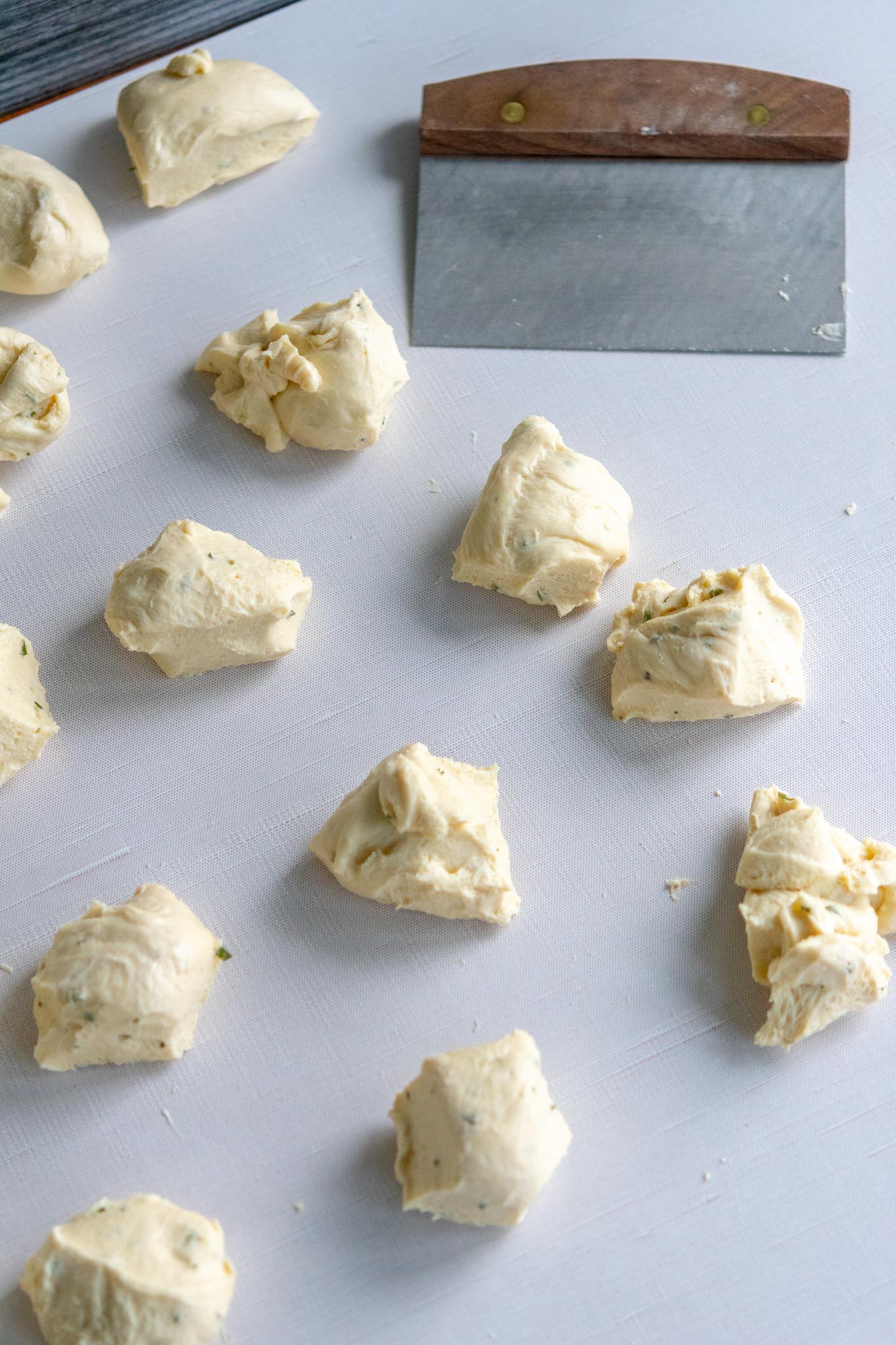
Turn the dough out onto a lightly floured work surface. It will be hardened up from the cold fat, but it should be easy to remove from the bowl. Use a bowl scraper to scrape any remaining sticky bits and place them on top of the dough.
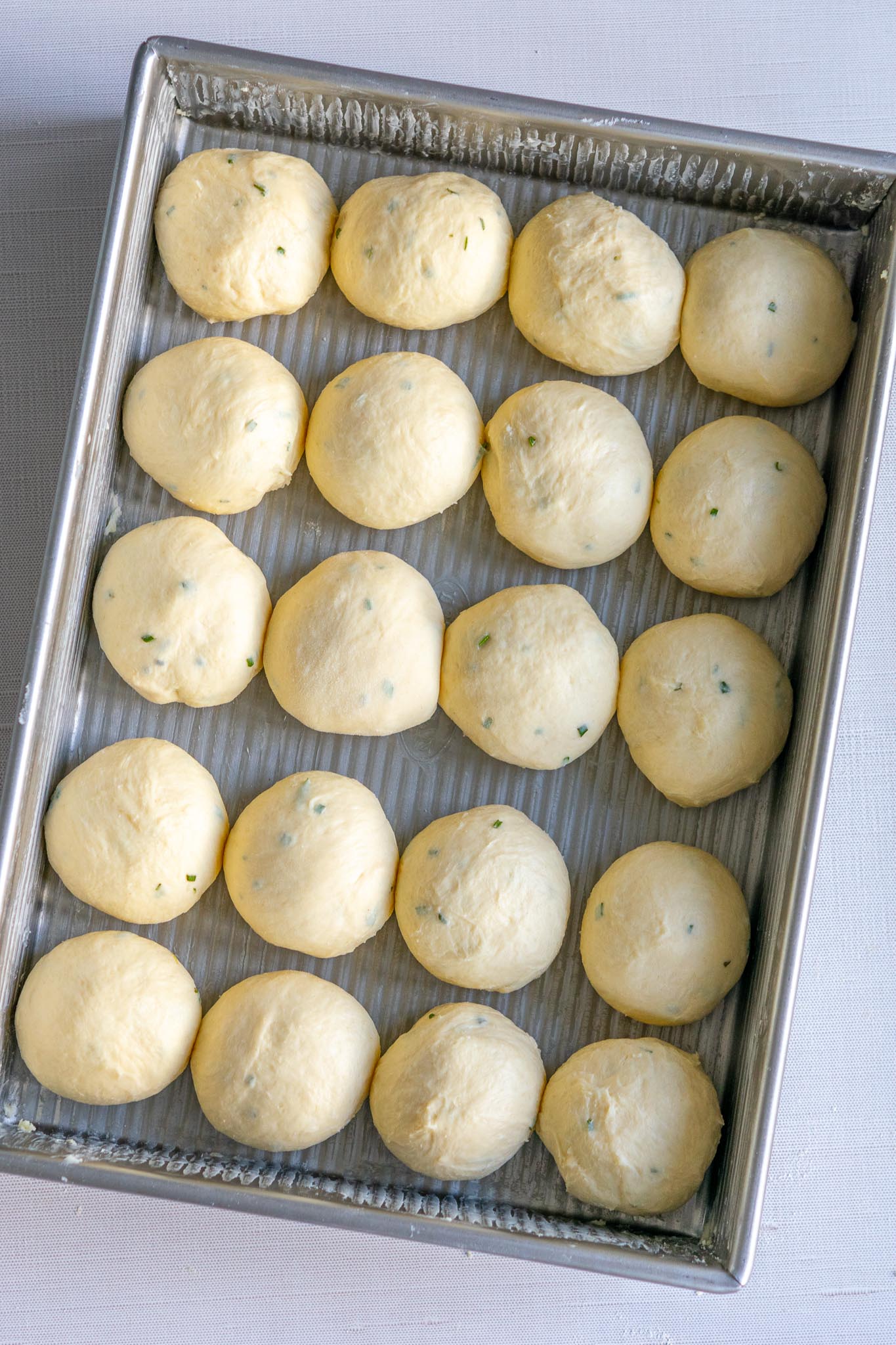
Weigh the entire dough on a baking scale. Divide the weight by 20. Each of your rolls should weigh this amount. My rolls weighed about 66 grams each.
Using a bench scraper, divide the dough into twenty equally sized pieces.
How to Shape Sourdough Dinner Rolls
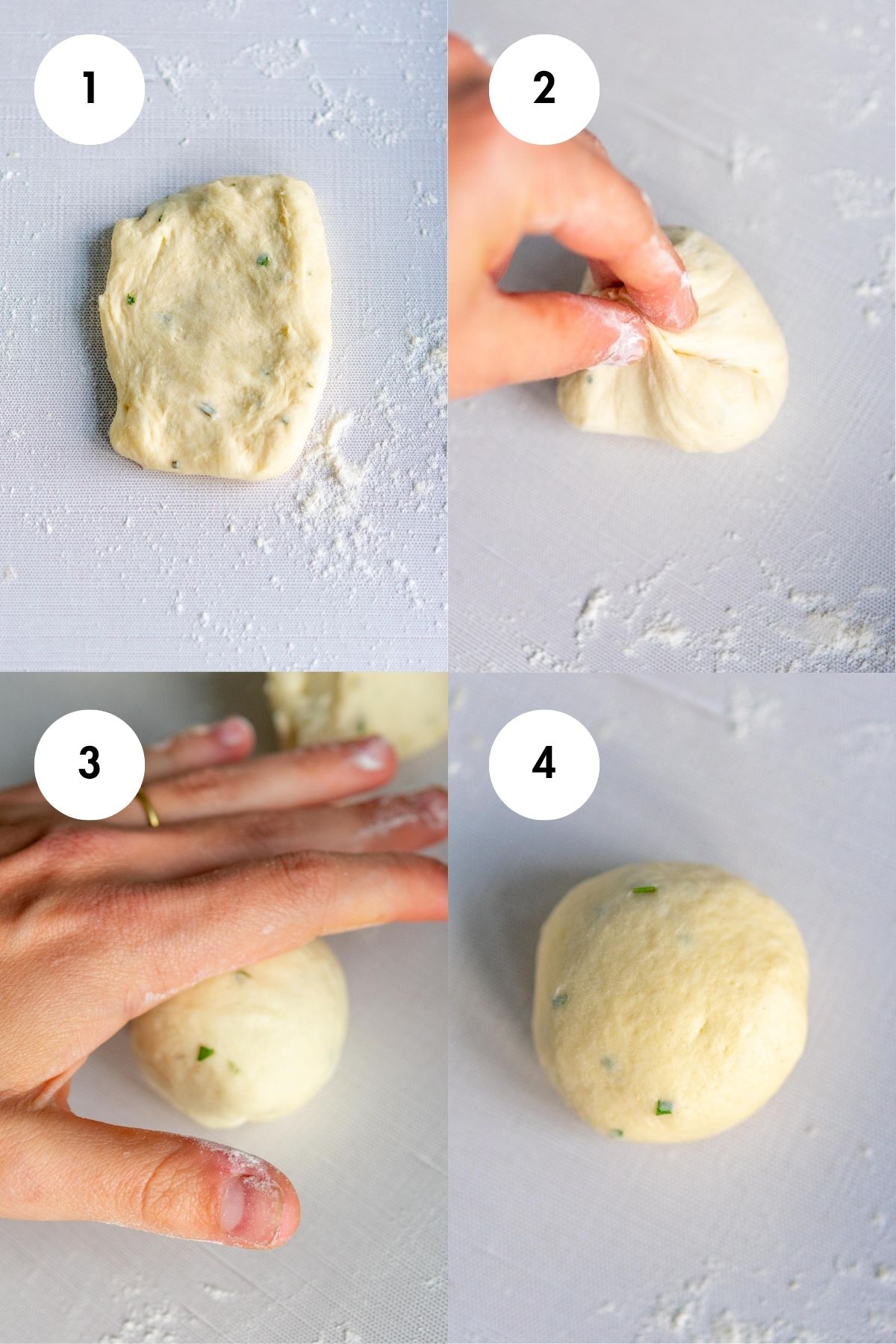
It couldn’t be easier to shape dinner rolls, and it doesn’t require any special equipment or much technique.
- Press one divided dinner roll into a flat rectangle or square on a lightly floured surface.
- Pinch the four corners of the dough together to form a small, dumpling-like ball.
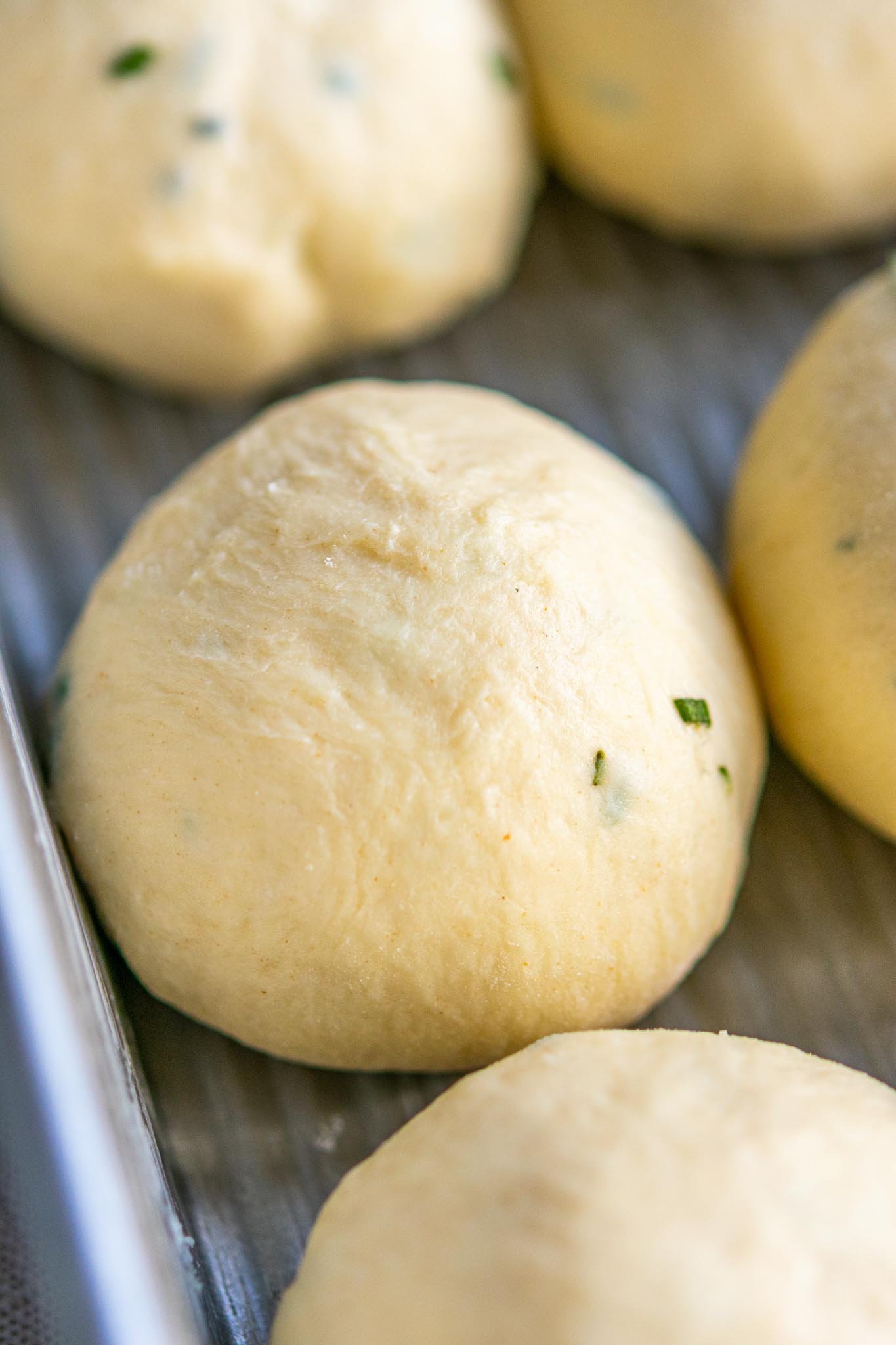
- Turn the ball over and roll it on a lightly floured surface to create surface tension until the dough comes together into a perfect sphere.
- Repeat with the remaining rolls.
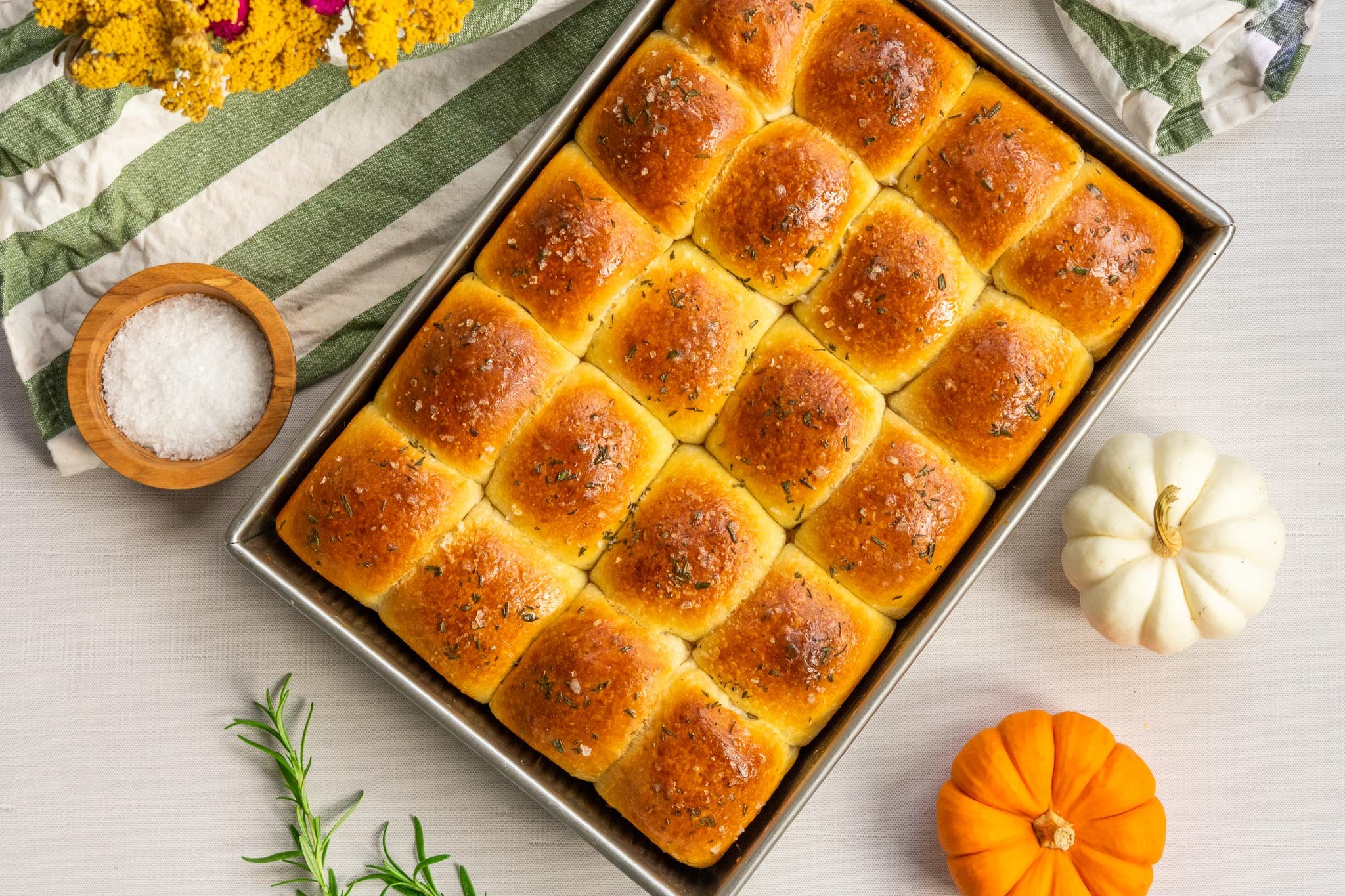
Space the rolls evenly in the baking pan, with five rows of four rolls each. The rolls should fit snugly in the pan, with a little space between them to allow for proofing.
At this point, you can refrigerate the dinner rolls before proofing for a day or you can proof them according to your schedule.
8. Final Proof
Cover the pan and place it in a warm location for the final proof (second rise).
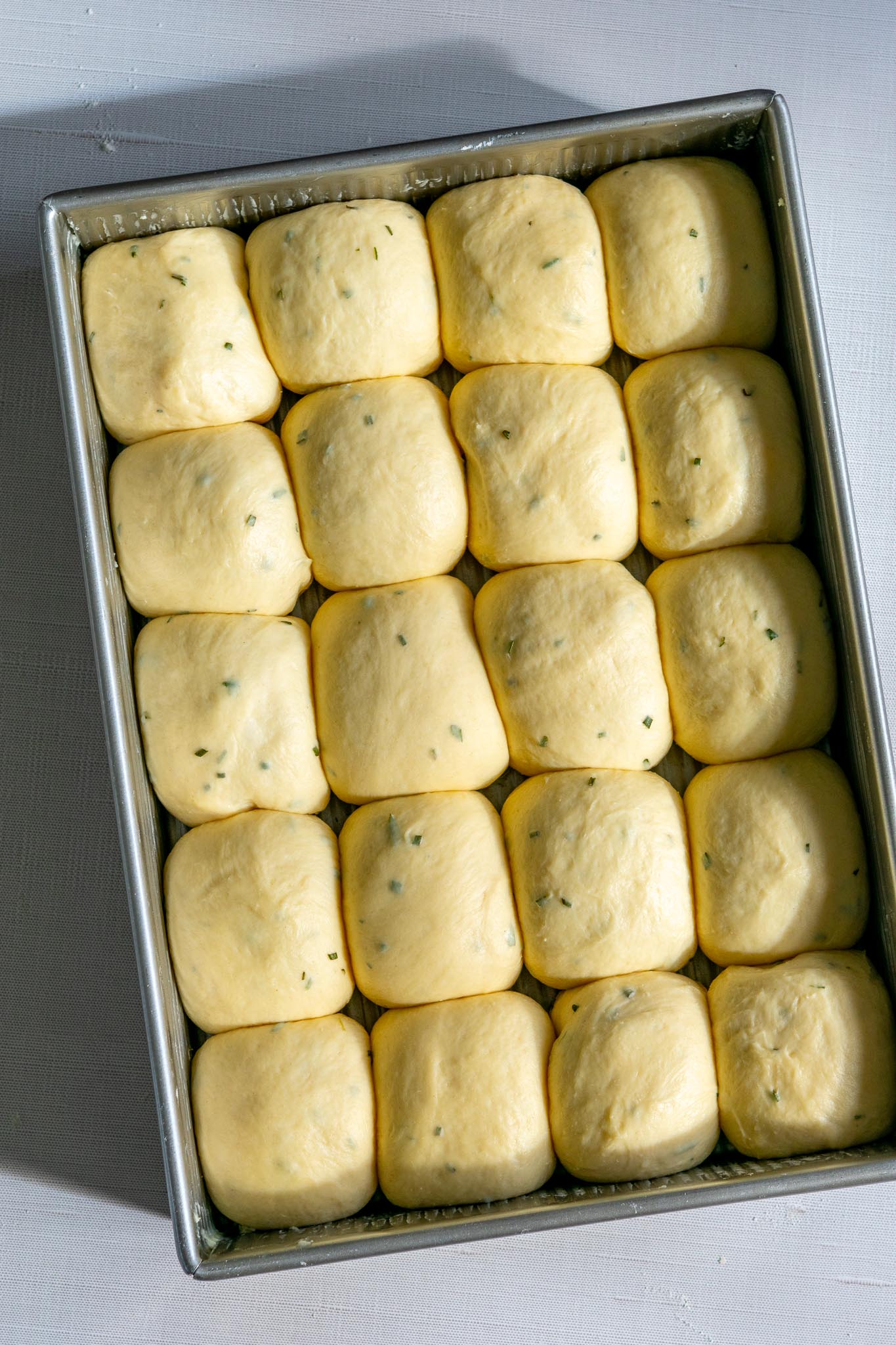
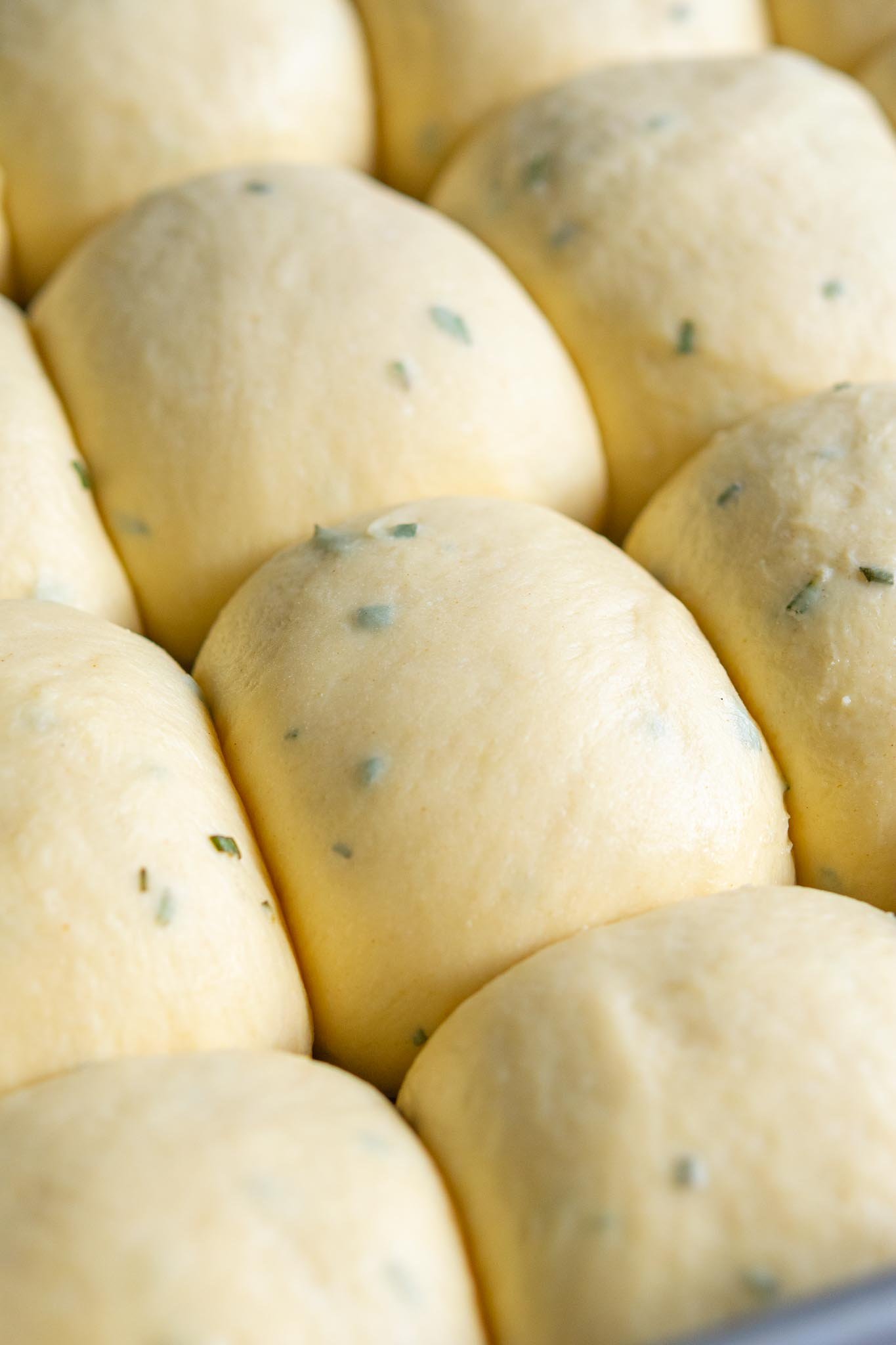
At 78ºF, the final proof should take about 4 hours. The dinner rolls are finished proofing when they’ve doubled in size, and they fill the pan.
To test if proofing is complete, use the finger poke test. First, poke a dinner roll with a floured finger. The rolls are properly proofed when the dough leaves a small indentation that slowly fills in. If the dough springs back immediately, they are under-proofed and need more time.
If you’re preparing the rolls ahead of time, you can cover them and place the pan in the refrigerator for baking later.
In this case, you may want to cut the final proof slightly shorter so they do not overproof in the refrigerator. This is a great option for prepping ahead of time for a Thanksgiving meal (maybe even with my Sourdough Stuffing with Fennel).
9. Bake
Near the end of proofing, preheat the oven to 375ºF (191ºC).
Make an egg wash by whisking one egg and a splash of water in a small bowl and brush on top of the rolls.
Sprinkle about a tablespoon of chopped, fresh rosemary and coarse flaky salt on top.
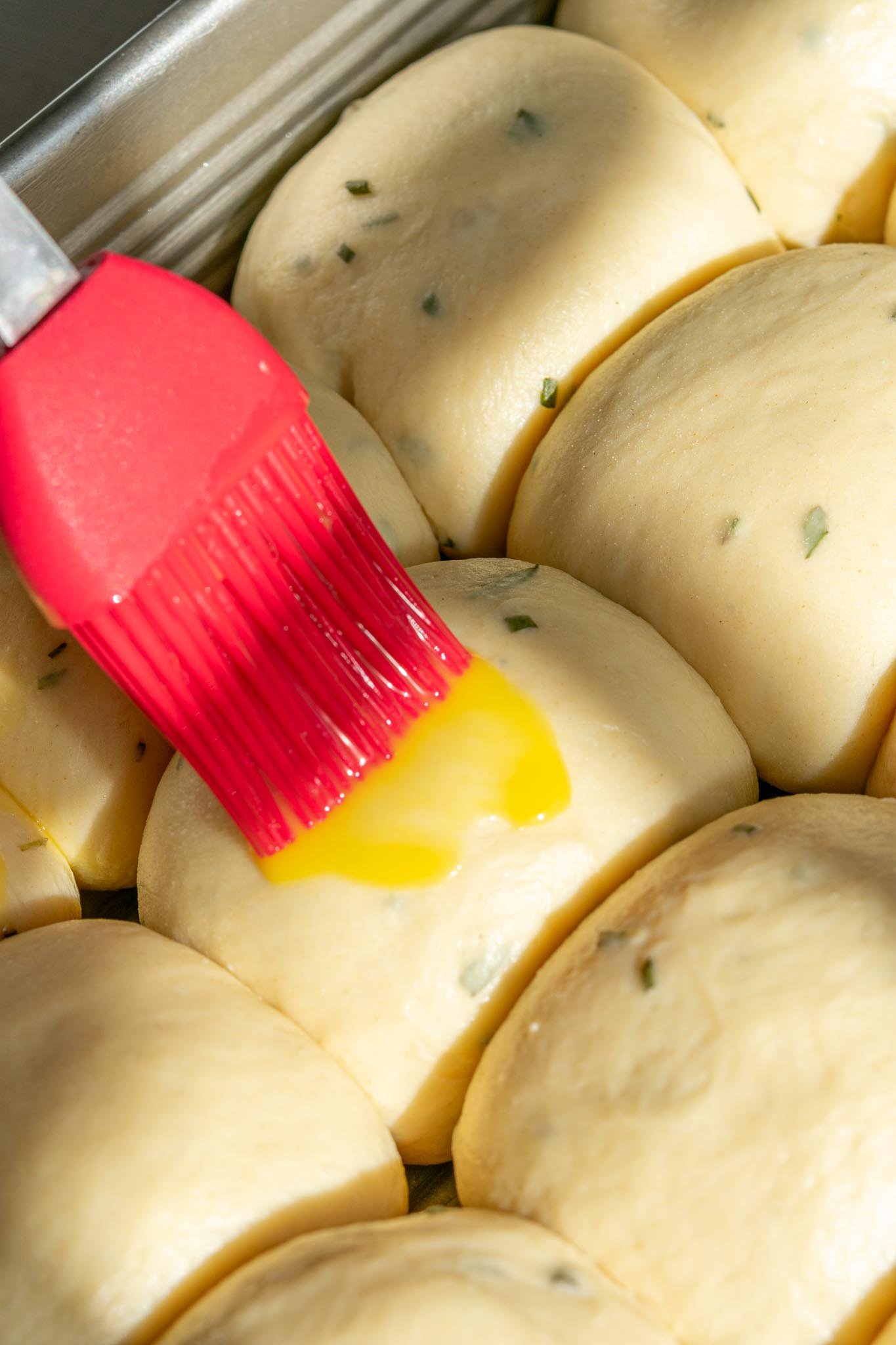
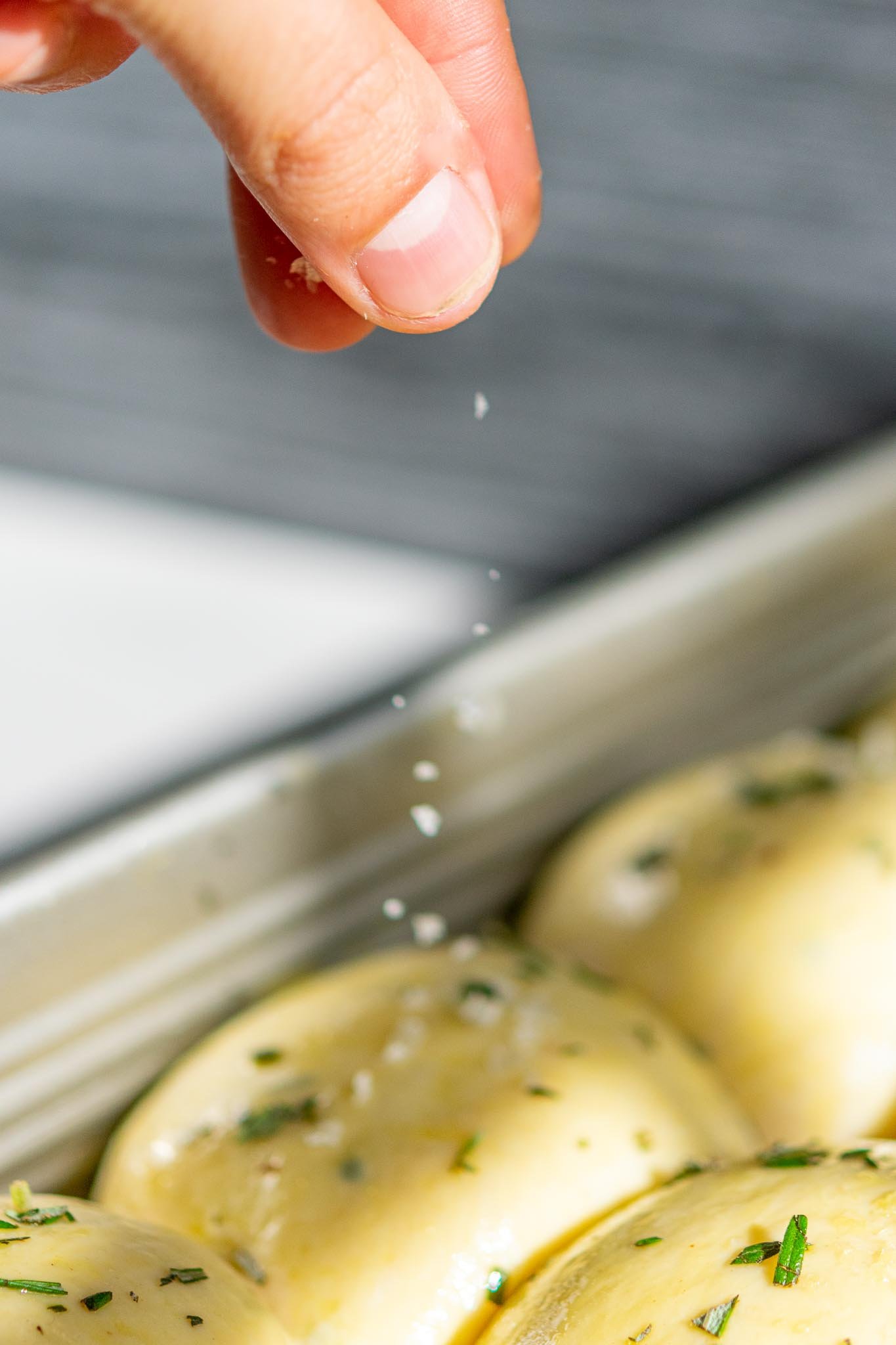
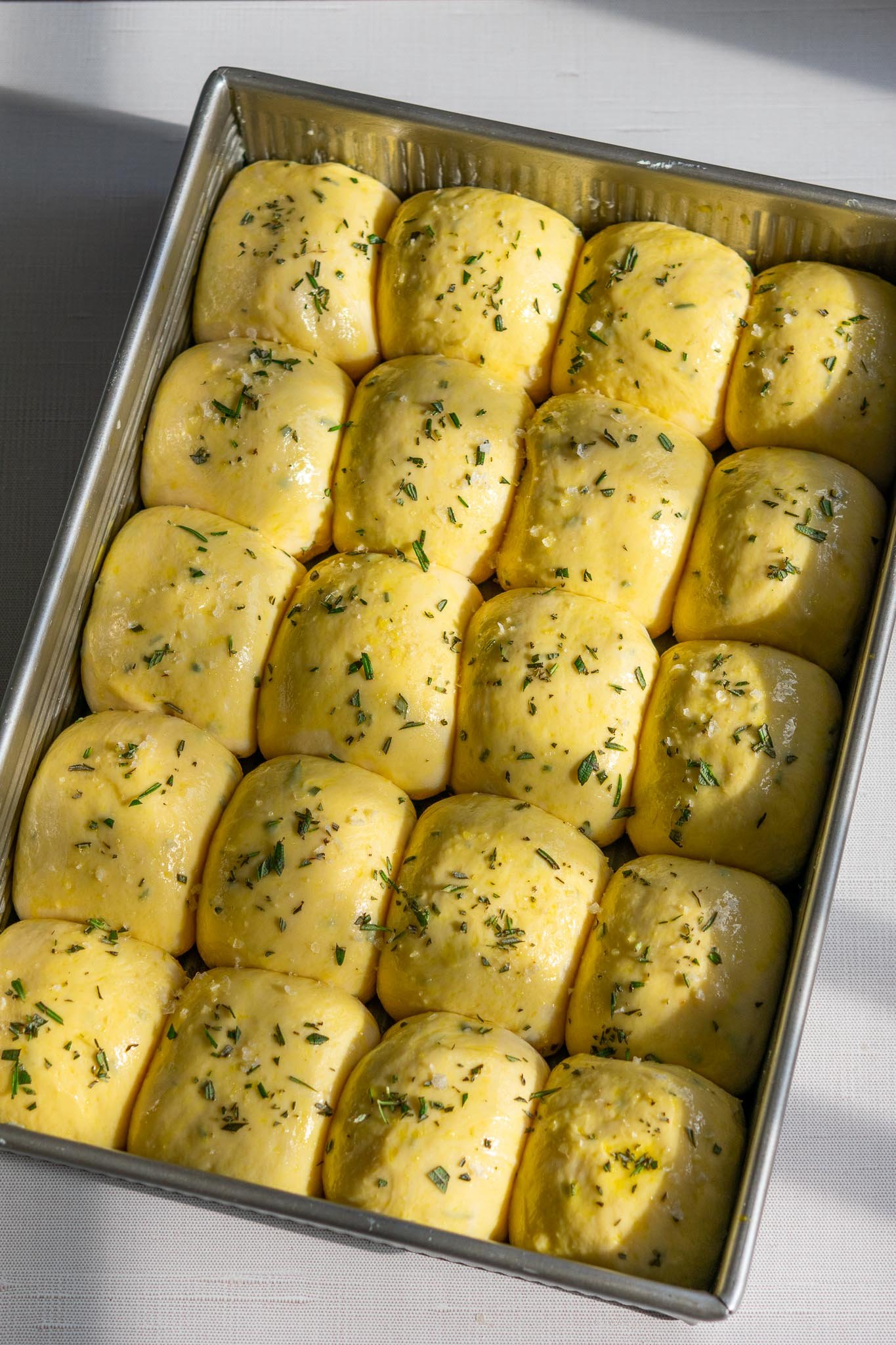
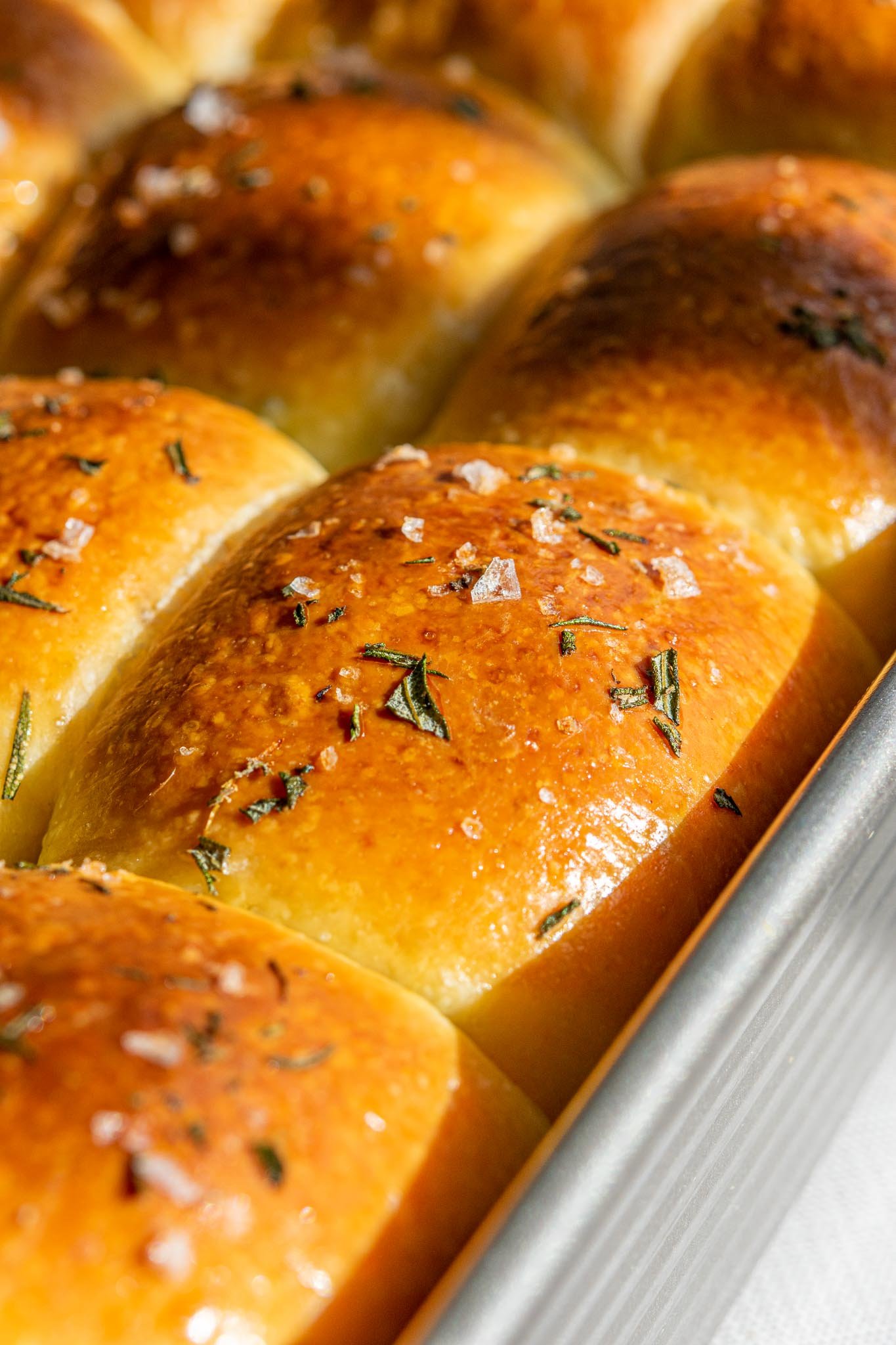
Bake for 25-28 minutes or until the tops are golden brown and the internal temperature of the rolls reads 200ºF (93ºC).
Cool the sourdough dinner rolls on a wire rack for at least 15 minutes before serving them warm.
If you want even more shine to your rolls, brush the warm dinner rolls with a tablespoon of melted butter while they are still in the pan.
Pull apart the warm rolls and devour them!
How to Serve
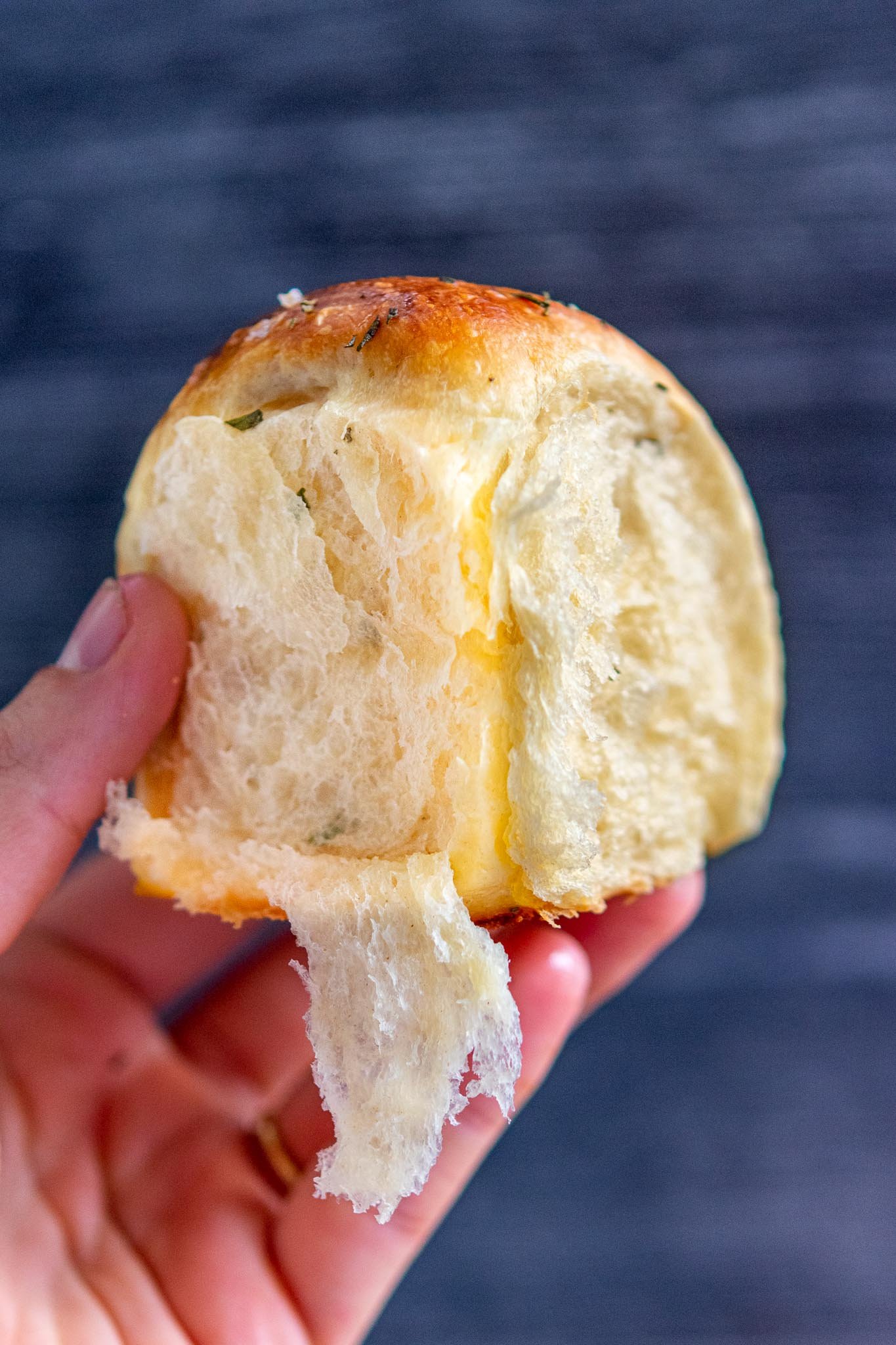
These sourdough dinner rolls have a pull-apart texture and are incredibly buttery, flaky, and soft.
This recipe yields 20 rolls, making them a perfect accompaniment to a Thanksgiving dinner, another holiday meal, or a weeknight dinner.
Additionally, it’s easy to halve the recipe to make 9-10 rolls for a smaller crowd..
Sourdough dinner rolls are excellent with soups, stews, or another hearty meal. They’re best served warm or reheated slightly.
I also enjoy dinner rolls for breakfast or brunch, toasted with a bit of fruit jam. To make small breakfast sandwiches, you could even slice them in half and fill them with scrambled eggs and cheese.
How to Store
Since these dinner rolls are made using the Yudane method, they store extremely well and longer than most dinner rolls.
These rosemary dinner rolls can be wrapped in aluminum foil and stored at room temperature for 4-5 days if you don’t eat them all first!
After a couple of days, they begin to stale and dry out slightly, so it’s best to reheat them in a toaster oven for a couple of minutes or in the microwave for a few seconds. Reheating the rolls will refresh them.
To freeze the sourdough dinner rolls, pull apart individual rolls once completely cooled and place them in a freezer-safe ziplock bag. Keep the rolls in the freezer for up to three months. Reheat the rolls in a 350ºF oven or in a toaster oven.
❓Sourdough Dinner Rolls FAQs
Can you halve this recipe?
Yes. It’s easy to halve this recipe to make nine dinner rolls. Nine rolls work best when halving this recipe instead of ten rolls.
Halve all of the ingredients and bake the rolls in a 9″ round cake pan (eight rolls around with one in the middle) or an 8×8 square pan (3×3 rows).
Can I make sourdough dinner rolls vegan?
Yes! Use a good vegan butter and replace the whole milk with unsweetened and plain plant-based milk. To substitute the eggs, use an egg replacer or a flax/chia egg.
Can I use another herb instead of rosemary?
Absolutely. Thyme, tarragon, or chives would be my first two herb replacements in these dinner rolls.
You can also skip the herbs altogether.
How do I substitute fresh rosemary with dried rosemary?
Use half the amount of dried rosemary to replace fresh rosemary. Dried herbs have a more concentrated flavor than fresh herbs since the water content has evaporated. Thus, use less dried herbs when cooking or baking when substituting for fresh herbs.
Can I use sourdough discard to make dinner rolls?
If you use sourdough discard in this recipe, you’ll need to add some instant yeast or active dry yeast to compensate for the lost leavening power in sourdough discard.
Can I add whole wheat flour to the dinner rolls?
Yes, substitute up to 25% of the bread flour with whole wheat flour.
⭐️⭐️⭐️⭐️⭐️
Please leave a rating, comment or question below! Tag me on Instagram or Facebook @SourdoughBrandon or PIN this recipe on Pinterest to come back to it later!

Sourdough Dinner Rolls with Rosemary
Equipment
- 1 Stand Mixer, recommended
- 1 Brød and Taylor Folding Proofer, optional but helpful
Ingredients
Levain
- 80 grams Sourdough Starter
- 80 grams Bread Flour
- 80 grams Water
Yudane
- 116 grams Bread Flour
- 116 grams Boiling Water
Sourdough Dinner Rolls with Rosemary
- 440 grams Bread Flour
- 50 grams Granulated Sugar
- 12 grams Sea Salt
- 1 TBS Fresh Rosemary, 3 sprigs, or 1 ½ tsp dried
- Levain, see above, or 240g of active sourdough starter
- Yudane, see above
- 118 grams Whole Milk, room temperature
- 3 Eggs, room temperature
- 142 grams Unsalted Butter, 10 TBS, room temperature
Egg Wash and Topping
- 1 Egg
- 1 tsp Water
- 2 tsp Fresh Rosemary
- Flaky Salt, optional
Instructions
- Build the Levain:In a clean jar, mix the sourdough starter, bread flour, and water.Cover and set in a warm location (between 75-80ºF) for about five hours until it is at least doubled and bubbly.Alternatively, skip this step and use 240g of active sourdough starter to mix in your dough.80 grams Sourdough Starter, 80 grams Bread Flour, 80 grams Water
- Make Yudane:Immediately after making the levain, make the yudane. This will help make your dinner rolls extremely soft and fluffy.Place the bread flour in a small, heatproof bowl and pour the boiling water on top of the flour.With a silicone spatula, mix together the flour and boiling water until the flour is gelatinized and forms a thick paste.Cover and let it cool until your levain is ripe.116 grams Bread Flour, 116 grams Boiling Water
- Mix the Dough:Once the levain is ripe, pour all of the dough ingredients (including the levain and yudane) except the butter into the bowl of a stand mixer with the bread hook attachment.Mix on low speed for a few minutes until the flour is incorporated and the dough is rough and shaggy. Cover the bowl with a towel and let it rest for 10 minutes.Mix on medium speed for 5 minutes until the dough becomes more cohesive.440 grams Bread Flour, 50 grams Granulated Sugar, 12 grams Sea Salt, 1 TBS Fresh Rosemary, Levain, Yudane, 118 grams Whole Milk, 3 Eggs
- Add the Butter and Mix:Slice the room-temperature butter into ten tablespoon-sized pieces. Continuing to mix the dough on medium speed, add one tablespoon of butter to the bowl at a time until it is fully incorporated into the dough. Repeat with the remaining pieces of butter (about 10 minutes in total).Continue to mix the dough for at least five more minutes until the dough passes the windowpane test, is silky smooth, and easily slides off of the dough hook.142 grams Unsalted Butter
- Bulk Fermentation:Transfer the dough to a medium bowl, gather it into a round, cover it, and place it in a warm location to proof. At 78ºF, bulk fermentation takes about 4 hours total.After one hour, perform one stretch and fold on the dough. Rest for the remainder of bulk fermentation.Bulk fermentation is complete when the dough is doubled, domed in the bowl, and there are visible bubbles on top of and around the dough.
- Overnight Proof:Cover the bowl and place it into a refrigerator to proof overnight, 8-12 hours.
- Divide and Shape the Dinner Rolls:The next day, butter or grease your baking pan to prep it.Remove the dough from the refrigerator and use your hand to punch it down and degas it.Weigh the dough and divide the total weight by 20. Use a bench scraper to divide the dough into 20 equal-sized pieces (mine typically are about 66 grams each).On a lightly floured surface, press one piece of divided dough into a flat square. Pinch the four corners of the dough into the center of the square like a dumpling. Turn it over and use a hand to quickly roll it on the surface to create tension and create a sphere.Repeat with the remaining rolls. Space the 20 rolls evenly in the baking pan in 5×4 rows.
- Final Proof:Cover the baking pan and place in a warm location for the final proof.At 78ºF, the final proof takes about 4 hours. The rolls are finished proofing when they've doubled in size and fill the pan. If you poke the rolls with a floured finger, they should leave a slight indentation and feel full of air.
- Bake:Near the end of proofing, preheat the oven to 375ºF (191ºC).Make the egg wash by whisking one egg and a splash of water in a small bowl. Brush the rolls with the egg wash and sprinkle flaky salt and additional fresh rosemary on top of the rolls.Bake the rolls for 25-28 minutes or until the tops are golden brown and. the internal temperature reads 200ºF (93ºC).Cool on a wire rack for at least 15 minutes before pulling apart and enjoying them warm! For more shine, brush melted butter on top of the warm dinner rolls.1 Egg, 1 tsp Water, 2 tsp Fresh Rosemary, Flaky Salt
Notes
- Try to keep the dough at a constant, warm temperature (between 75-80ºF) as much as possible throughout fermentation. I use the Brød and Taylor bread proofer to keep my dough at a constant 78ºF. If your dough and environment are cooler, bulk fermentation will take longer. Conversely, in warmer conditions, the dough will ferment faster.
- View my guide above for more detailed instructions including photos of each recipe step.





My dough is in the fridge, til the morning. I’m wondering if this dough could be used for hamburger buns?
You can! I have a Sourdough Hamburger Buns recipe too.