
Sourdough Pumpkin Cinnamon Swirl Bread
This post may contain affiliate links for products and ingredients I use and recommend. For more information, see my affiliate disclosures.
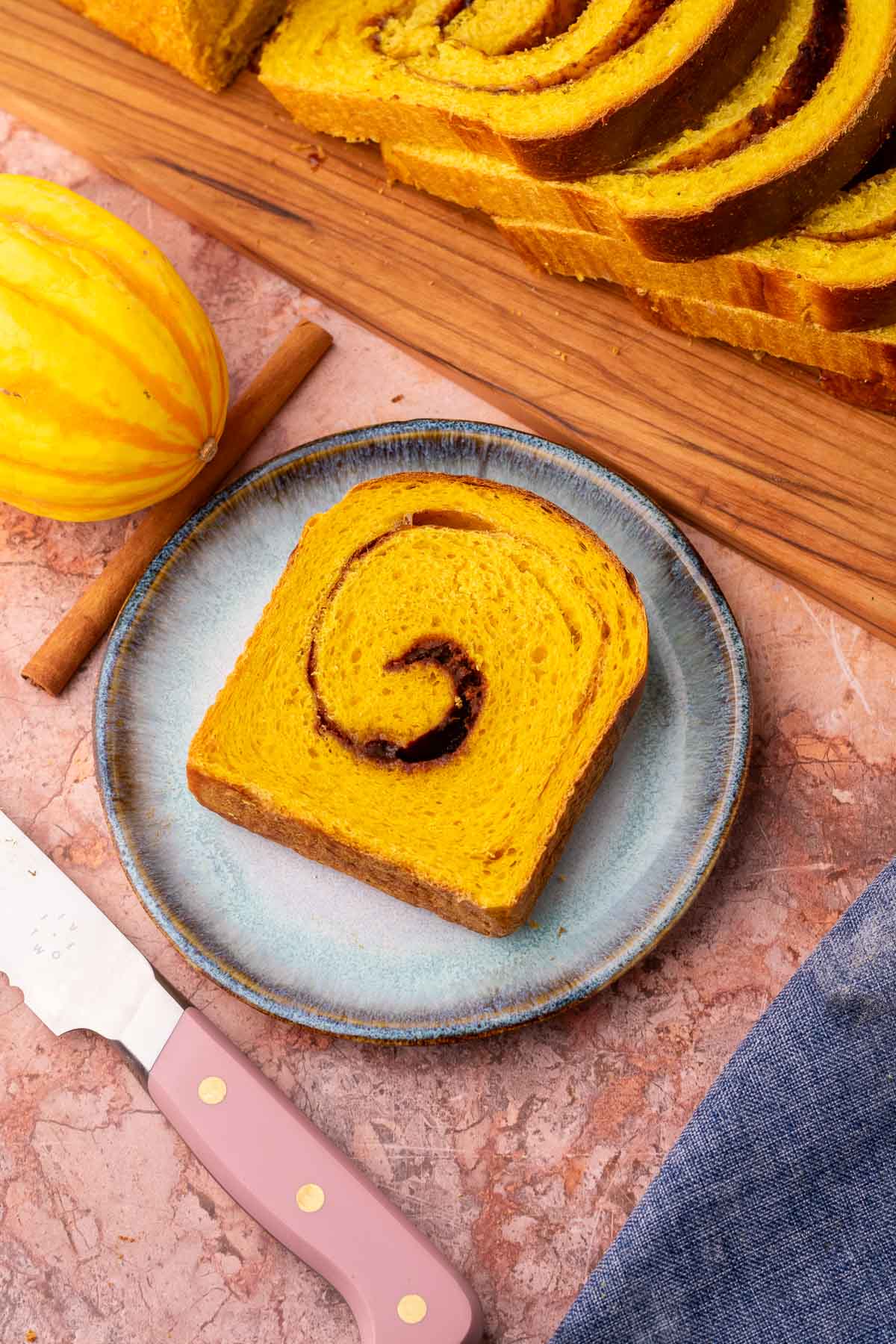
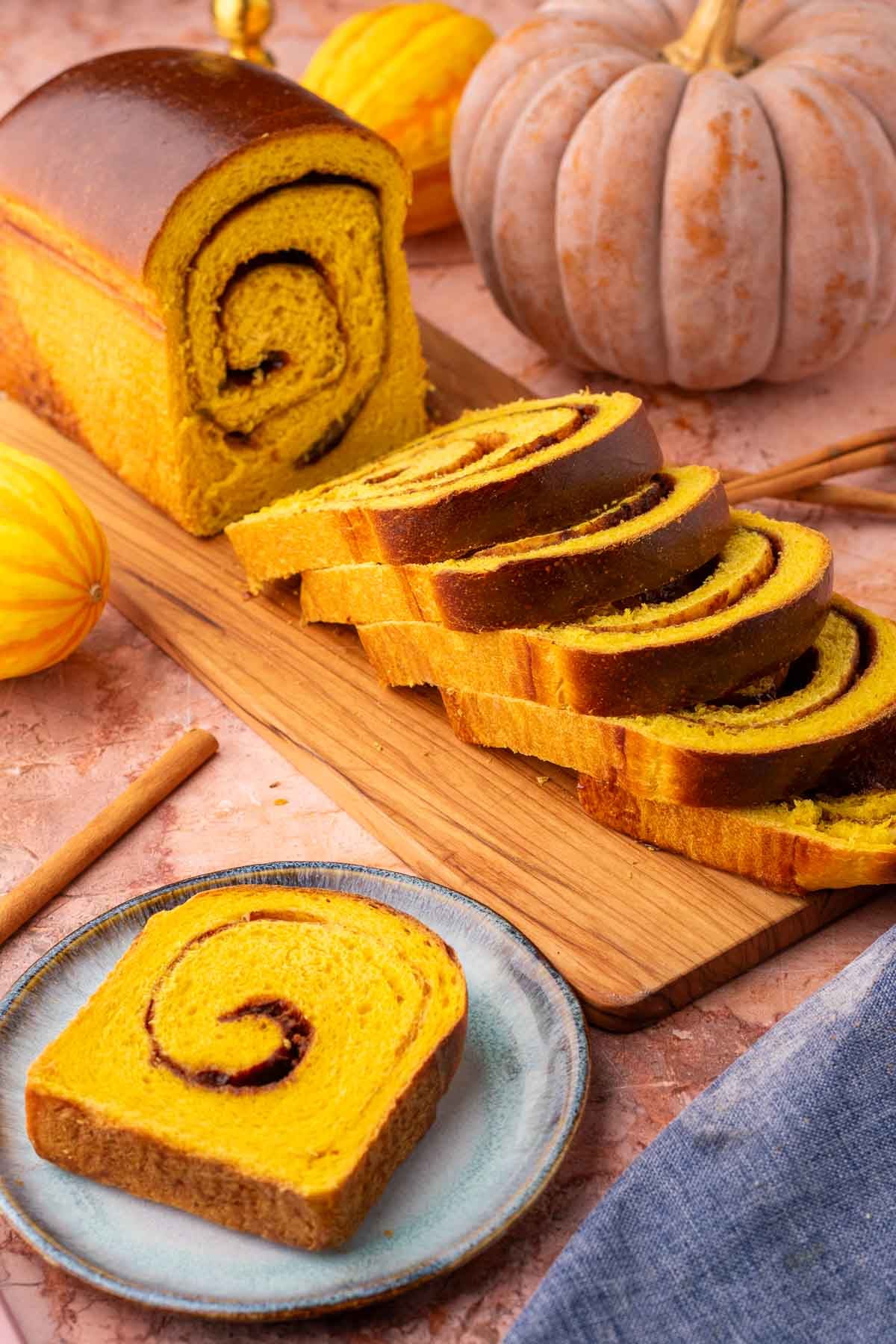
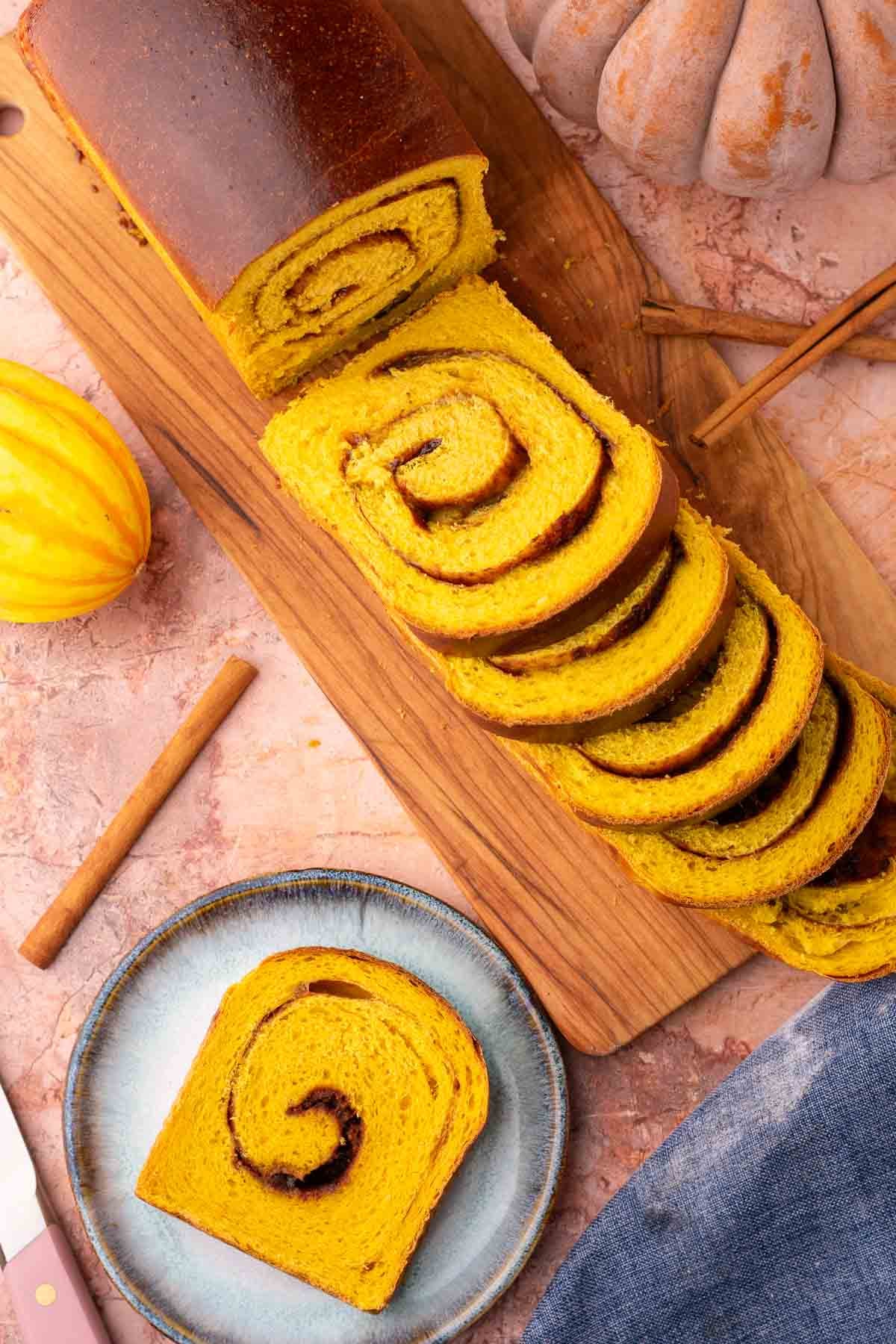
Made with soft sourdough brioche dough, real pumpkin puree, and a cinnamon swirl, this Sourdough Pumpkin Cinnamon Swirl Bread is incredibly soft and makes a delicious sourdough pumpkin sandwich bread.
The canned pumpkin adds moisture, tenderness, earthy flavor, and a beautiful orange hue to this pumpkin loaf. This sourdough pumpkin bread features a perfect cinnamon swirl for sweetness and warm spice, reminiscent of this Sourdough Cinnamon Raisin Bread.
This detailed fall sourdough recipe walks through every step of the process and gives lots of tips and photos so you can get the best results possible.
👉 For other favorite sourdough pumpkin recipes, see my recipes for:
👍 Why You’ll Love This Recipe
- Canned pumpkin puree, like in these Sourdough Pumpkin Cinnamon Rolls with a similar dough, adds moisture, earthy flavor, and doesn’t require as many eggs and butter in the dough.
- Even with a cinnamon swirl, the bread isn’t too sweet.
- Naturally leavened, enriched dough with a soft, pull-apart texture from a supple sourdough brioche pumpkin dough.
- An excellent fall sandwich bread that makes great breakfast toast or French toast, like Sourdough Anadama Bread.
- Can bake in a bread loaf pan.
🛠 Tools Needed
See below for my tool recommendations for making this sourdough pumpkin cinnamon swirl bread, including various substitutes.
- Baking Scale
- Measure your ingredients by weight instead of volume is essential so you get a more consistent and accurate bake.
- Stand Mixer with dough hook attachment (highly recommended)
- If you have a stand mixer, it’ll really help bring this enriched dough together better. This will help the dough build gluten easier and faster than by hand. I recommend using it for other enriched doughs like my Sourdough Croissants, Sourdough Sandwich Bread, and Sourdough Cinnamon Rolls.
- If you don’t have a stand mixer, you can knead the dough by hand.
- Bread Loaf Pan
- My favorite bread loaf pan that works perfectly for this recipe is the 9×4″ USA Small Pullman Pan (without the lid). I use this pan for other great breads like this Sourdough Croissant Bread Loaf.
- You can bake it in 9×5″ or 8.5×4.5″ bread loaf pans, but it may be squatter.
- Rolling Pin, for rolling out the dough
- Pastry Brush, for egg wash
- Optional: Brød and Taylor Folding Bread Proofer
- This folding proofing box by Brød & Taylor is a game-changer to keep your sourdough starter and doughs at the perfect temperature while proofing.
- The proofer folds up easily, includes a humidity tray, is multifunctional, and can even be a slow cooker.
🛒 Ingredients Needed
See below for more information, variations, and possible substitutes.
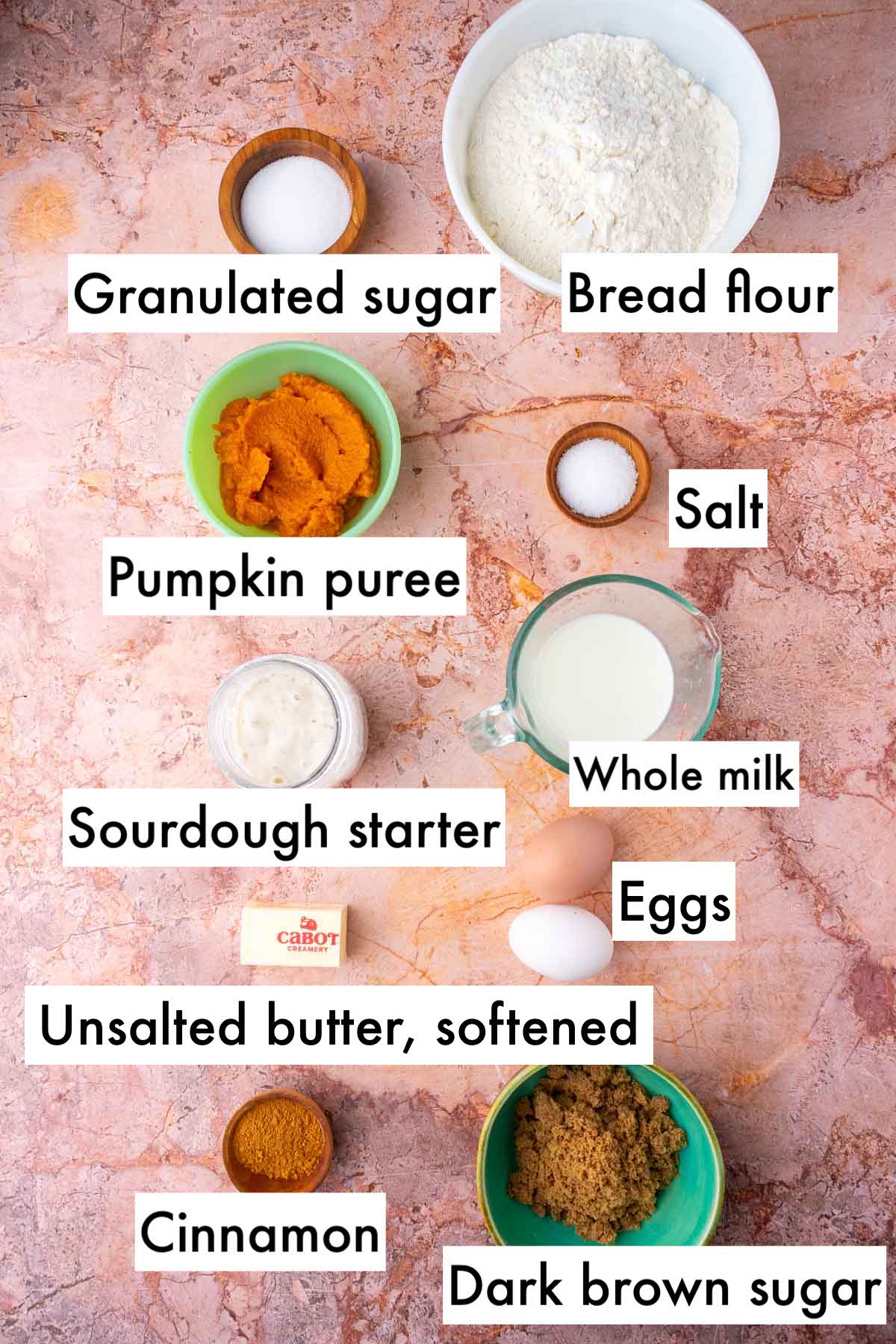
Sourdough Pumpkin Brioche Dough
- Bread Flour
- I use King Arthur Bread Flour at 12.7% protein, which gives the pumpkin bread a chewy texture and helps it rise tall. The higher amount of gluten is helpful in combination with the canned pumpkin to add structure, but you could use all-purpose flour too.
- If you want to make even heartier, substitute a cup with about 120g with whole wheat flour.
- Salt
- Sourdough Starter
- Use active sourdough starter and not sourdough discard for this bread.
- Don’t have a sourdough starter? Learn How to Make a Sourdough Starter and make a stronger sourdough starter with my top sourdough starter tips and why I maintain a small sourdough starter.
- Canned Pumpkin Puree
- I recipe test with Libby’s canned pumpkin for consistency in my baking, but you can make your own pumpkin puree too.
- Unsalted butter, room temperature
- This is a brioche dough, so it’s vital that your butter is at room temperature so it will incorporate into the dough. If it’s too cold, it won’t mix well (or take forever to mix) and if it’s melted, it may make your dough too sticky.
- Egg
- Whole milk
- I always bake with whole milk and full-fat dairy for richness and the best flavor, but you can substitute the whole milk with 2%, low-fat milk, or plant-based if needed (use unsweetened).
- Scald the milk beforehand to denature the proteins, leading to a softer bread like I do in Sourdough English Muffins, Sourdough Cinnamon Raisin English Muffins, and Sourdough Hot Cross Buns with Brown Butter.
- Granulated sugar
- The bread some natural sweetness from the pumpkin, but the sugar helps add a bit more sweetness and helps with fermentation.
- You can substitute the sugar with ⅔ the amount of honey, maple syrup, agave, or another natural liquid sweetener. It’s a small amount, but you may need to reduce the milk slightly so your dough isn’t too sticky.
Cinnamon Swirl
- Cinnamon
- Can substitute with pumpkin pie spice or other warm spices like cardamom or giger.
- If you love cinnamon, you’ll love my Sourdough Apple Crisp, Sourdough Graham Crackers, and Sourdough Snickerdoodle Cookies.
- Dark brown sugar
- You can use light brown sugar if you need to, but dark brown sugar has more molasses, leading to a richer flavor.
- Flour
- A small amount of starch (flour here) helps the cinnamon swirl filling from leaking as much. Some leaking is normal, though, with the long fermentation! You can use cornstarch or tapioca starch as well.
- Egg Wash
- In addition to brushing the top of the loaf with egg wash for browning, brush egg was on the rolled out dough so the filling doesn’t leak. This is one of the biggest tricks to prevent gaps in swirl breads because the egg helps bind the filling to the dough!
🎃 How to Make Sourdough Pumpkin Cinnamon Swirl Bread
Follow this visual step-by-step guide to help make this soft Sourdough Pumpkin Cinnamon Swirl Bread.
1. Make the Levain
Mix 40 grams of sourdough starter, 40 grams of bread flour, and 40 grams of room-temperature water in a clean jar.
Cover and set it in a warm location (between 75-80ºF) for about 4-5 hours until it’s bubbly and ripe. The levain should double in size during this time.
Note: Alternatively, skip this step and use 120 grams of an active sourdough starter in the recipe.
To make a sourdough starter from scratch, follow my Sourdough Starter recipe guide.
Learn more about the difference between a starter and levain. If you’re an advanced baker, you could use a sweet stiff levain for this recipe and add a bit more milk to the dough when mixing.
2. Mix the Dough
Scald the whole milk in a small saucepan. This will denature the proteins and lead to a softer dough. It’s a quick step that I do for many recipes like my Sourdough Maple Pecan Sticky Buns and makes a big difference.
Pour the scalded milk into the bowl of a stand mixer with the dough hook attachment and let cool until warm (not hot, below 100ºF). Then, add the egg, pumpkin puree, and all of the levain (or starter). Mix the wet ingredients together.
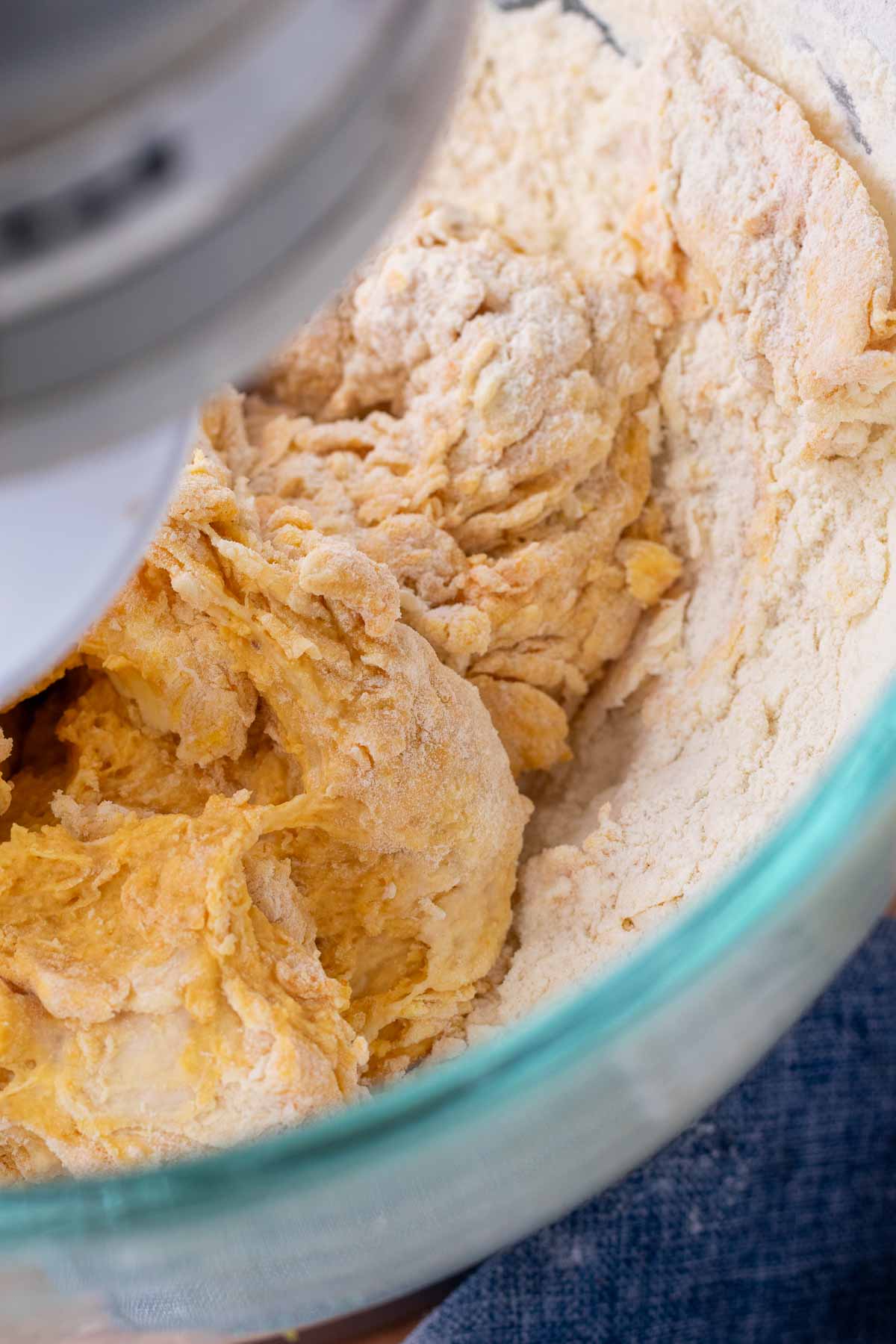
Pour in the dry ingredients- the granulated sugar, bread flour, and salt- and mix to bring the dough together into a mass and hydrate the flour. Cover with a towel and let the dough rest for 10 minutes.
Continue mixing on medium speed for a couple of minutes, and add a small slice of softened butter to the dough at a time while mixing. Wait until the butter is fully incorporated before you add the next piece.
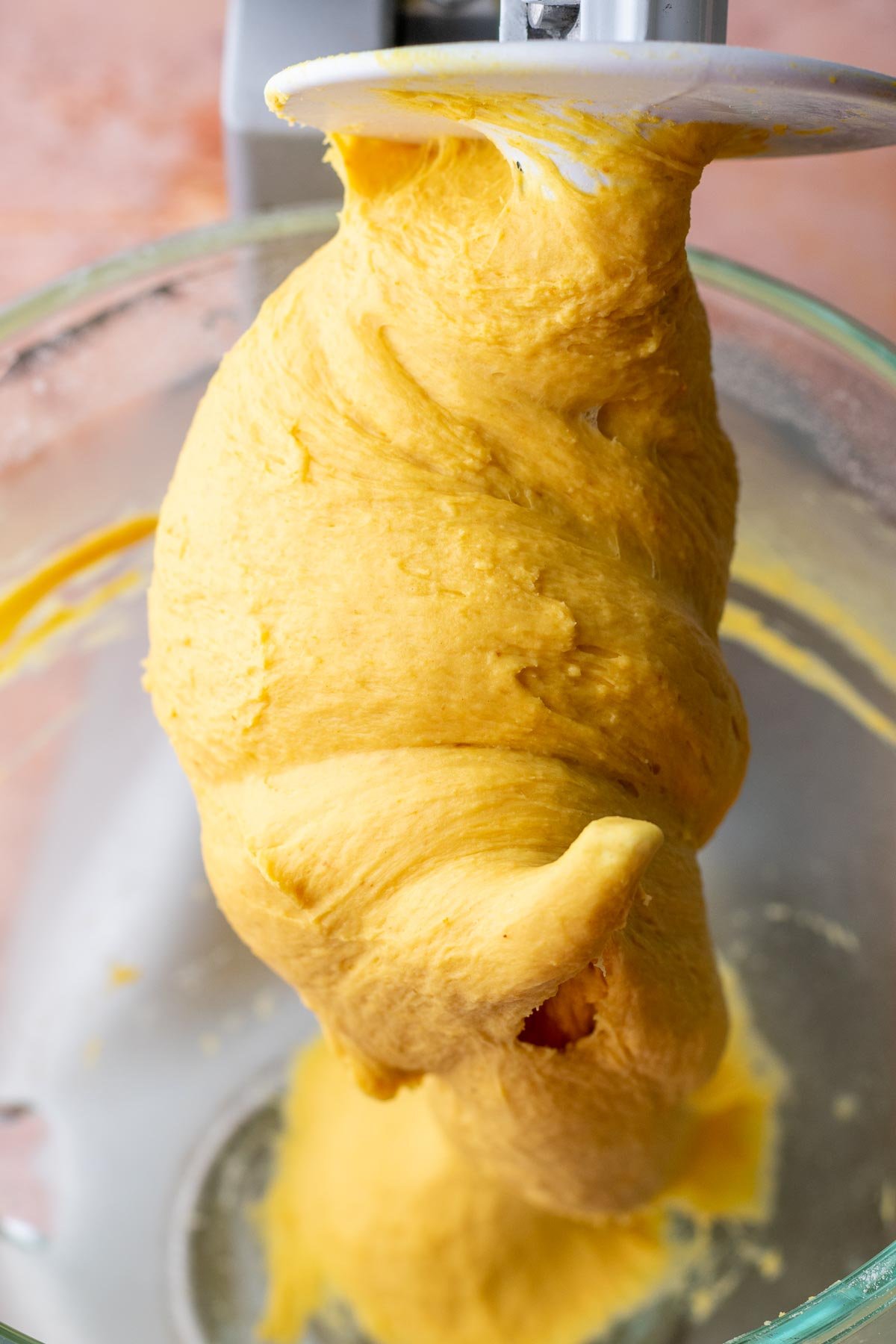
Mix the pumpkin dough for 10-15 minutes or until the dough smooths out, is tacky, slaps the sides of the bowl, and passes the windowpane test.
To test, pull a piece of dough between your fingers. If you can stretch it into a thin membrane, like a windowpane, without it tearing, then it’s mixed enough. Otherwise, keep mixing for a few more minutes.
3. Bulk Fermentation
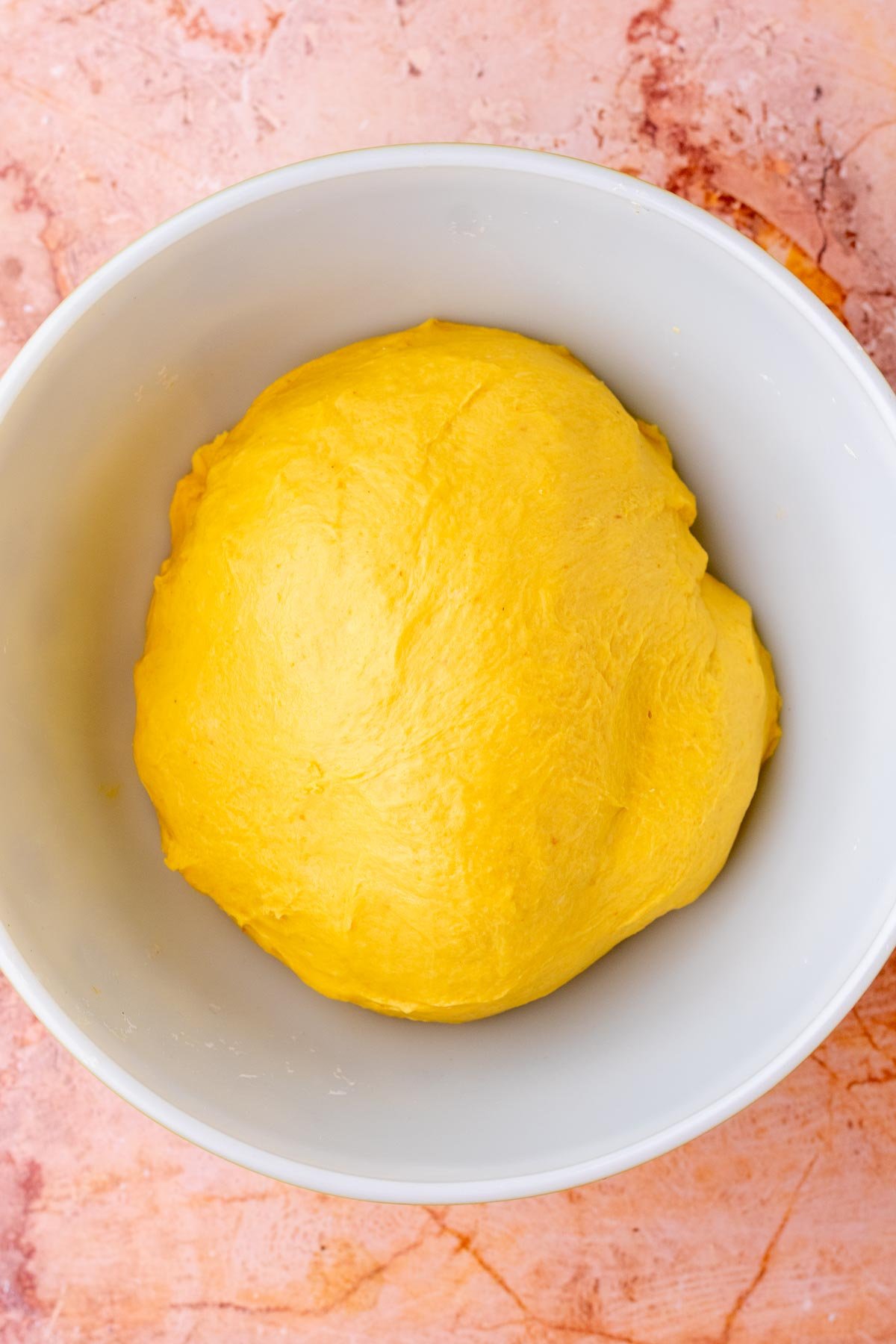
Transfer the dough to a mixing bowl and cover for bulk fermentation, which will take about 6 hours at 78ºF.
If your dough and environment are colder, bulk fermentation will take longer. Conversely, in warmer conditions, the dough will ferment faster.
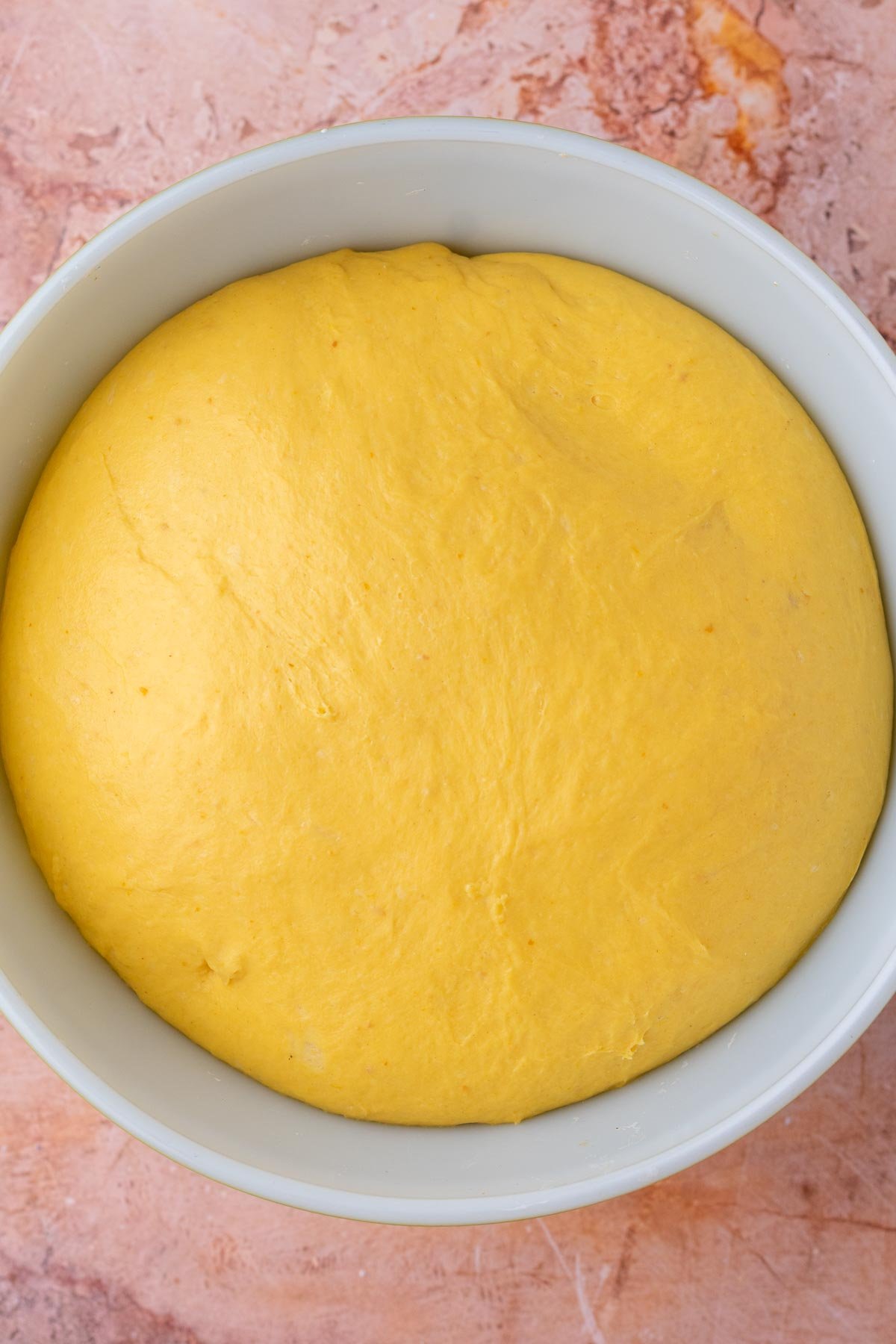
Bulk fermentation is complete when this dough has doubled in size, is smoother, and domes in your bowl.
Tip: The Brød and Taylor folding bread proofer is extremely helpful for creating a consistent environment that’s ideal for proofing breads. I keep mine at 78ºF.
4. Overnight Proof
Transfer the dough to the refrigerator for a cold, overnight proof and up to 48 hours.
The dough will continue to ferment slowly in the refrigerator, which helps develop flavor and allows you to bake on your own schedule.
5. Make the Cinnamon Swirl and Shape
Before shaping, butter or grease the bread loaf pan. Set it aside.
Make the Cinnamon Swirl Filling
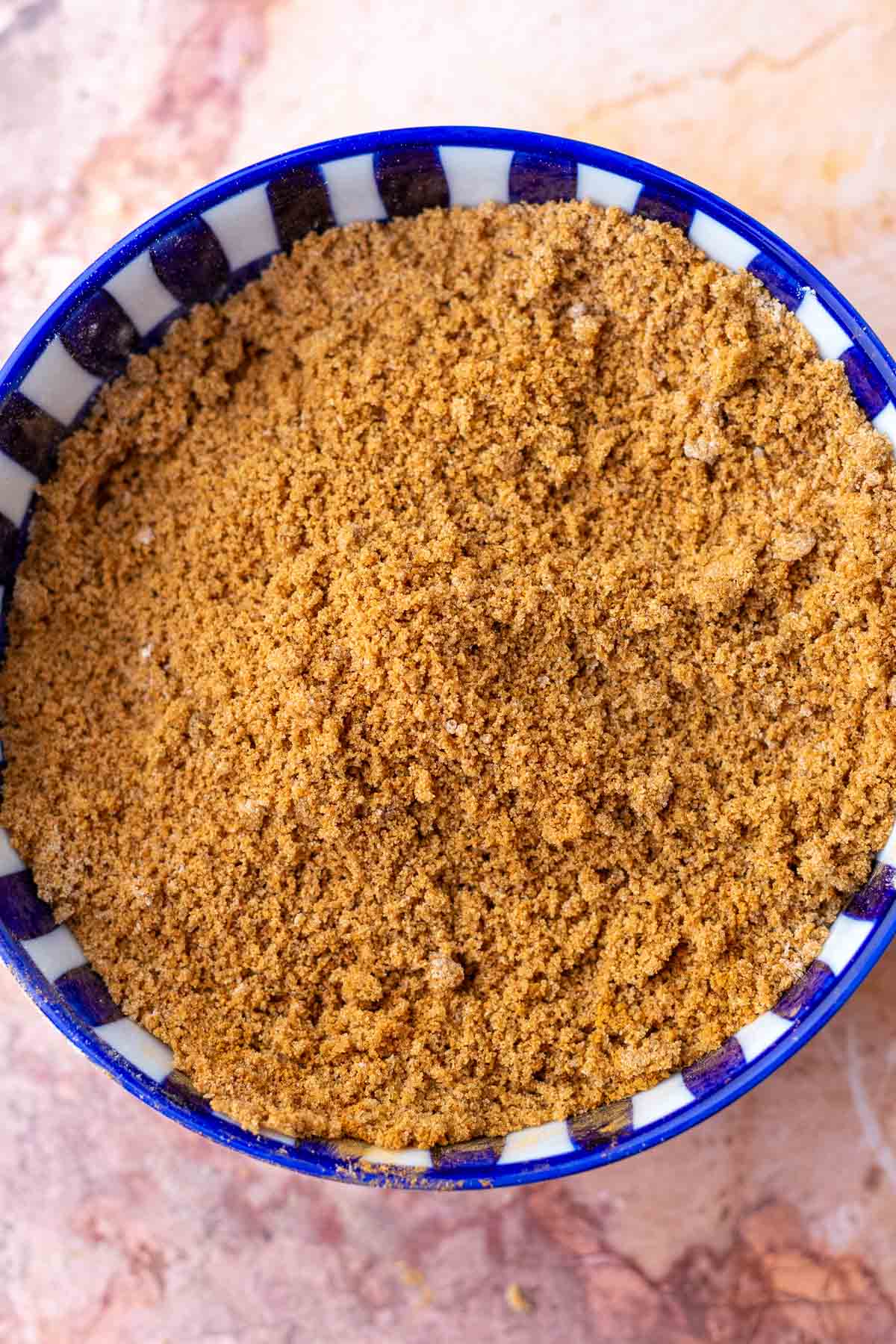
Mix the dark brown sugar, cinnamon, and a TBS of flour in a bowl with a spatula to make the cinnamon sugar filling. Beat an egg in a small bowl and set both aside.
How to Shape Sourdough Pumpkin Cinnamon Swirl Bread
The steps are labeled in the images below.
- Step 1: Punch down and turn out the cold dough onto a clean work surface. Use a rolling pin to roll out the dough into a large rectangular slab, about 12×18″. Only flour the dough lightly if it’s sticking.
- Step 2: Brush egg wash on the surface of the dough. Reserve the rest for just before baking.
- Step 3: Sprinkle the cinnamon swirl filling evenly over the dough and egg wash, the way to the edges.
- Step 3: Roll the dough into a relatively tight log from the long end. Try to keep the roll even as you roll it up and remember that the start of the roll will become the center swirl of the bread.

6. Final Proof
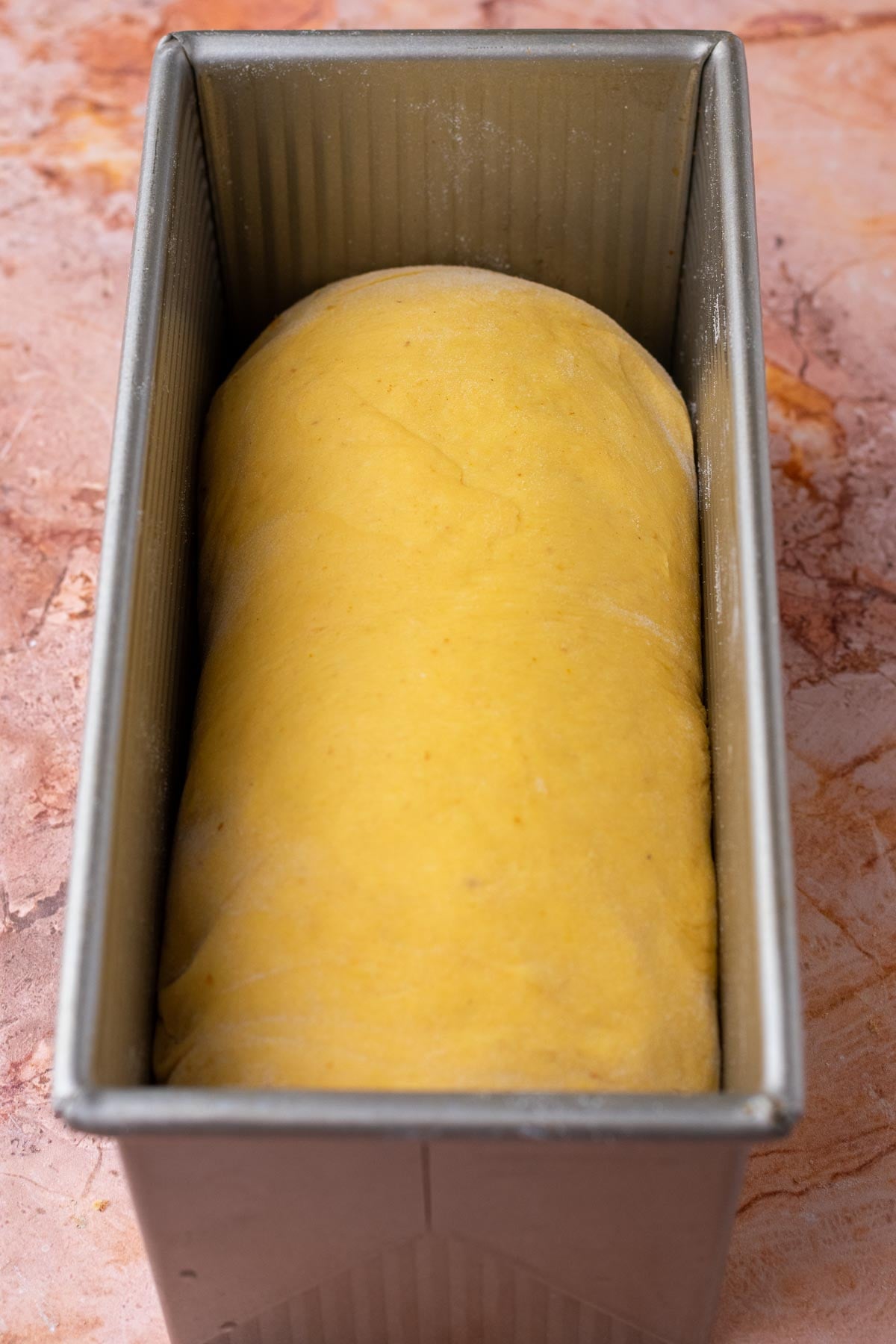
Place the shaped sourdough pumpkin cinnamon dough seam-side down in the greased bread loaf pan.
Cover for the final proof. At 78ºF, the final proof typically takes about 3 ½-4 hours, but it depends on your environment and how much the dough proofed during the first bulk ferment.
At the end of the final proof, the dough should about double in size and rise in the pan, be poofy, touch each other, and feel full of air if you poke one with a floured finger.
7. Bake
Preheat the oven to 375ºF (191ºC).
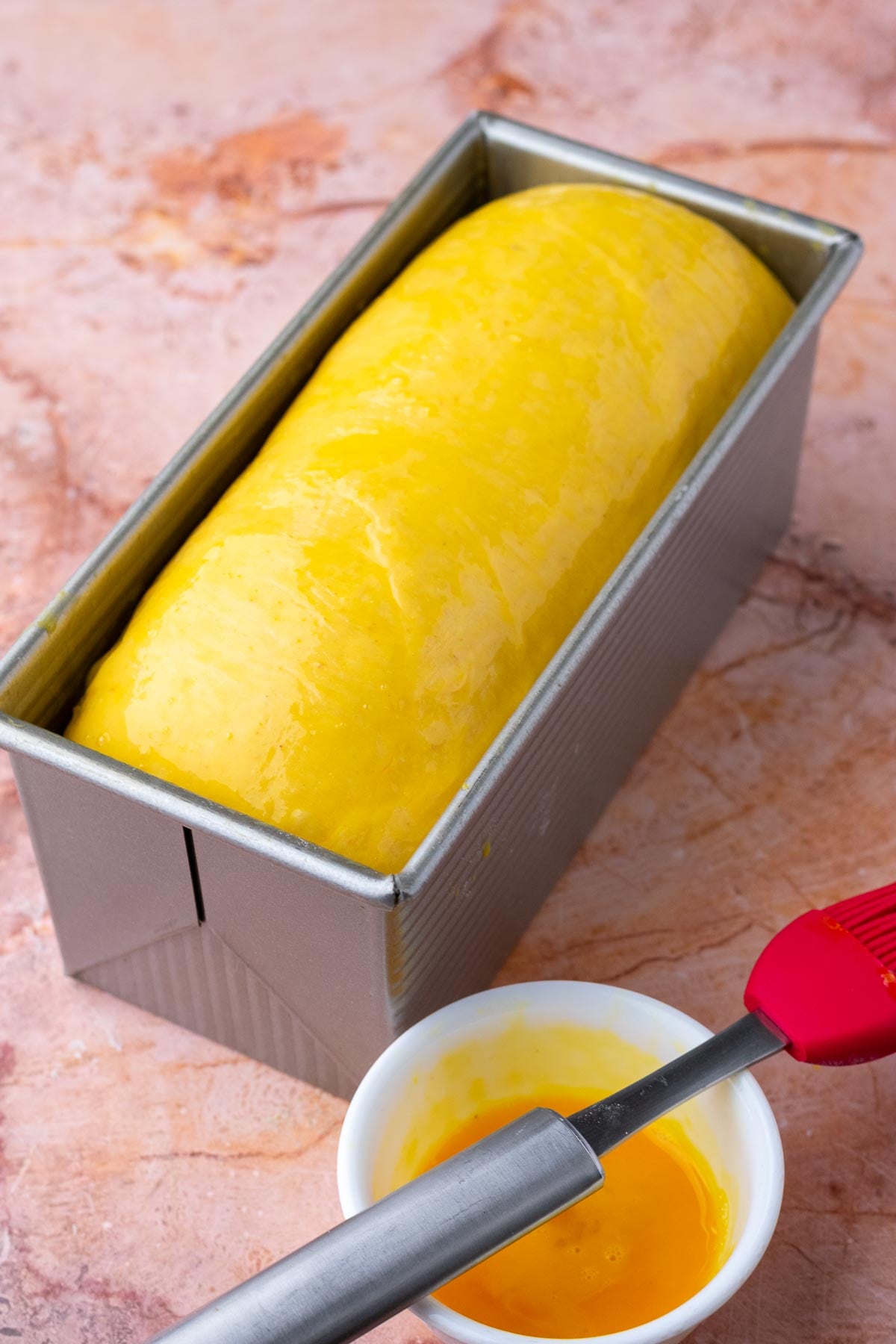
Brush the reserved egg wash on top of the dough.
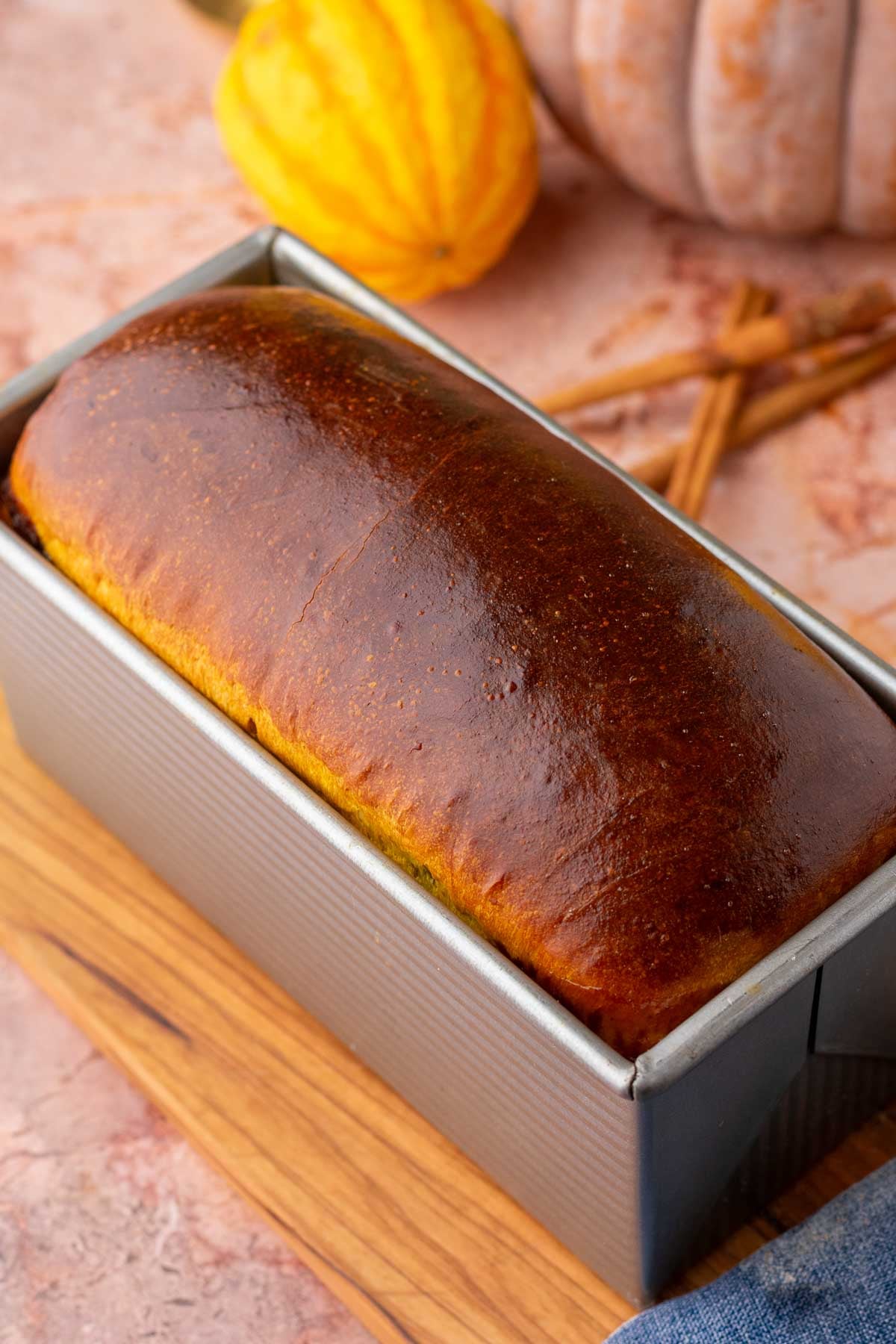
Bake the loaf on a sheet pan (to catch any drippings if the swirl leaks) for 40-45 minutes until the top is dark brown. The pumpkin bread should have an internal temperature with an instant-read thermometer of about 200ºF (93ºC) when baked.
Finally, cool in the pan on a wire rack for 10 minutes. Then, turn the loaf out of the pan to finish cooling completely on the wire rack for at least an hour before slicing.
How to Store, Make Ahead, & Serve
This sourdough pumpkin cinnamon bread stores extremely well due to the added pumpkin puree, sourdough, and scalded milk, which help keep it soft and fluffy (similar to how mashed sweet potatoes keep these Sourdough Sweet Potato Dinner Rolls and Sourdough Sweet Potato Biscuits soft).
The bread should keep covered or in a bread bag for 3-4 days at room temperature, but will lose some moisture after slicing. You can reheat or toast slices slightly before serving.
Finally, you can freeze baked bread slices in a freezer-safe bag and keep for a few months. Toast straight from frozen.
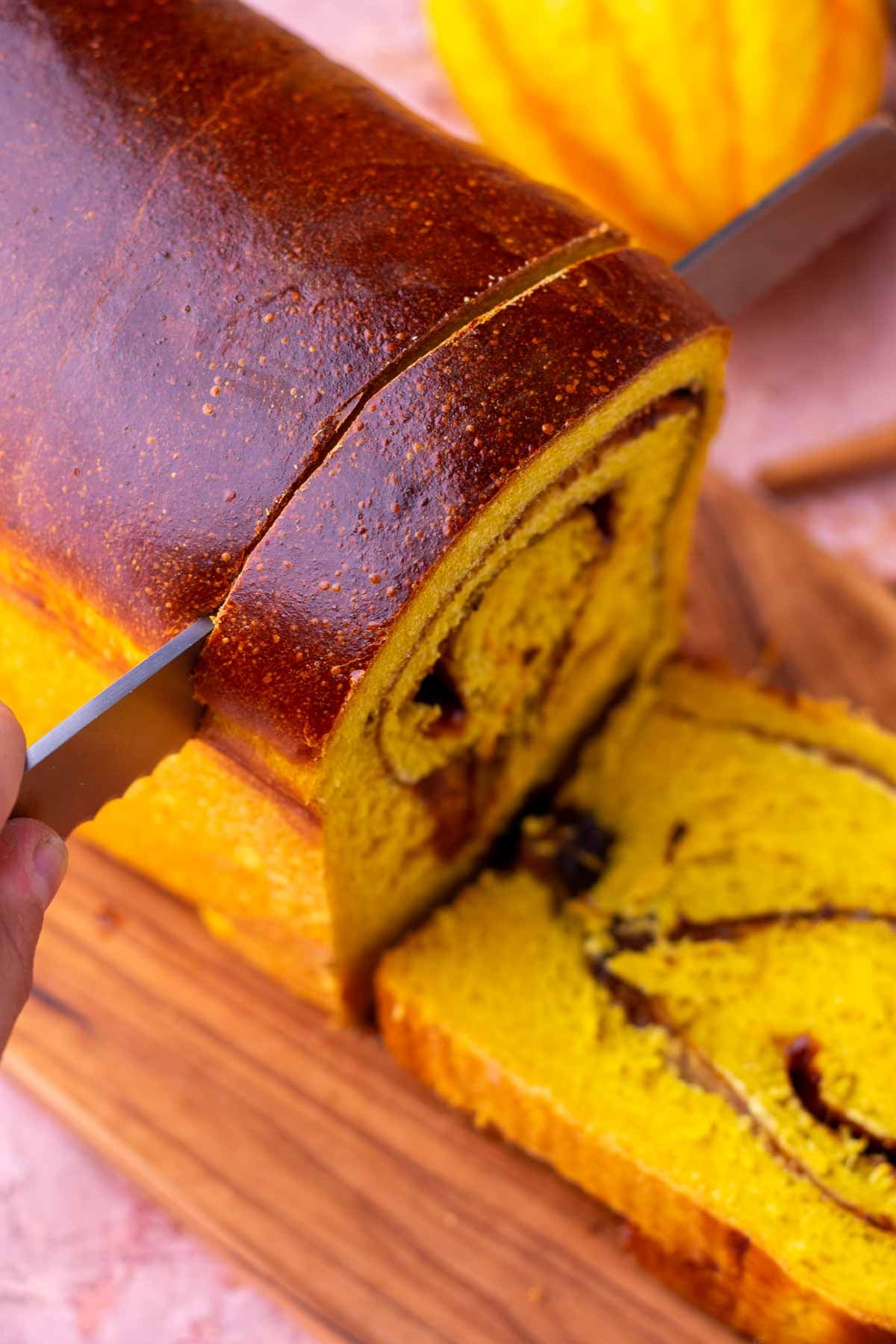
This is a stunning sourdough pumpkin bread for fall holiday dinners, an autumnal breakfast bread or pumpkin French Toast, and you could even serve it at Thanksgiving or Christmas.
The sourdough pumpkin sandwich bread is excellent served with this creamy homemade Apple Butter.
❓FAQs
Can I use all-purpose flour?
You can use all-purpose flour instead of bread flour, but note that you may need to mix more and possibly add more flour to strengthen the dough.
Why is my dough sticky?
The brioche dough can be sticky at first, depending on the moisture content of your canned pumpkin and how warm your butter is. If it’s still very sticky after mixing, add a TBS of flour to your dough at a time.
Can I use sourdough discard?
Yes, you can make sourdough discard pumpkin bread. Replace the levain with 120g of sourdough discard and a teaspoon of instant yeast. Proofing times will be faster, but otherwise, follow the same recipe.
Why does the cinnamon swirl filling leak out?
Sugar is hydrophilic, meaning it attracts water. This draws out the liquid in ingredients, like macerating fruit. With sourdough, this becomes more apparent due to the long fermentation. However, adding a bit of starch, like flour, and keeping the bread cooler during the final proof can help mitigate some of the leakage.
Can I add cinnamon to the dough?
Cinnamon, like garlic, has anti-fungal properties that can inhibit fermentation. Thus, I only recommend using cinnamon or other spices in the swirl.
Can I use other spices in the swirl?
Yes, you can use pumpkin spice, ginger, cardamom, nutmeg, or a mixture of them like in this Sourdough Banana Bread with Chai Spices, or these spiced Sourdough Zucchini Muffins.

⭐️⭐️⭐️⭐️⭐️
Please leave a rating, comment or question below! Tag me on Instagram or Facebook @SourdoughBrandon or PIN this recipe on Pinterest to come back to it later!
Sourdough Pumpkin Cinnamon Swirl Bread
Equipment
- 1 Stand Mixer, recommended
- 1 Pastry Brush, for egg wash
- 1 USA Pullman Pan, Small, or bread loaf pan
- 1 Brød and Taylor Folding Proofer, optional but helpful
Ingredients
Levain
- 40 grams Sourdough Starter
- 40 grams Bread Flour
- 40 grams Water
Sourdough Pumpkin Brioche Dough
- 120 grams Whole Milk, ½ cup, scalded and cooled
- 183 grams Pumpkin Puree, ¾ cup, I use Libby's
- 1 Egg
- Levain, or 120g active sourdough starter
- 500 grams Bread Flour, 4 cups
- 50 grams Granulated Sugar, ¼ cup
- 10 grams Kosher Salt
- 56 grams Unsalted Butter, 4 TBS, softened
Cinnamon Swirl Filling
- 75 grams Dark Brown Sugar, ⅓ cup
- 8 grams Ground Cinnamon, 2 ½ tsp
- 8 grams Bread Flour, 1 TBS
- 1 Egg, for egg wash
Instructions
- Build the Levain:In a clean jar, mix the sourdough starter, bread flour, and water.Cover and set in a warm location (between 75-80ºF) for about five hours until it is at least doubled and bubbly.Alternatively, skip this step and mix 120g of active sourdough starter into your dough.40 grams Sourdough Starter, 40 grams Bread Flour, 40 grams Water
- Mix the Dough:Scald the milk in a small saucepan until just about boiling and pour into the bowl of your stand mixer bowl. Let cool to just warm or room temperature.Add the pumpkin puree, egg, and all of levain to the bowl with the cooled milk and mix. Then, mix in the bread flour, sugar, and salt.Mix on low speed for a few minutes until the flour is incorporated and the dough comes together into a mass.Cover with a towel and let rest for 10 minutes to further hydrate.120 grams Whole Milk, 183 grams Pumpkin Puree, 1 Egg, Levain, 500 grams Bread Flour, 50 grams Granulated Sugar, 10 grams Kosher Salt
- Add the Butter and Mix:Slice the room-temperature butter into pieces and while continuing to mix the dough on medium speed, add one piece of softened butter to the bowl at a time until each piece is fully incorporated into the dough.Continue to mix the dough for 10-15 more minutes until the dough passes the windowpane test, is smooth, tacky, and easily slides off of the dough hook.56 grams Unsalted Butter
- Bulk Fermentation:Transfer the dough to a medium bowl, cover, and place it in a warm location for bulk fermentation. At 78ºF, bulk fermentation takes about 6 hours (longer if cooler).Bulk fermentation is complete when the dough is doubled, domed in the bowl, and smooth.
- Overnight Proof:Cover the bowl and place it into a refrigerator to proof overnight and up to 48 hours.
- Make the Cinnamon Swirl Filling:The next day, butter or grease your bread loaf pan, beat an egg in a small bowl, and set both aside.In a small bowl, mix together the dark brown sugar, cinnamon, and flour. Set aside.75 grams Dark Brown Sugar, 8 grams Ground Cinnamon, 8 grams Bread Flour, 1 Egg
- Shape:Turn out the cold dough onto a clean surface. Use a rolling pin to roll it out into a rectangular slab about 12×18".Brush egg wash on the surface of the dough and reserve the rest for brushing on before baking.Sprinkle the cinnamon sugar filling over the surface of the dough to the edges and pat it down to the surface so it adheres to the egg wash..Carefully roll up the dough from a short side into a log. Try to roll it tightly and evenly. Remember that the start of the roll will be the middle of the loaf.
- Final Proof:Place the log seam-side down in the bread loaf pan and cover for the final proof.At 78ºF, the final proof takes about 3.5-4 hours. The bread is finished proofing when it's almost doubled in size, puffy, and near the top of the pan. If you poke the bread with a floured finger, it should leave a slight indentation and feel full of air.
- Bake:Preheat the oven to 375ºF (191ºC). Brush the top of the bread with the reserved egg wash.Bake on a sheet pan for 40-45 minutes until the top browns and the internal dough temperature reads 200ºF (93ºC).Cool on a wire rack for 10 minutes before turning it out of the pan to finish cooling for at least an hour on the wire rack before slicing.
Notes
- Try to keep the dough at a constant, warm temperature (between 75-80ºF) as much as possible throughout fermentation. I use the Brød and Taylor bread proofer to keep my dough at a constant 78ºF. If your dough and environment are cooler, bulk fermentation will take longer. Conversely, in warmer conditions, the dough will ferment faster.
- View my guide above for more detailed instructions, including photos of each recipe step, FAQs, and baker’s percentage chart to scale the recipe up or down.




This is amazing bread! The only thing I did different was I added 1/2 tsp pumpkin pie spice to the cinnamon mixture.
As always, Brandon’s recipes and method are totally reliable. I made this loaf last weekend and the results were fantastic! This loaf will be perfect holiday gifting!
Appreciate it so much!
My loaf is in progress and I can hardly wait to taste it. But a very nitpicky question … is there a reason you recommend rolling out the dough to 12 x 18 (as opposed to 9 x 18, since the loaf fits a 9” pan)? I always get great results from your recipes BTW so thank you. Keep them coming!
Thanks so much! Once I roll it up, it usually ends up shrinking a bit because of the gluten, but rolling it to 9″ is fine too!