
Sourdough Sandwich Bread
This post may contain affiliate links for products and ingredients I use and recommend. For more information, see my affiliate disclosures.
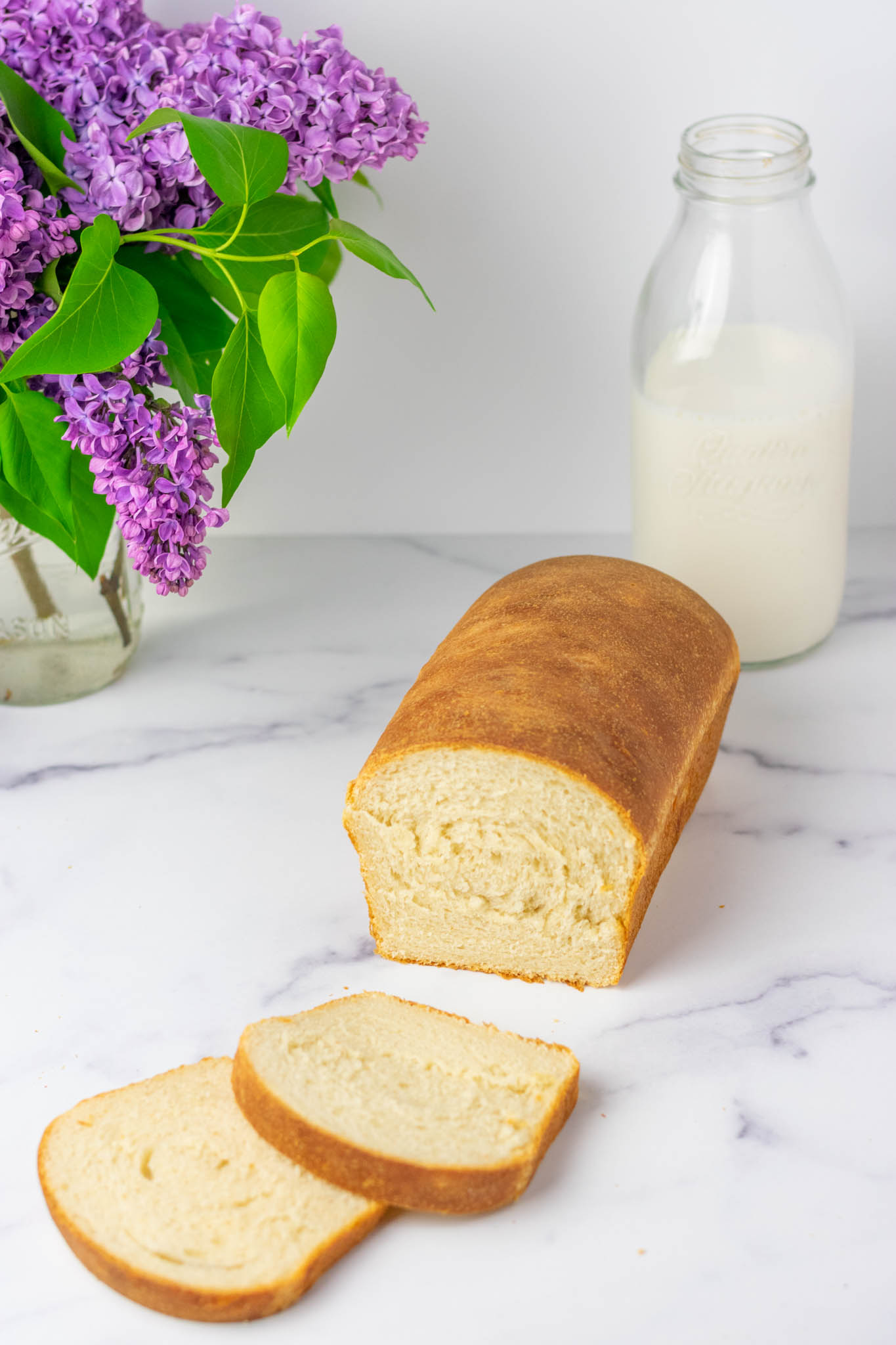
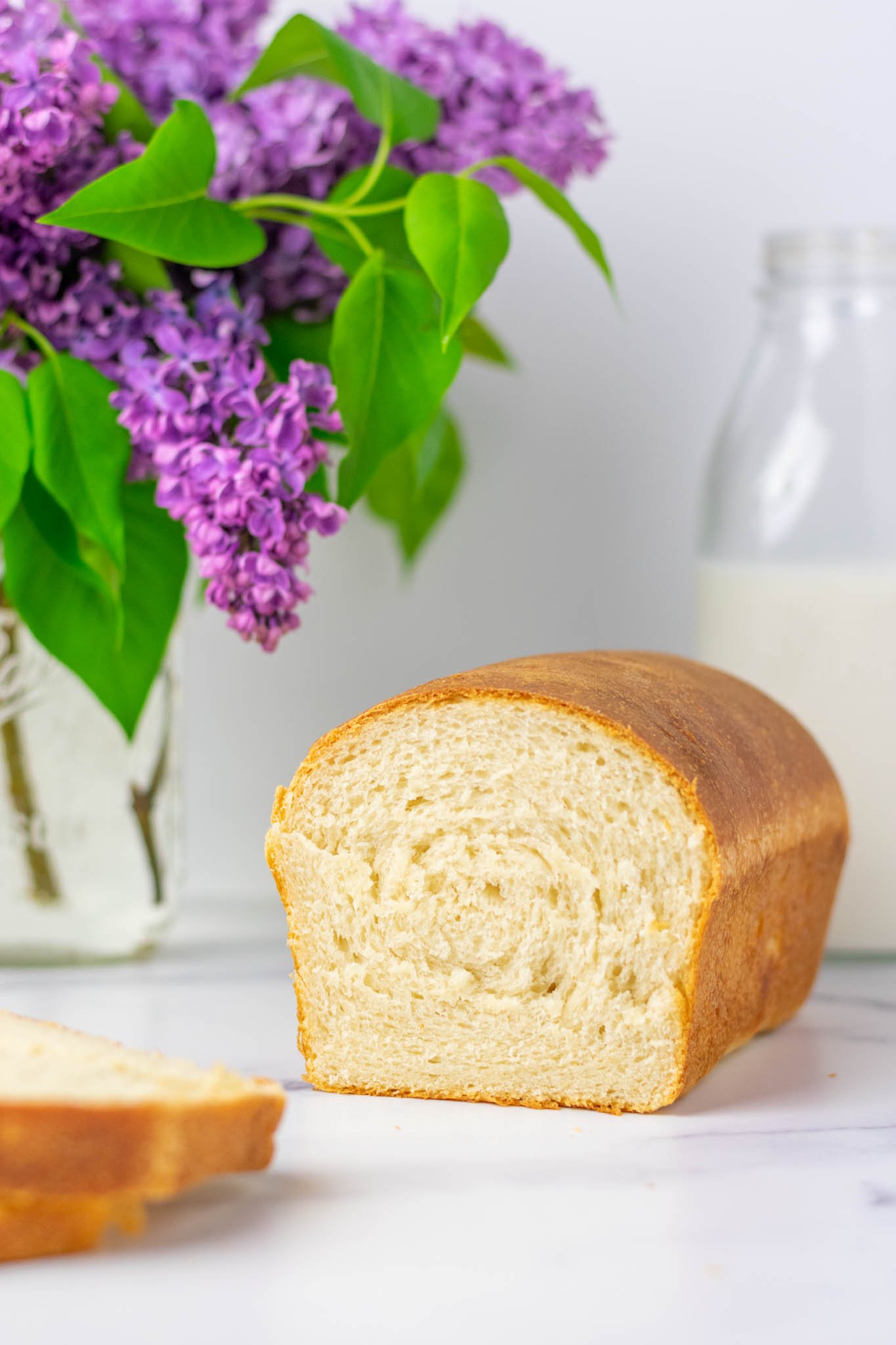
This Sourdough Sandwich Bread recipe is so soft and easy to make! The loaf has a soft, buttery crust and a tender interior.
Whether it’s breakfast toast, lunch sandwiches, or grilled cheese sandwiches, the soft sandwich bread is versatile, easy to slice, and full of flavor.
Making homemade sandwich bread is also great for beginners venturing into making sourdough bread.
I often recommend this recipe as a first sourdough recipe for new sourdough bakers to make, along with Sourdough Focaccia. That’s because there are no complex shaping techniques; you only need a basic bread loaf pan, it’s easy to mix, and it’s made with simple ingredients that you can make gluten-free or vegan.
With minimal effort, you’ll have the best sourdough sandwich bread for you and your family!
👉 Check out my other popular sourdough sandwich bread recipes, including:
👍 Why You’ll Love This Sourdough Sandwich Bread
- Easy recipe with a soft crust like my Maple Oat Sourdough Sandwich Bread.
- Kid-friendly sandwich bread.
- Can use to make sandwiches, toast, PB&J’s, etc.
- Stores well in the freezer.
- No stand mixer required.
- Can make vegan or gluten-free.
👨🍳 Tips for Making Softer Sandwich Bread
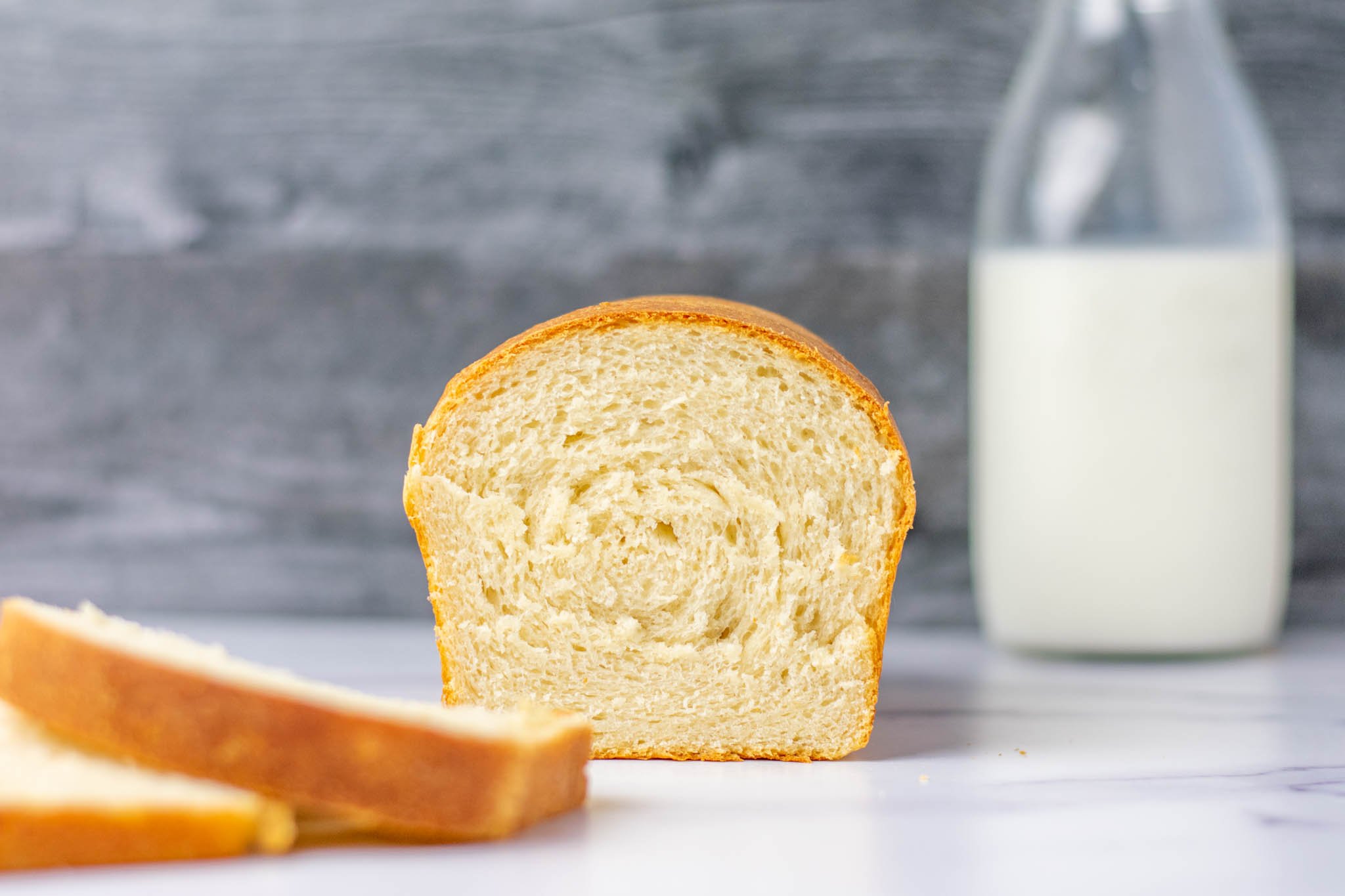
- Use whole milk and dried milk powder for a softer bread. They help tenderize the bread and make it extra soft, and store it for days.
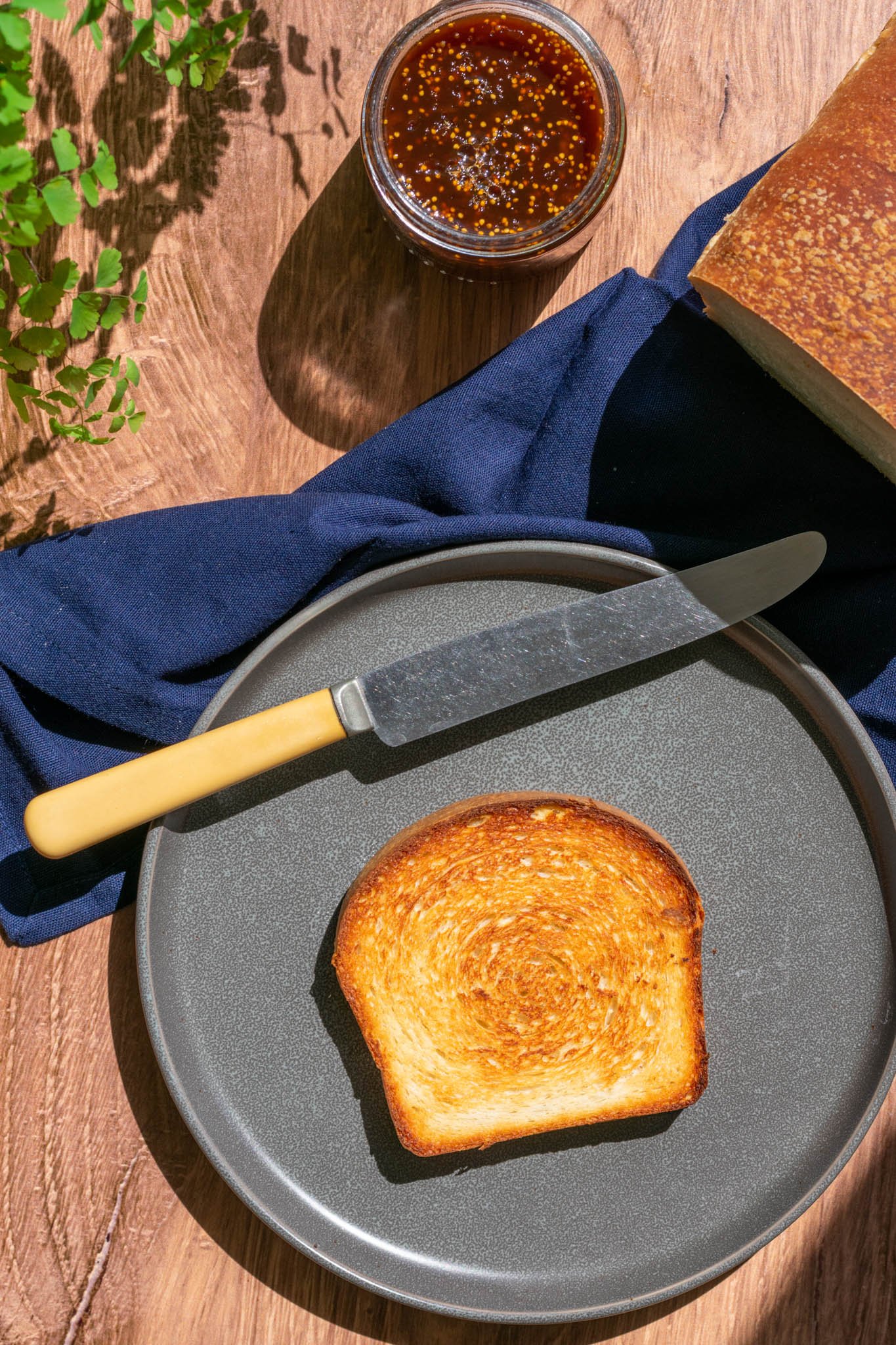
- For a soft crust, brush butter on before baking.
- Bake to an internal temperature of 190-200ºF (88-93ºC).
- For a taller loaf (like my sourdough brioche), bake in a Pullman pan or an 8.5×4.5″ pan.
- Don’t worry too much about shaping! The dough is very forgiving and flexible.
⏰ Sample Baking Schedule
The chart below is a sample baking schedule for this sandwich bread that works for an overnight proof. Many steps are flexible, depending on your own day-to-day schedule.
To make a same-day sourdough sandwich bread, mix the dough in the morning and skip the overnight proof.
For example, you can make the levain the night before by using a smaller amount of starter and higher ratio of flour and water. You can also proof the dough overnight in the refrigerator for up to two days to bake on your own time.
- Make Levain: 9am
- Mix Dough: 2pm
- Bulk Fermentation: until 7pm
- Overnight Cold Proof
- Shape and Final Proof: Next day, 8am-1pm
- Bake: 1-1:35pm
🛠 Tools Needed
See below for the list of basic tools you need to make this sourdough sandwich bread.
- Bread Loaf Pan
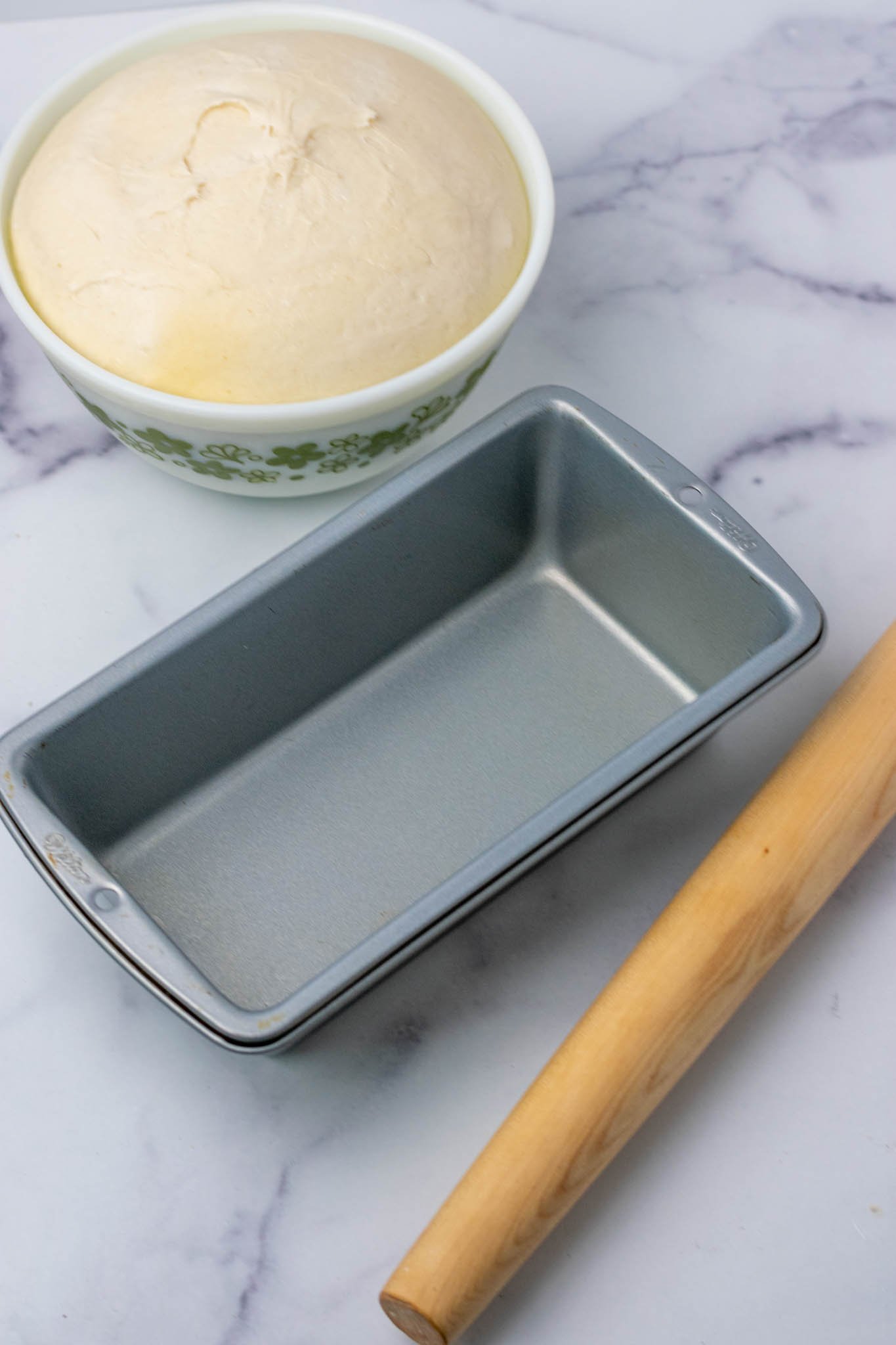
- I use this 8.5″x4.5″ standard bread loaf pan for this recipe. The smaller loaf pan size helps keep the bread taller.
- You can use a 9×5″ loaf pan as well, but note that your bread might be a little stumpier.
- Baking Scale
- Measure your ingredients by weight instead of volume so you get more accurate and consistent results.
- Rolling Pin
- Stand Mixer (optional but helpful)
- The stand mixer will help mix your dough more easily, but you can also knead this sandwich bread by hand if you’d prefer.
🛒 Ingredients Needed
This sourdough sandwich bread only uses a few simple ingredients. See below for my recommendations and substitutions.
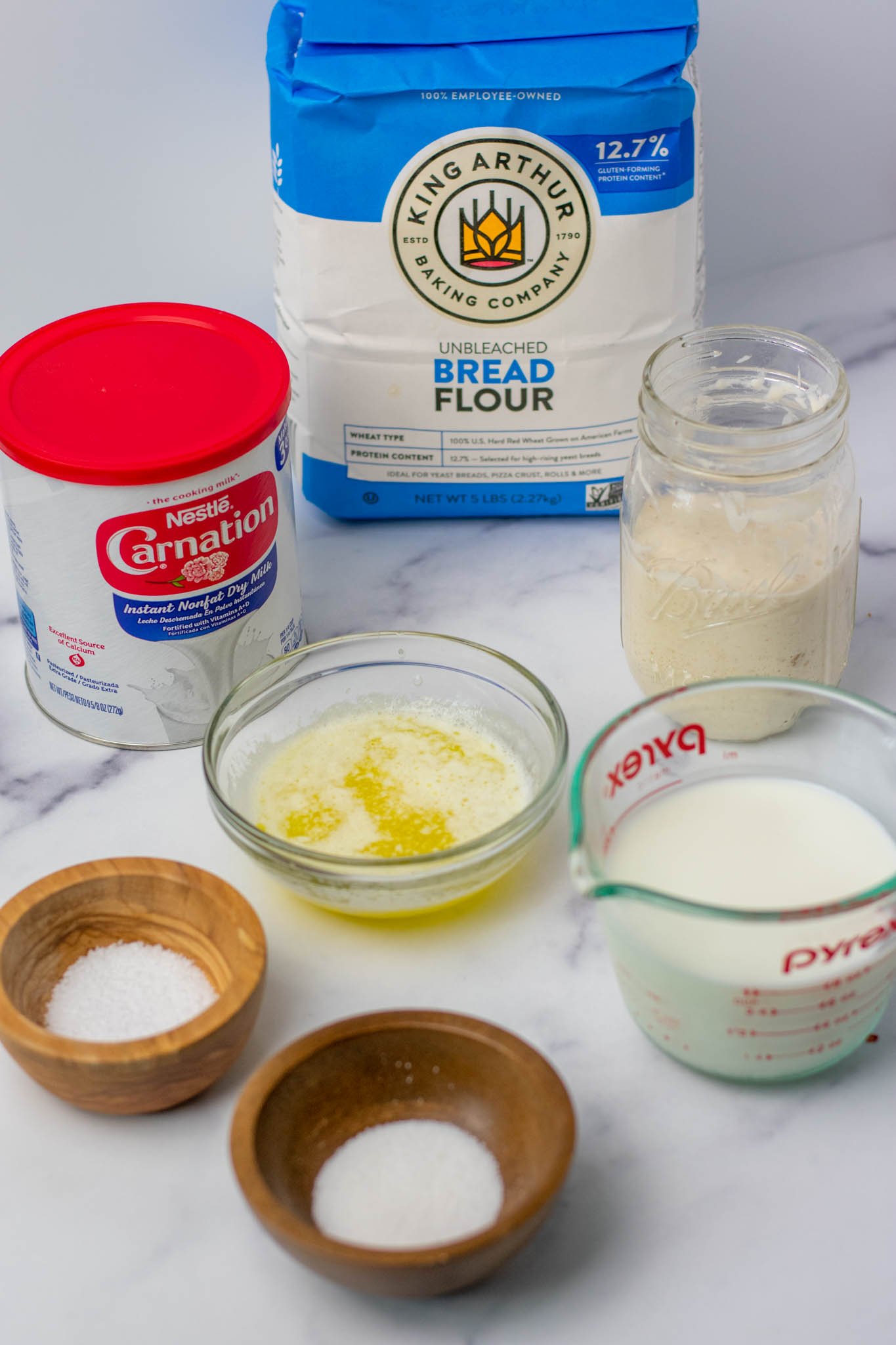
- Bread flour
- High-protein bread flours give breads their chewy texture. I use King Arthur and it works well for this recipe.
- If you’d like, you can substitute with all-purpose flour and still get good results in this loaf.
- Active sourdough starter
- Only use an active sourdough starter for this recipe, not sourdough discard.
- Learn how to make a sourdough starter and get my top sourdough starter tips.
- Whole milk
- Milk keeps the bread soft, rich, and flavorful. Full-fat milk works best for a softer loaf, but you can use 2% as well.
- If you’re making this recipe vegan, you can use plant-based milk.
- Dried milk powder (optional)
- The Dried milk powder will help tenderize your bread, help keep the bread from staling, and adds a little more concentrated milk flavor to the bread.
- Unsalted butter (melted)
- Adds richness and softens the crust of the loaf.
- Use plant-based butter if making vegan.
- Salt
- Granulated sugar
- You’re welcome to substitute with coconut sugar, raw sugar, agave, maple syrup, honey, or leave it out all together.
🥪 How to Make Sourdough Sandwich Bread
1. Make Levain
Add 50g of active sourdough starter, 50g of water, and 50g of bread flour to a clean glass jar.
Mix and cover with a loose-fitting lid. The levain should be ready in about 5 hours or until the levain is active, doubled, and bubbly.
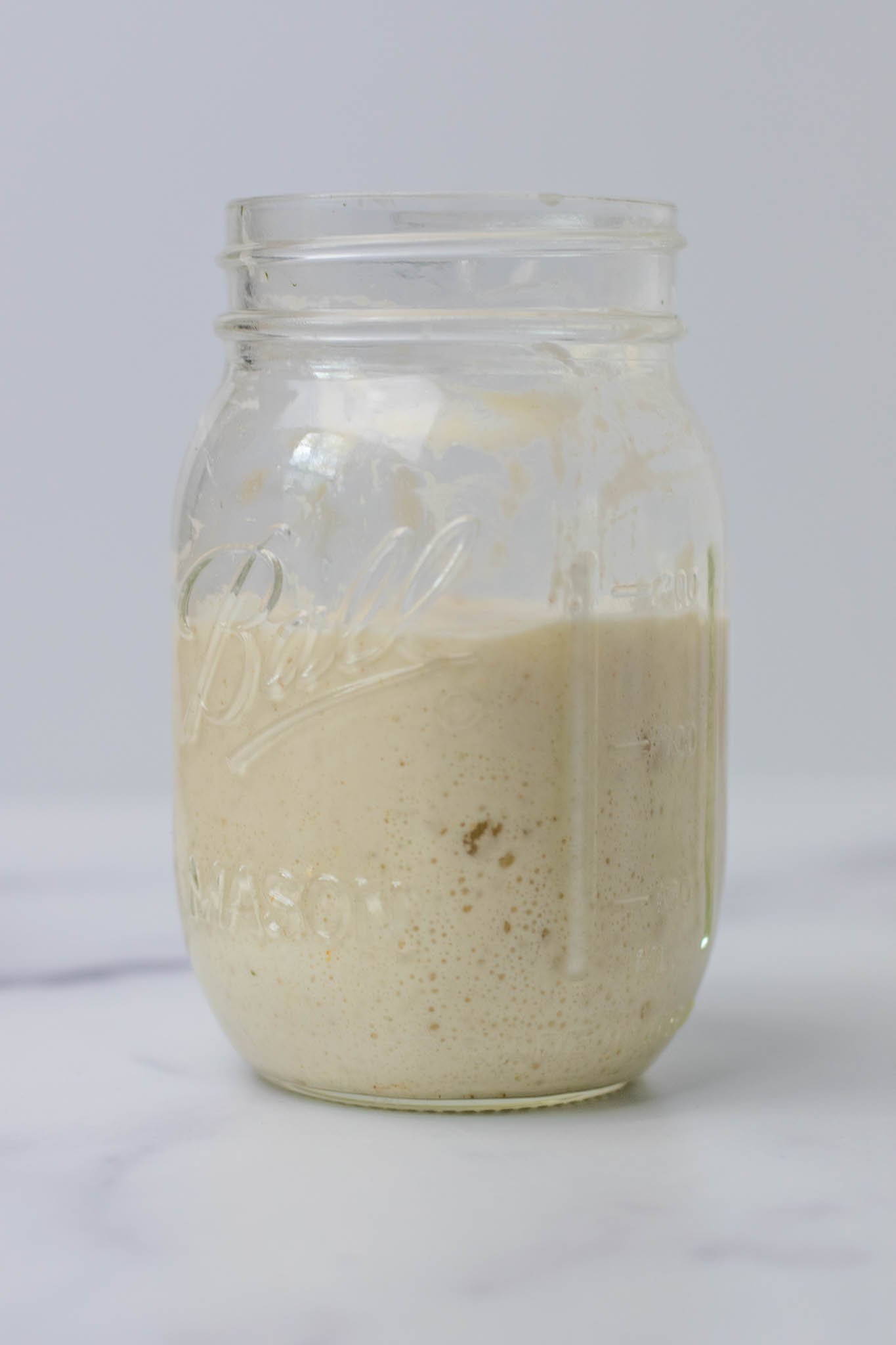
Note: If you want to skip making a levain, simply add about 150g active sourdough starter in the next step.
A levain is simply an offshoot of a sourdough starter that is completely added to a recipe. Learn more about the difference between a sourdough starter and a levain.
2. Mix the Dough
Add all of the sandwich bread ingredients to the bowl of a stand mixer fitted with the dough hook attachment (or mix by hand).
Mix on medium speed until all of the ingredients come together into a shaggy dough.
If you’re mixing by hand, the dough will be quite sticky at first.
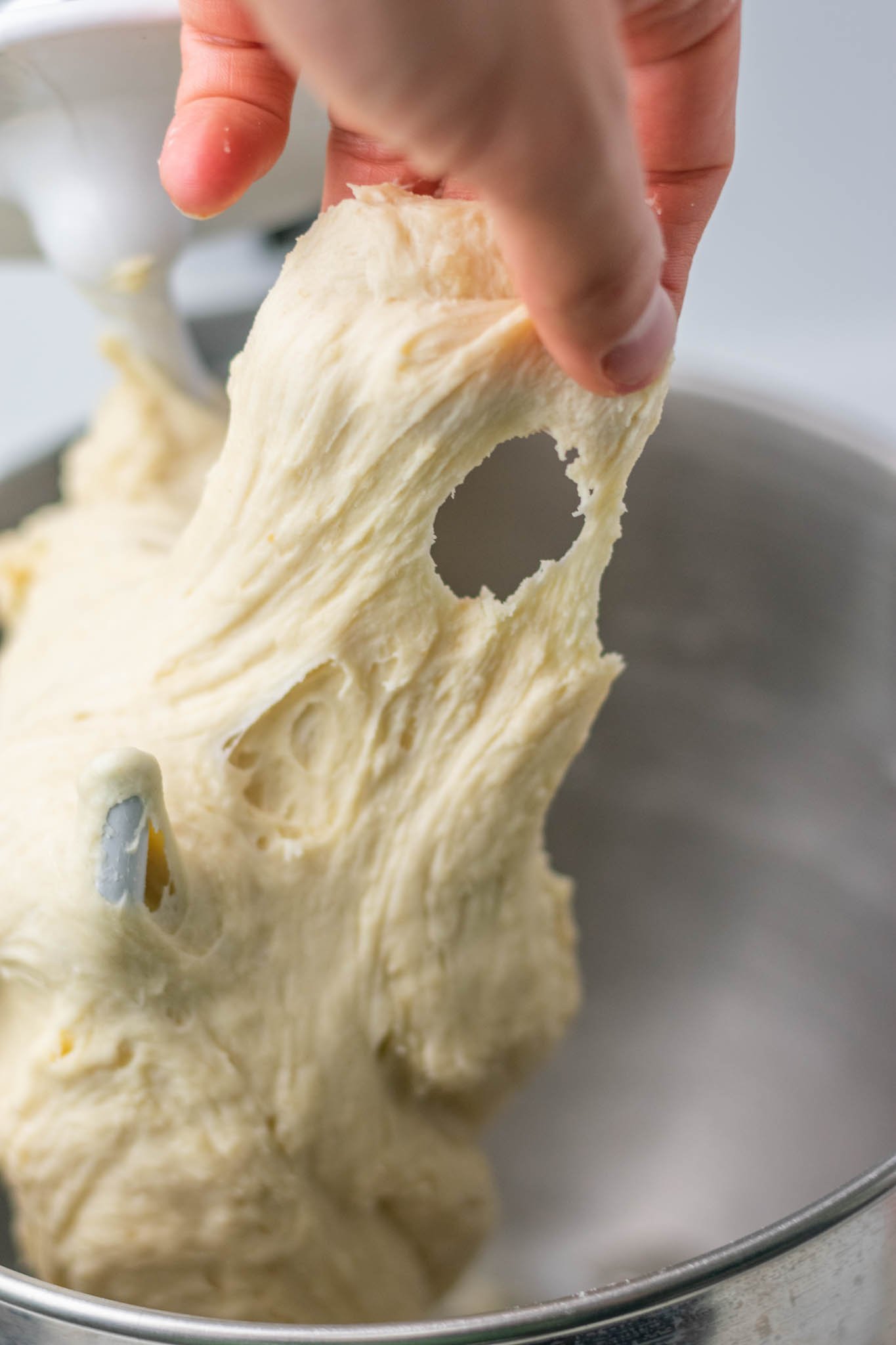
Cover the bowl with a towel and let it rest for 10 minutes. This quick rest will allow the flour to fully hydrate and for the gluten to relax.
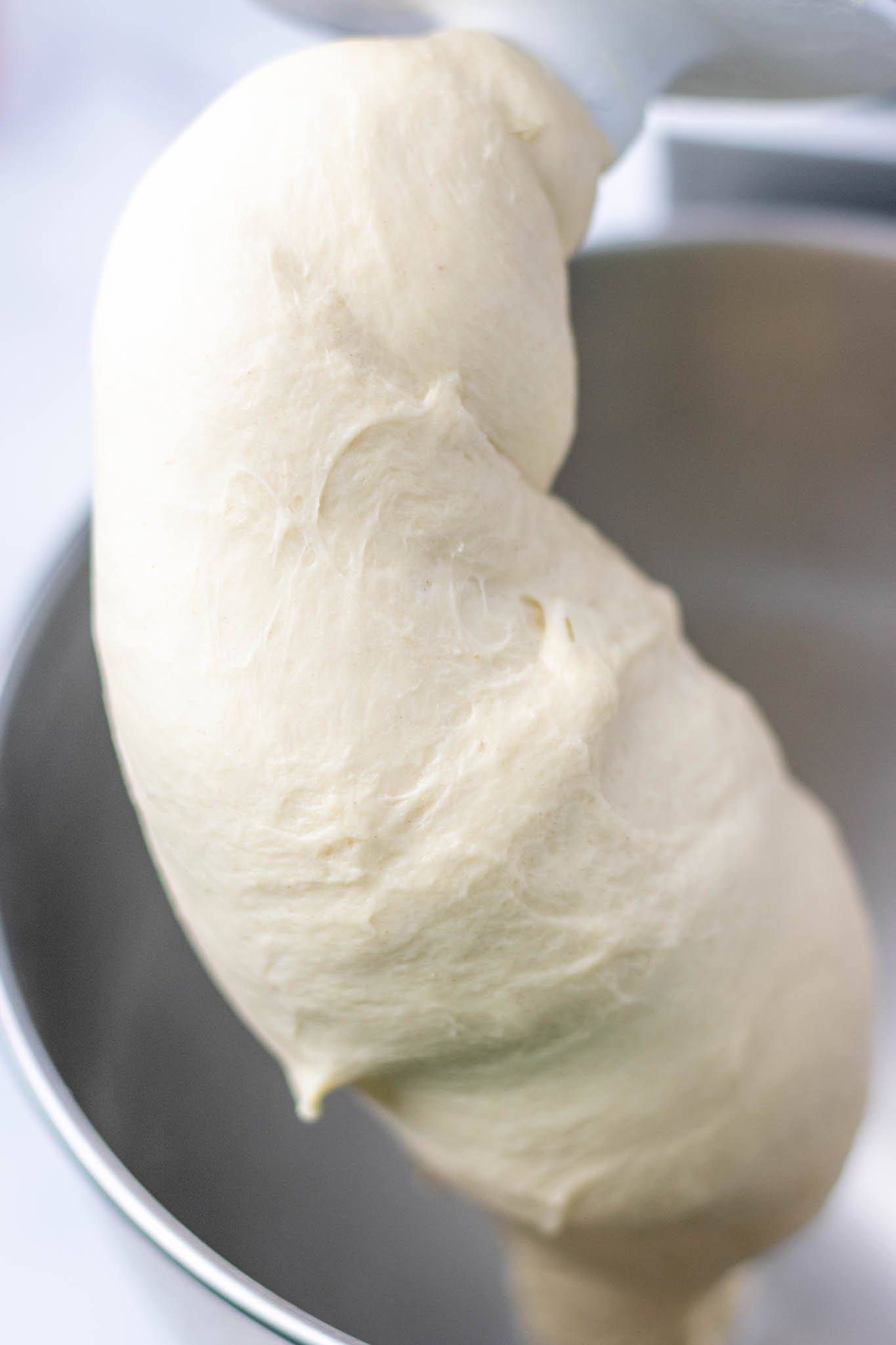
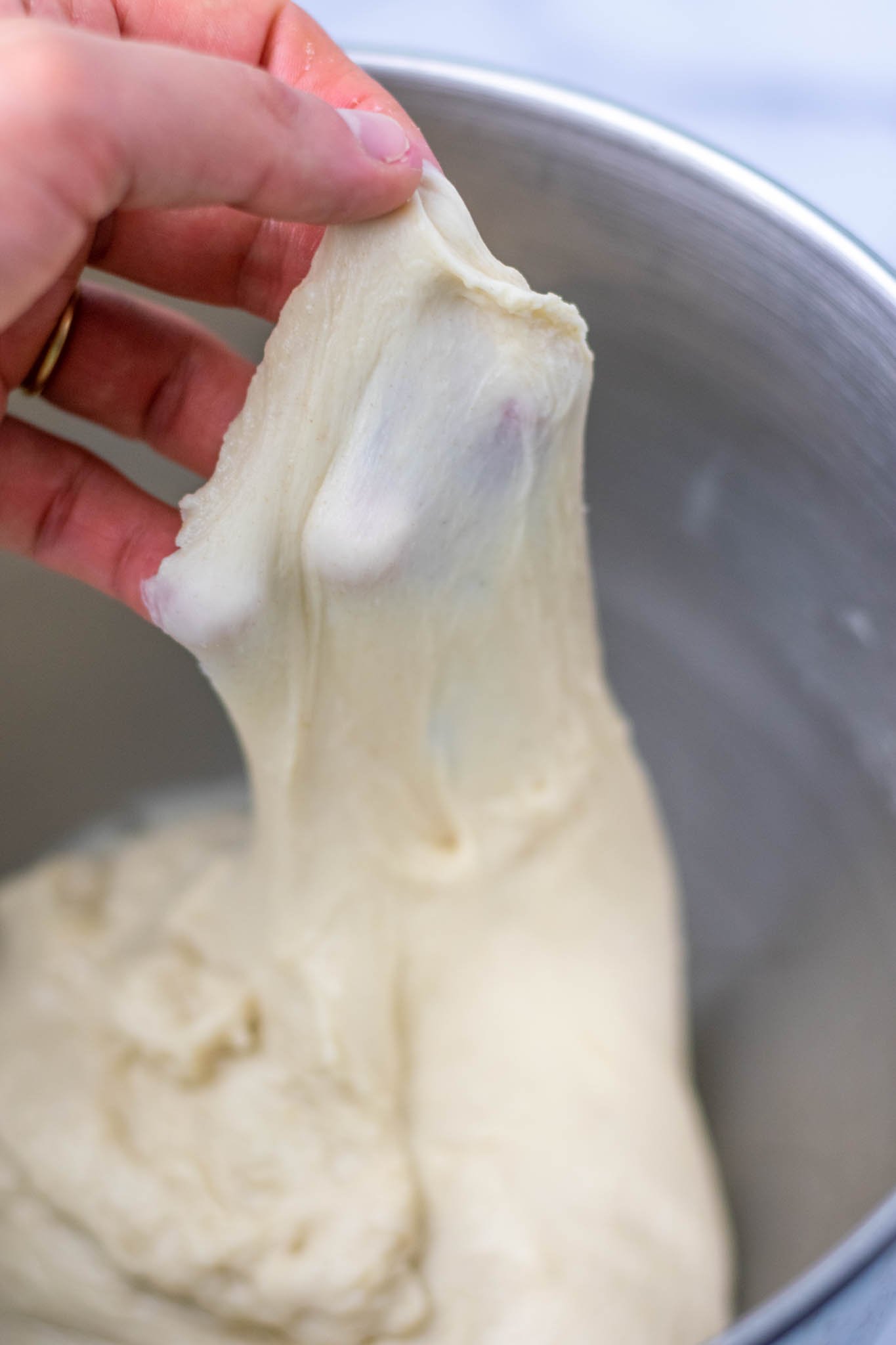
Continue mixing on medium speed until the dough is tacky (not sticky) and you can stretch a piece of the dough into a thin layer without it tearing (aka “the windowpane test”).
Mixing should take about 7-10 minutes.
If mixing by hand, follow the same indicators as above and knead the dough on a lightly floured countertop.
3. Bulk Fermentation (First Rise)
Place the dough in a lightly oiled medium bowl and cover.
Let the dough proof for 4.5-5 hours in a warm location for its bulk rise.
I keep my dough and starter in my Brød and Taylor Folding Bread Proofer and it keeps it at a steady temperature that you can adjust along with a humidity tray. I keep my bread proofer set at a constant 78ºF.
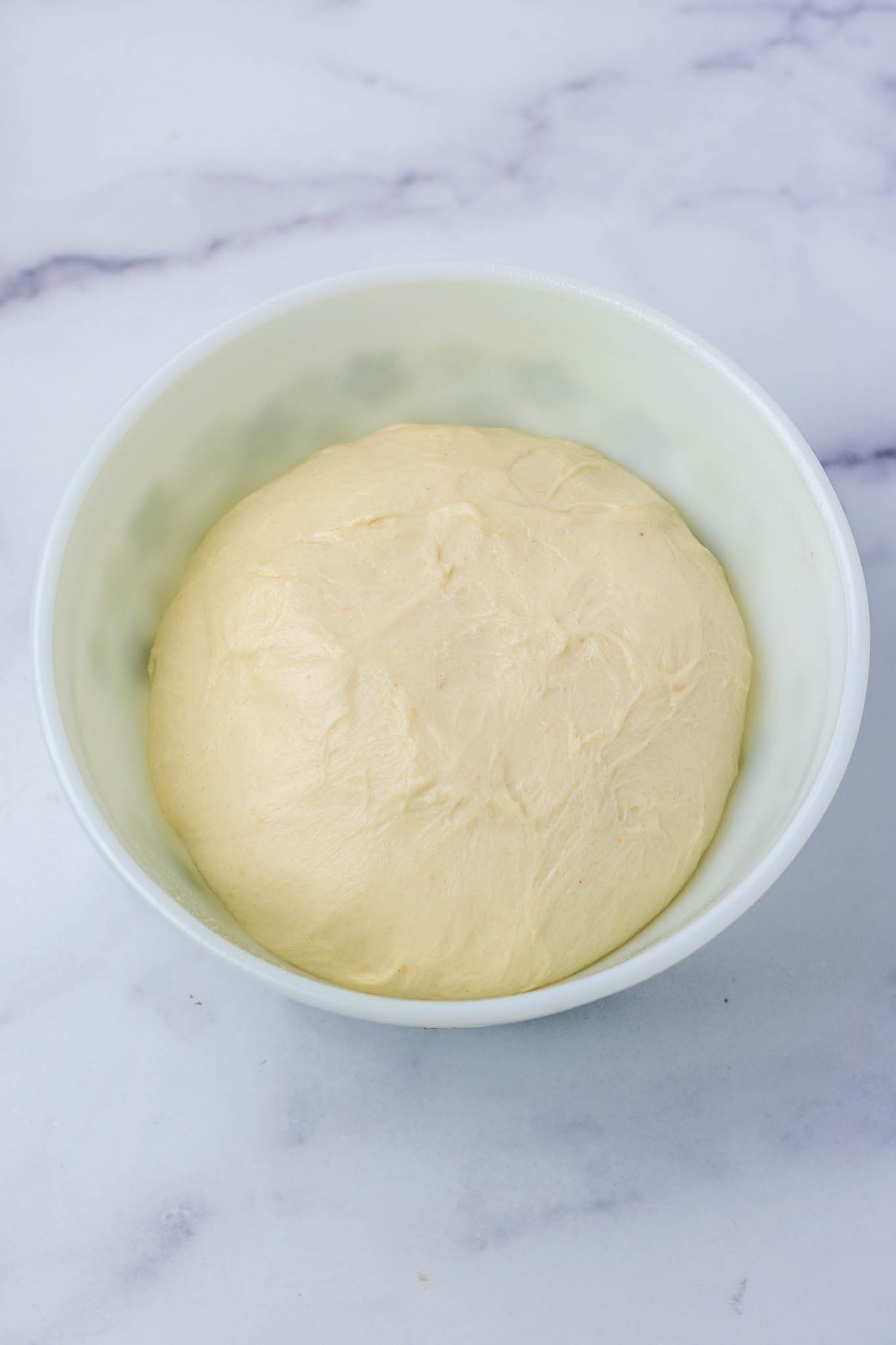
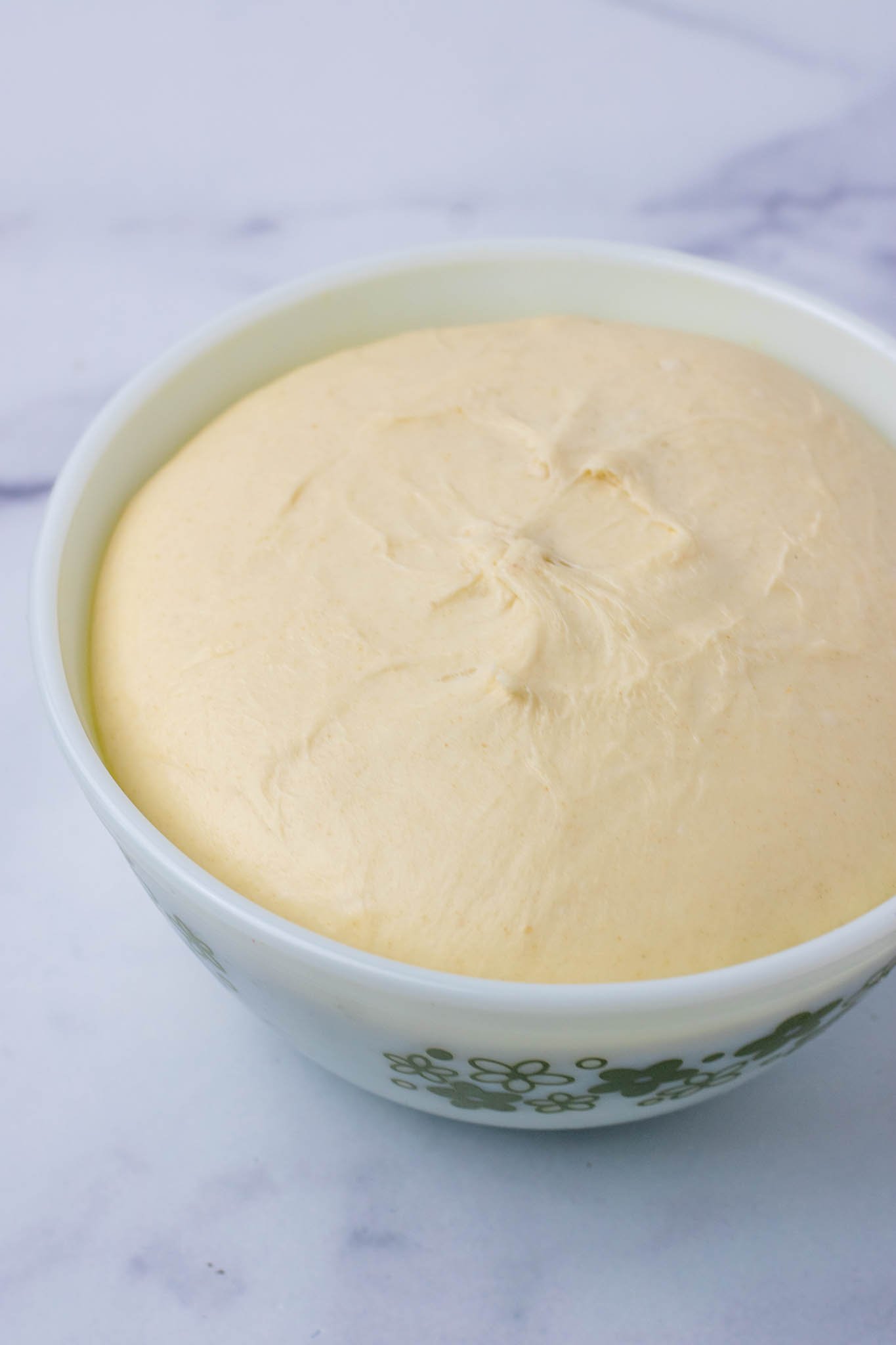
At the end of bulk fermentation (first rise), the dough should at least double in size, be domed, and feel full of air.
4. Overnight Proof
Transfer to the refrigerator to proof overnight or up to 48 hours.
A cold proof, or retard, allows your bread dough to ferment at a much slower rate and will give added flavor to your bread and make shaping easier.
The cold proof also gives you more flexibility to bake your bread at a later time.
5. Shape
The next day, remove the dough from the refrigerator and butter or oil a 8.5″x4.5″ bread loaf pan.
Turn out the dough onto a lightly floured surface and very lightly flour the surface of the dough.
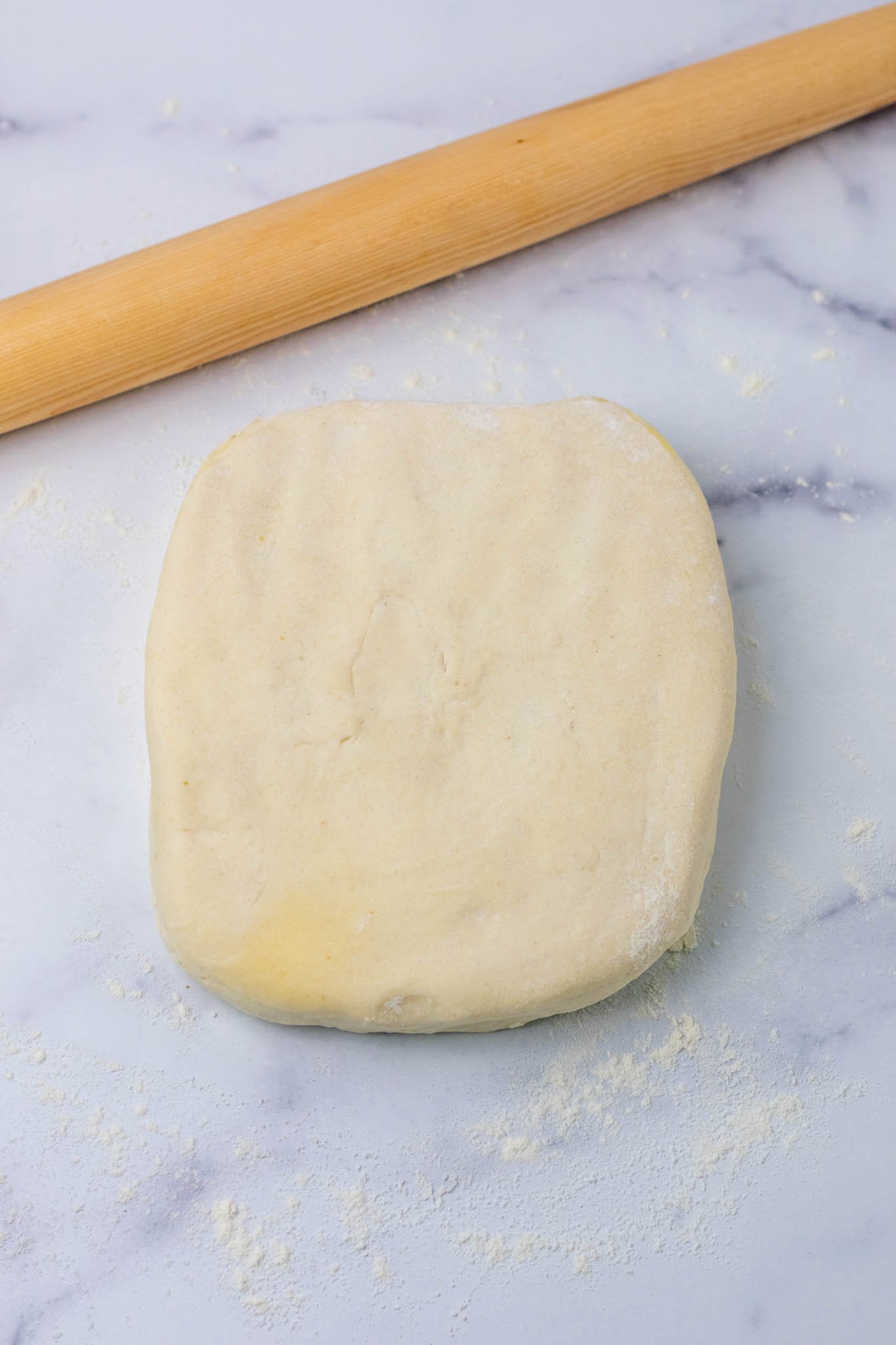
Press the dough into a square shape with your fingers. This will deflate the dough.
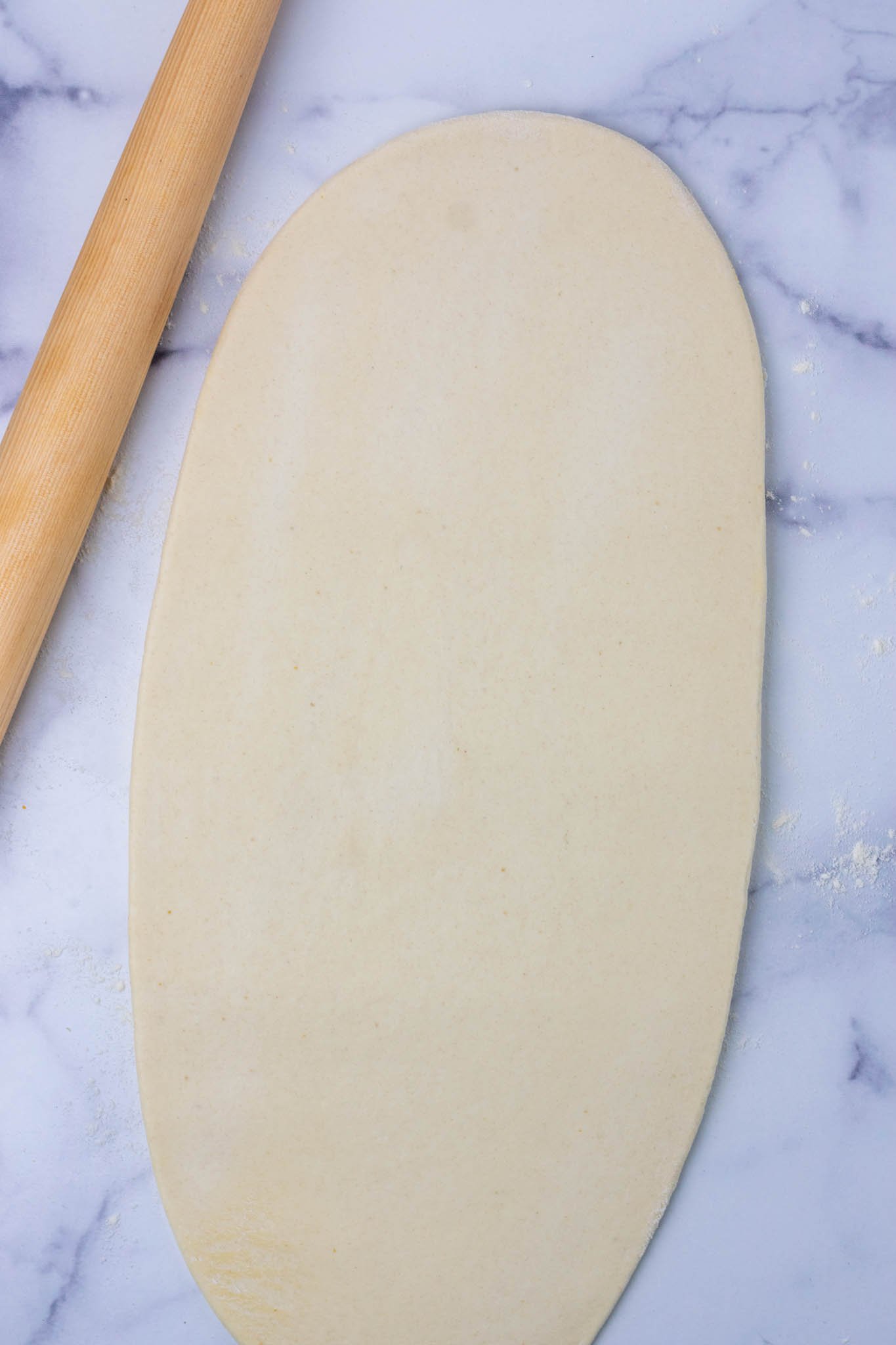
With a rolling pin, evenly roll the dough out into a long oval (mine is typically about 8.5″ wide and 17″ long).
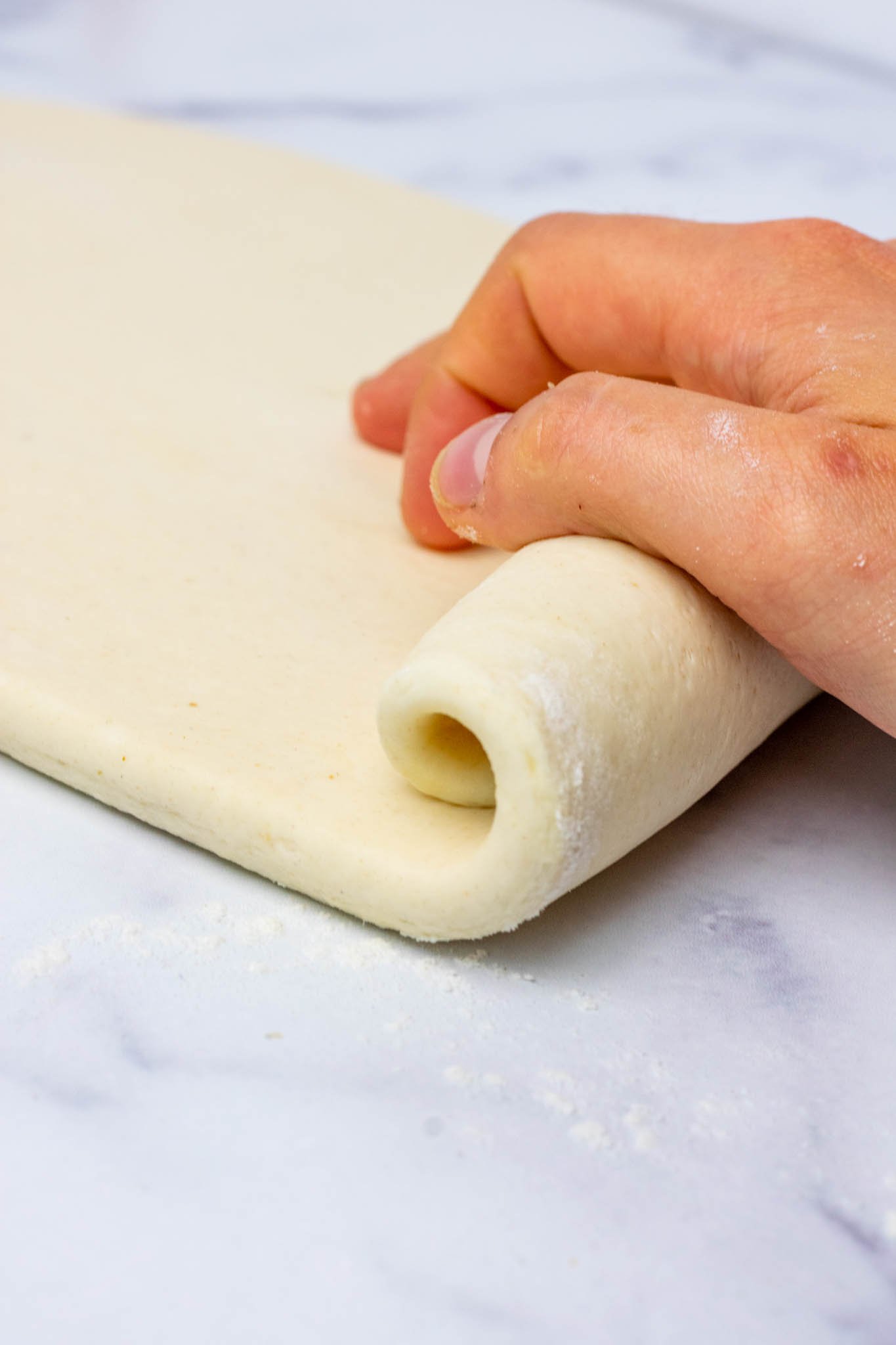
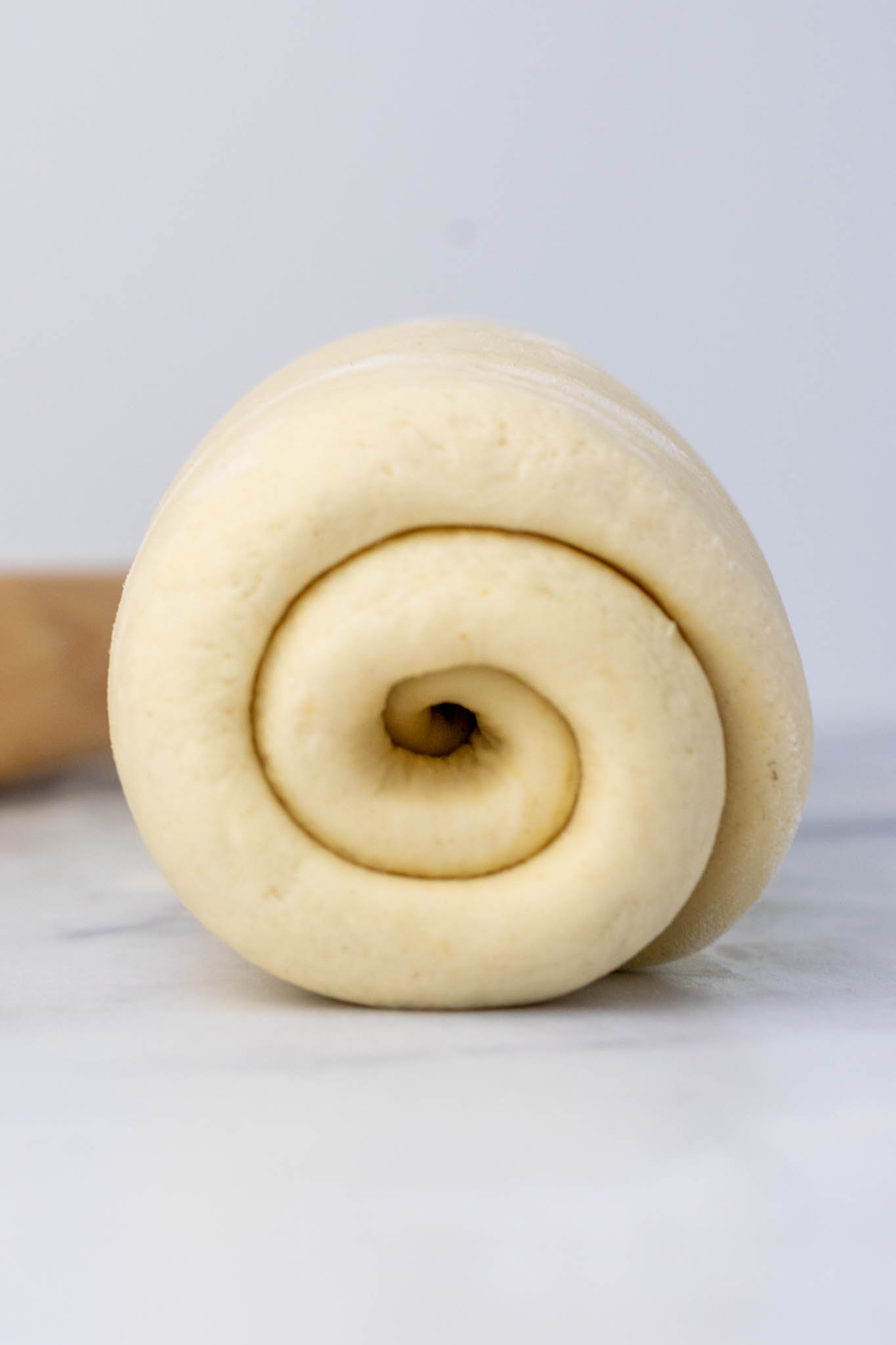
Starting from the short end closest to you, use your hands to roll up the dough into a log. The dough should still be cold and easy to handle. If there is any sticking, lightly flour your hands.
Pick up the dough log and place it seam-side down into the bread loaf pan. The dough should fit snugly.

6. Final Proof
Cover the bread loaf pan and place in a warm location at 75-80ºF to proof for 4.5 to 5 hours.
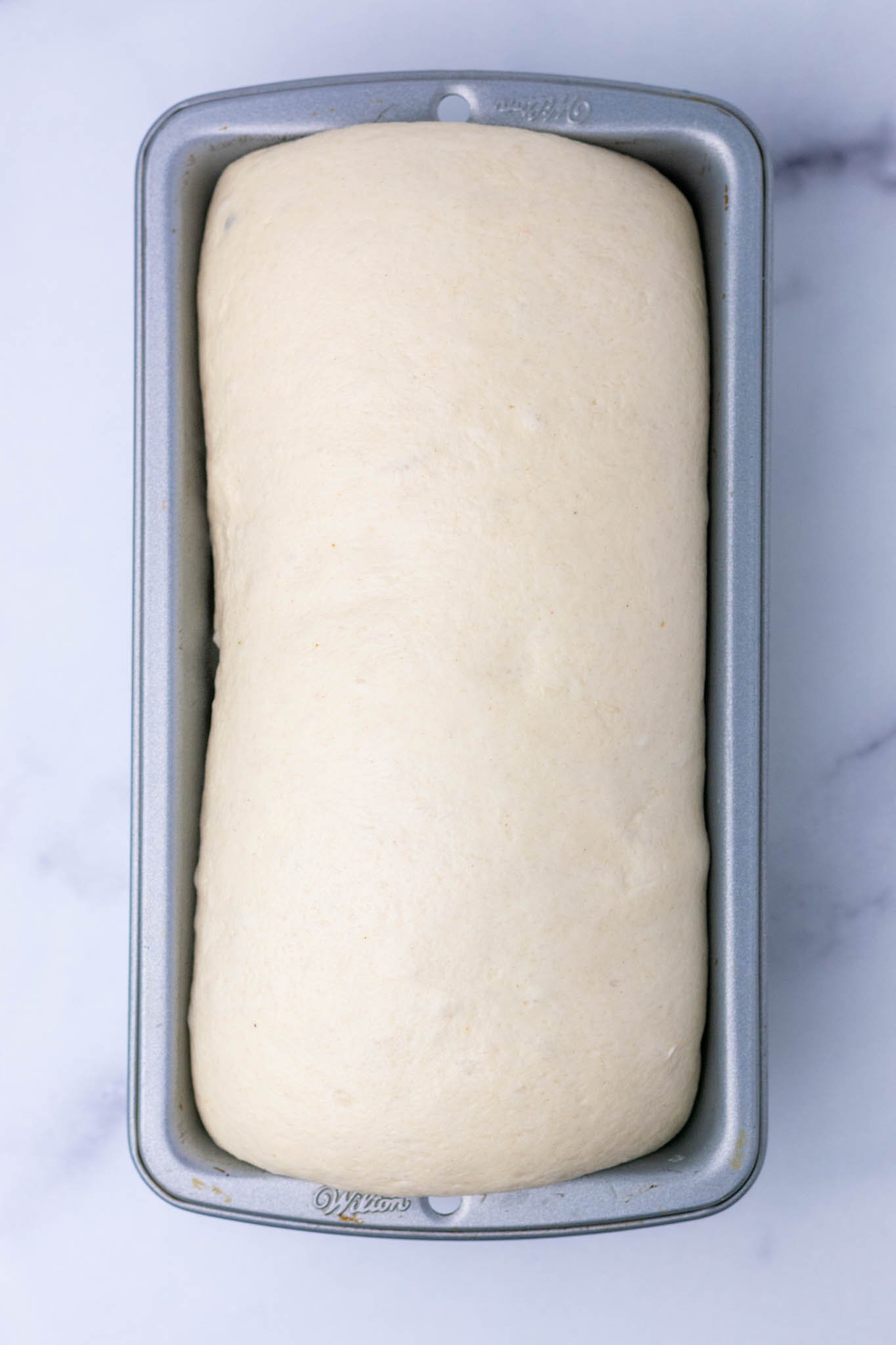
The final proof is complete when the dough has filled up the bread loaf pan and rises about 1 inch above the bread loaf pan.
At the end of proofing, the dough should look swollen and feel full of air if you lightly press on it with a floured finger.
You can use the “finger-poke test” to assess if the dough is finished proofing. To test, use a lightly floured finger to press about 1/2-inch into the dough. If it springs back immediately, then it needs longer to proof. And if the dough leaves a small indentation that slowly fills in, then it’s ready!
7. Bake
Preheat the oven to 375ºF (190ºC).
Once preheated, brush the top of the sourdough sandwich bread with a tablespoon of melted butter.
Brushing the bread dough with melted butter helps give it a softer crust and contributes more flavor and color to the crust.
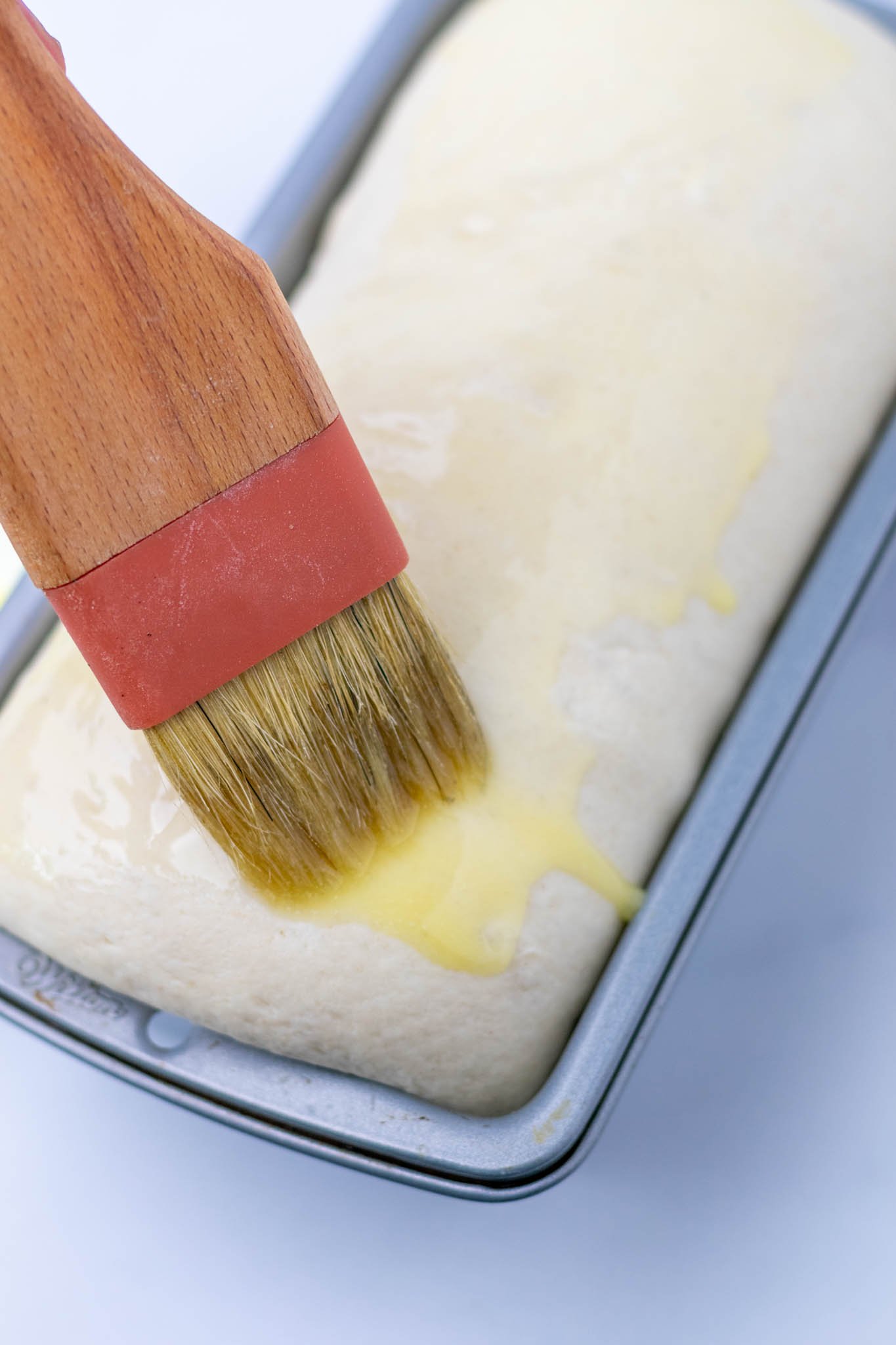
Bake for 35-40 minutes.
The bread is done when the top crust of the bread is evenly and lightly browned and the internal temperature reads between 190-200ºF (88-93ºC).
Place the loaf on a wire rack and let it cool for about 5 minutes in the pan. After 5 minutes, turn the still-hot bread out of the pan (use gloves!) and let it cool completely on the wire rack.
Letting it cool completely out of the bread loaf pan will help ensure that your bread is not gummy.
Slice and enjoy!
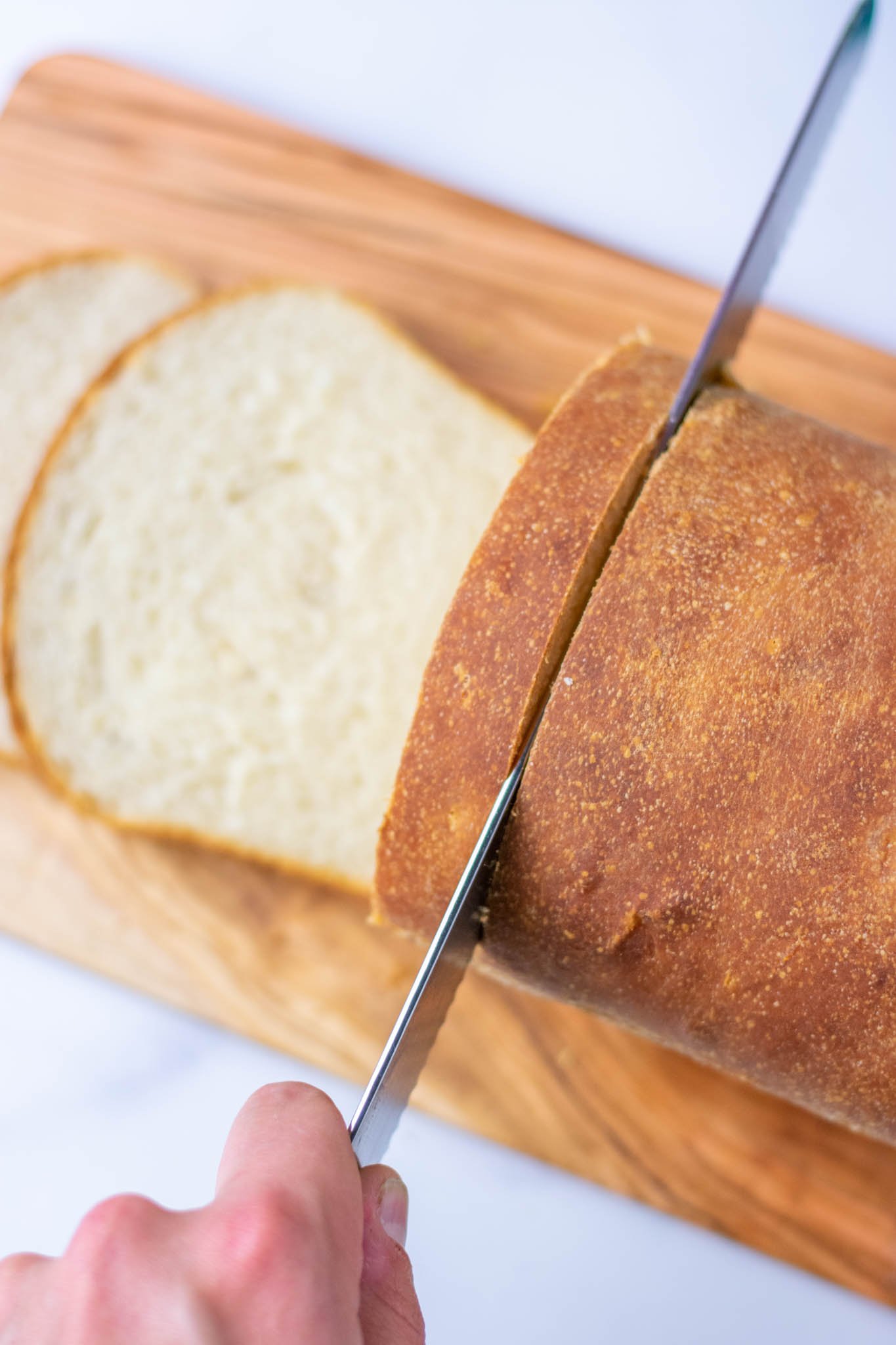
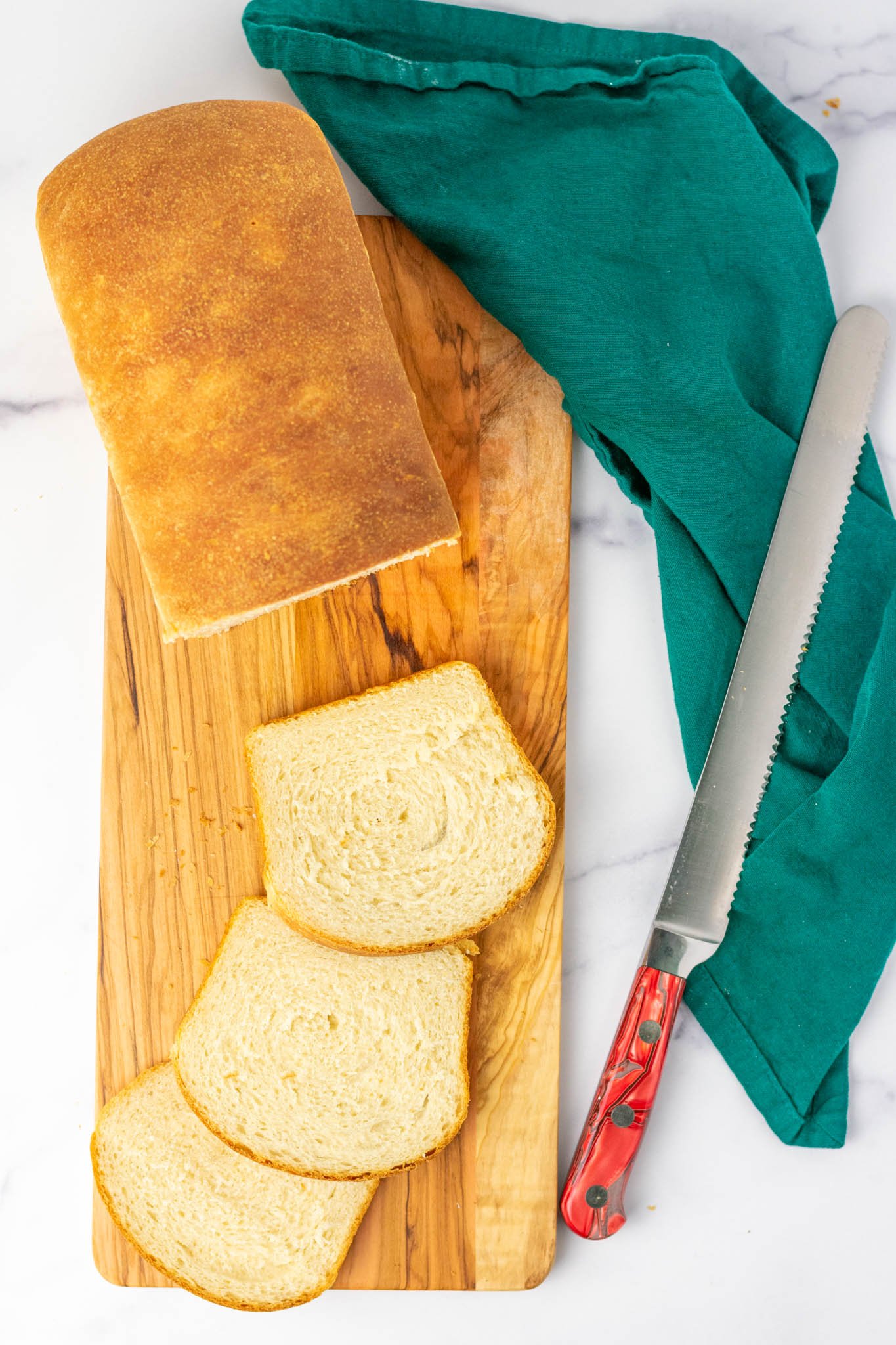
Note: If you use an instant-read thermometer, the internal temperature of baked sandwich bread should read 190-200ºF (88-93ºC).
Baking sandwich bread to an internal temperature over 200ºF will result in a drier and tougher loaf. To keep it soft, aim to bake it until the internal temperature is 190ºF.
How to Store
It’s easy to store this loaf with a couple of options: at room temperature or frozen. The use of sourdough helps preserve the loaf longer than other yeasted breads.
At room temperature, keep the bread covered or wrapped in aluminum foil to keep it from staling. It will stay fresh for up to five days. If it does stale any, warm it up or toast it for a couple of minutes in a toaster oven.
You can also store it wrapped in a tea towel and in a paper bag to stay fresh longer.
To freeze, slice the bread and store the slices in a freezer-safe ziplock bag. Place in the freezer to store for at least two months.
What to Make With Sourdough Sandwich Bread
This recipe is so easy and flexible- it can be used for many things!
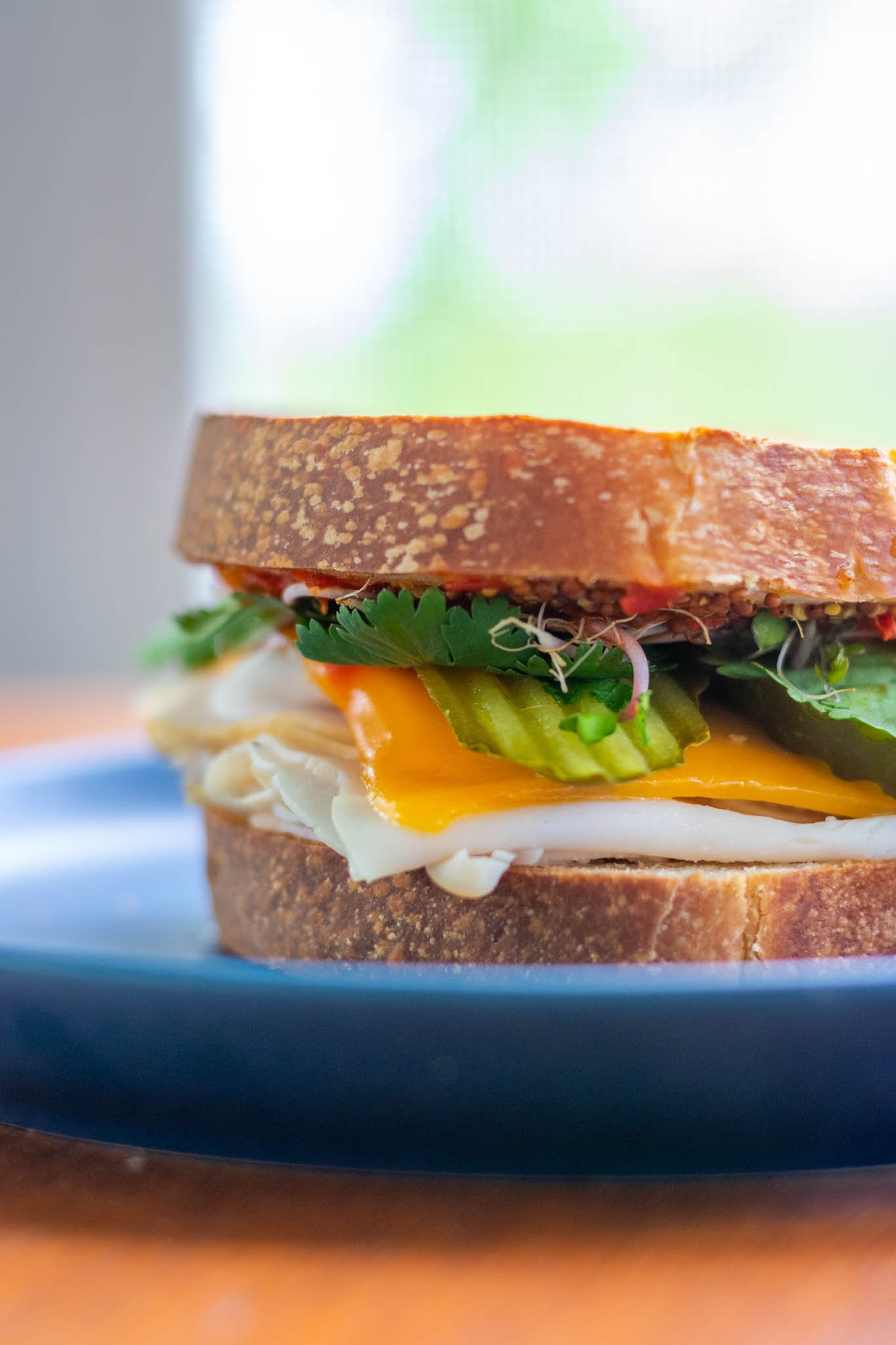
The texture and flavor of this bread are similar to grocery store white sandwich bread (although the flavor is much more complex!), so it’s interchangeable with any of the ways you would use store-bought sandwich bread.
Homemade sandwich bread can be used for sandwiches like grilled cheeses, PB&J’s, BLTs, and other lunch sandwiches.
Additionally, I enjoy it as a morning toast with butter and jelly like Concord Grape Jam with Vanilla or dunked with tomato soup. You could even use it as the base for bread pudding, dried croutons, and the list goes on.

❓ FAQs
Can this recipe be made vegan?
Yes! This sourdough sandwich bread recipe can easily be made vegan. Substitute the whole milk in the recipe with an equal amount of water or another plant-based milk.
Instead of using butter, use an equal amount of neutral oil like canola, avocado, or vegetable oil.
Can I make without a stand mixer?
Yes. If you do not have a stand mixer, you can still make sourdough sandwich bread. When mixing dough ingredients, knead the dough with your hands following the same indicators on the recipe.
This is a stiff dough and might take about 15 minutes to knead by hand.
Why is my sourdough bread gummy?
Make sure the loaf is completely cooled before slicing it. Slicing into hot or warm bread affects the crumb structure of a bread loaf because the crumb of your bread will not be fully set.
It’s also possible you underbaked the sandwich bread. The internal temperature of the bread should read 190ºF when fully baked.
Can I double this recipe?
Yes. Double all of the ingredients and follow the same instructions. When you remove the dough from the refrigerator, divide it in half before shaping so you will have two loaves.
How do I make same-day sourdough sandwich bread?
If you’d like to skip the overnight proof, you can. Make sure you start the recipe early in the morning and you can bake it in the evening.
How do I make a sourdough discard sandwich bread?
If your sourdough discard is fresh (within a day or two), you can use it to create your levain for this recipe. However, do not substitute all of the levain for sourdough discard. This will result in a very sour, acidic loaf that will likely not rise well in your bread pan.
Instead, use sourdough discard in other discard recipes like my Sourdough Discard Blueberry Scones or my Easy Sourdough Discard Granola Recipe!
⭐️⭐️⭐️⭐️⭐️
Please leave a rating, comment or question below! Tag me on Instagram or Facebook @SourdoughBrandon or PIN this recipe on Pinterest to come back to it later!

Sourdough Sandwich Bread
Equipment
- 1 Bread Loaf Pan, 8.5"x4.5"
- 1 Stand Mixer, recommended
- 1 Brød and Taylor Folding Proofer, optional
Ingredients
Levain
- 50 grams Sourdough Starter
- 50 grams Water
- 50 grams Bread Flour
Sourdough Sandwich Bread Dough
- 400 grams Bread Flour
- 8 grams Kosher Salt
- 12 grams Granulated Sugar
- 13 grams Dried Milk Powder, 2 TBS, optional
- 71 grams Unsalted Butter, 5 TBS melted, plus 1 TBS for brushing
- 250 grams Whole Milk, room temperature
- 150 grams Levain, see above, or use 150g of active sourdough starter
Instructions
- Make Levain:Mix together the levain ingredients in a jar. Cover and let double in size in a warm location for 4-5 hours until bubbly.Alternatively, skip this step and mix 150g of sourdough starter into your dough.50 grams Sourdough Starter, 50 grams Water, 50 grams Bread Flour
- Mix Ingredients:Once the levain is ready, add all of the sourdough sandwich bread dough ingredients to the bowl of a stand mixer including all of the levain.Attach the dough hook and mix together on medium speed until all of the ingredients come together into a shaggy dough.*Cover with a towel and let rest 10 minutes for the dough to fully hydrate.Continue mixing on medium speed for about 7-10 more minutes until the dough is tacky, not sticky and you can stretch a piece of the dough into a thin membrane without it tearing (windowpane test).400 grams Bread Flour, 8 grams Kosher Salt, 12 grams Granulated Sugar, 13 grams Dried Milk Powder, 71 grams Unsalted Butter, 250 grams Whole Milk, 150 grams Levain
- Bulk Fermentation (First Rise):Place the dough in a lightly oiled medium-sized bowl and cover.In a warm location, the dough should bulk ferment for about 4.5-5 hours. At the end of bulk fermentation, the dough should double, dome in the bowl, and appear full of air.
- Overnight Proof:Place the bowl of dough into the refrigerator to proof overnight or up to 48 hours.
- Shape the Dough:The next day, remove the dough from the refrigerator and butter a 8.5"x4.5" bread loaf pan.Turn out the dough onto a lightly floured surface and lightly press the dough into a square shape with your fingers.Using a rolling pin, evenly roll out the dough into a large oval (about 8.5" wide and 17" long).Starting at the short end closest to you, use your hands to roll up the dough into a log. Pick up the dough log and place it seam-side down into the bread loaf pan.
- Final Proof:Cover the bread loaf pan and place in a warm location to proof for 4.5-5 hours.Final proof is complete when the dough looks swollen, has filled up the bread loaf pan, and rises about 1 inch above the bread loaf pan.If you press the dough with a lightly floured finger, it should leave a slight indentation.
- Bake:Preheat the oven to 375ºF (190ºC).Brush the top of the bread dough with a tablespoon of melted butter.Bake the sourdough sandwich bread for 35-40 minutes. The sandwich bread is done when the top crust is evenly and lightly browned and the internal temperature reads between 190-200ºF (88-93ºC).Let cool on a wire rack for about 5 minutes. Turning the still hot bread out of the bread loaf pan to cool completely on a wire rack. Slice and enjoy!



Love this easy recipe! The bread is delicious 🙂 I used ripe sourdough starter (made with KAF AP flour) instead of making a new levain, I used cultured buttermilk blend powder instead of milk powder, and I used Fairlife whole ultra-filtered milk because that is what I had on hand. I also doubled the recipe to make 2 loaves at once. The nutrition facts for one baked loaf (869 grams unbaked dough) ended up being, per slice:
2 oz. = 56 grams (1 slice) – 15.5 slices per loaf
Calories: 155.9
Carbs: 24.7 grams
Protein: 5.08grams
Sodium: 221 mg
Sugar: 1.62 grams
Cholesterol: 11.79 mg
Fat: 4.43 grams
Saturated fat: 2.65 grams
Used this as a base with some modifications and loved the result so much it’s an instant household staple. Swapped about 70 g of the flour with ww; left out the milk powder because I didn’t want it too soft to hold up to sandwiches; added 1/4 cup of seeds I’d soaked a half hour in 1/3 cup of water beforehand, and omitted that 1/3 cup water from the recipe water. Added 1/4 tsp of instant yeast to give it a boost, making it a hybrid dough but more reliable with my starter and timing. The result was a soft but not too soft, extremely flavorful bread. I love your seeded whole wheat and make it all the time, but we’ve found it almost a bit too tender for sandwiches, whereas this holds beautifully. Options! Thanks again.
Oh my stars. This recipe is my favorite! It is so good! I made these on Monday, baked on Tuesday and lemme tell you. Bomb. My family sadly ate an entire loaf last night after dinner so now I have only 1 loaf to show for all that work (haha). I didn’t have the milk powder so I didn’t use it. Everything else was the same.
I doubled this recipe thinking I would put it in my 2 large pullman loaf pans but my bad, didn’t realize the recipe is written for the 8.5x4x4 inch pans. I went ahead and baked them in my large pans. The shape wasn’t what I wanted; obviously this was my fault, but it was a good learning opportunity. First, read through the full recipe, including pan size next time and make the proper adjustments beforehand. I realized only after I had mixed 2x the recipe. Anyway, for next time or for anyone else that has the larger pullman loaf pans (13x4x4), this is what I plan to do with this recipe: Chatgpt says that I would need to multiply each ingredient by 1.36 for one loaf, and then I can multiple that by 2 for 2 loaves. Or just multiply by 2.72 if making in 2 large loaf pans. OR if you’re lazy, like myself, multiply by 3 using the toggle button on this site and split it in half. I don’t think it’ll matter too much.
Now, this bread is our favorite sandwich bread. It’ll be amazing with school lunches. I plan to make a bunch of these babies in one sitting so I don’t have to make multiples throughout the week. How can I store them? I know I can freeze loaves, but I don’t usually have good success with them after defrosting them (on the counter overnight). Is there a better way? Should I pop them in the freezer whole and then pop in an oven to defrost? What temp and how long?
Hi Diana, I’m so glad you liked the recipe and for following along. This loaf stores well after baking by slicing and freezing it. Then, I toast the slices up in a toaster oven. That’s what works best for me!
Loved the recipe but.. I accidently buttered the top of my sourdough sandwich bread loaf before the final proof. Everything was great until this occurred. So foolish of me! The dough felt incredible & it shaped easily, fitting perfectly in the pan. is this going to interfere with the last rise?
I’ll definitely use this recipe again & not do something so dumb.
I think it’ll be okay in the final rise still and I hope it turned out well for you!
I just started my sourdough journey last month and have attempted several sandwich breads but none have turned out well until this one! Pillowy soft, tangy, and so delicious and perfect for toast/sandwiches/ect. I will only ever be using this recipe from now on! Thank you for a foolproof recipe!
Thank you for making and sharing!